
Is Canon’s Absence in the Smartphone Game a Fatal Mistake? Shocking Consequences Revealed!

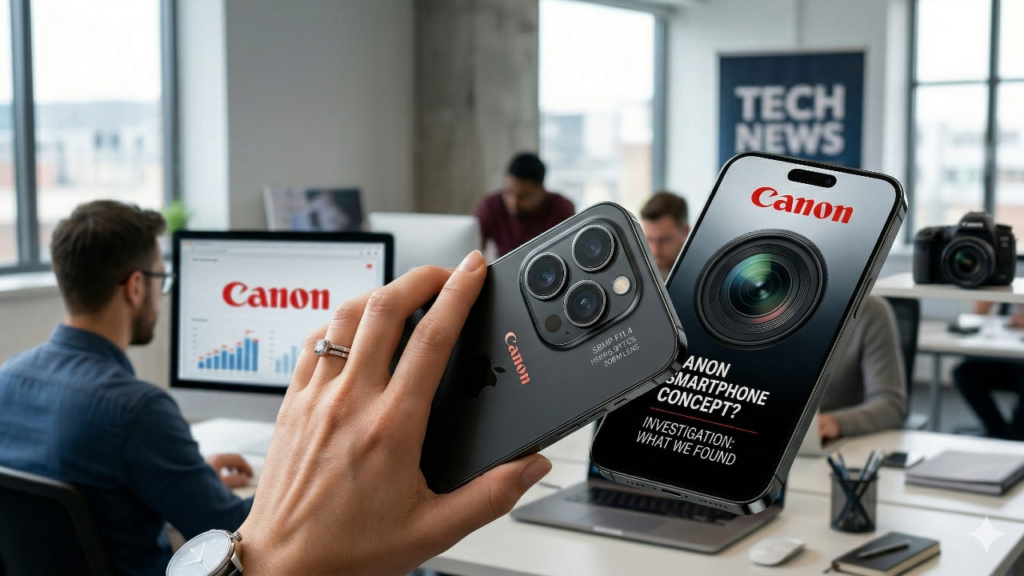
In the competitive landscape of smartphone photography, some of the world’s most respected camera brands have made notable partnerships. The legendary blue badge of Zeiss on Vivo devices, the iconic Hasselblad script on OnePlus and Oppo smartphones, and the unmistakable Leica red dot appearing on Xiaomi flagship models all signify the merging of advanced optics with mobile technology. Yet, one glaring absence is that of Canon, Nikon, or Fujifilm in this smartphone race. Why have these established Japanese camera brands opted out of co-branding or launching their own smartphone cameras, especially as European counterparts seem to double down on such trends?
According to Toshiaki Nomura, President & CEO of Canon India, the decision is clear: Canon has no plans to chase the smartphone camera craze. “If you talk about whether we [will] step into the smartphone [space], I do not think so,” Nomura stated. “They are complementary products.” This mindset positions Canon not in competition with smartphones but rather in a symbiotic relationship. Nomura believes that smartphones serve as excellent recruitment tools for photography, introducing billions to the art of capturing moments.
This perspective flips the conventional narrative that smartphones are merely “camera killers.” Instead, Canon sees smartphones as gateways to photography, teaching users how to frame shots, appreciate natural beauty, and value memories captured in images. As users grow beyond the limitations of smartphone cameras—often constrained by small sensors and fixed apertures—they may seek out dedicated imaging systems, potentially from Canon or other established brands.
Engineering Excellence
Nomura's reasoning transcends mere brand positioning; it delves into the essence of Canon's research and development philosophy. “When we tap into [any] market, even medical and imaging, printing… all these products… these core technologies [are] implemented in those products,” he explained. Canon’s expertise spans four key pillars: optics, image processing, sensors, and device management. The same technologies that enable a professional sports photographer to capture a 100mph fastball in low light power Canon’s innovations in medical imaging and semiconductor equipment. Rather than following trends, Canon aims to identify where its unique patents and technologies provide it with a competitive advantage.
Interestingly, Canon's commitment to innovation is manifesting in unexpected areas. The company has recently ventured into the space industry, particularly focusing on miniature satellites. While this may seem unrelated to cameras, Nomura asserts that the technologies required for satellite creation mirror those needed for high-end imaging devices. “You may feel satellite and imaging camera is totally different portfolio, but we can utilise our core technology like optics, image processing, sensors,” he stated, emphasizing that these components are crucial across various applications.
This strategic move allows Canon to focus on highly lucrative and complex sectors, such as space and medical imaging. The smartphone market, known for its razor-thin margins and rapid two-year upgrade cycles, poses significant risks, as evidenced by struggles faced by companies like Sony. In contrast, sectors like medical imaging provide long-term stability and demand the highest quality hardware, an area where Canon excels due to its 90-year legacy in optics.
While brands like Leica and Hasselblad have found success in mobile through partnerships, these collaborations often revolve around image tuning rather than hardware manufacturing. Currently, these partnerships primarily involve Chinese phone brands, limiting access to a wider market. Even in regions where these co-branded phones are available, such as India, there isn't substantial data to prove that such collaborations drive significant sales volumes, despite the interest from tech enthusiasts.
Additionally, for a company like Canon, which prides itself on its ability to manufacture its own sensors and lenses, the idea of engaging in a software-only collaboration seems inadequate. Holding a commanding 30% market share in dedicated cameras in India, Canon maintains that there is no immediate need to join the crowded smartphone market; the demand for purity in optics may only increase as mobile photography becomes saturated with over-processed images.
However, in the fast-evolving tech landscape, nothing is ever set in stone. Canon has demonstrated an openness to innovation in mobile technology, having filed a patent on August 12, 2025, with the United States Patent and Trademark Office. The application for an “Image pickup device capable of performing image pickup in a plurality of image-pickup modes in parallel” indicates that Canon might be exploring ways to deliver cinema-grade mobile cameras in the future. While this doesn't mean a Canon smartphone will launch tomorrow, it signals that the company is keeping its options open.
For now, Canon seems content to remain in its lane. As Nomura puts it, the company prioritizes strong leadership and cutting-edge patents over simply being part of every trend. For enthusiasts of the red logo, the message is clear: if you're seeking Canon quality, you’ll need to pick up a dedicated Canon camera.
Eva Longoria's Bold Bikini Reveal Will Make You Question Everything—Find Out Why!

This Month's Elections Could Change Everything: Are You Ready for the Shocking Outcomes?

Is Social Media Stealing Your Vote? Shocking Data Reveals How Democracy Is at Risk!
Your Browser Might Be Putting You at Risk—Discover the Shocking Truth Before It's Too Late!

This Instagram Trick Could Cost You Thousands—Are You Making This Mistake?

Trump's Shocking Choice: Why His Endorsement of Steve Hilton Could Change Everything in California!
You might also like: