
Students Predict a Climate Catastrophe in Harpswell—What They're Foreseeing Will Shock You!

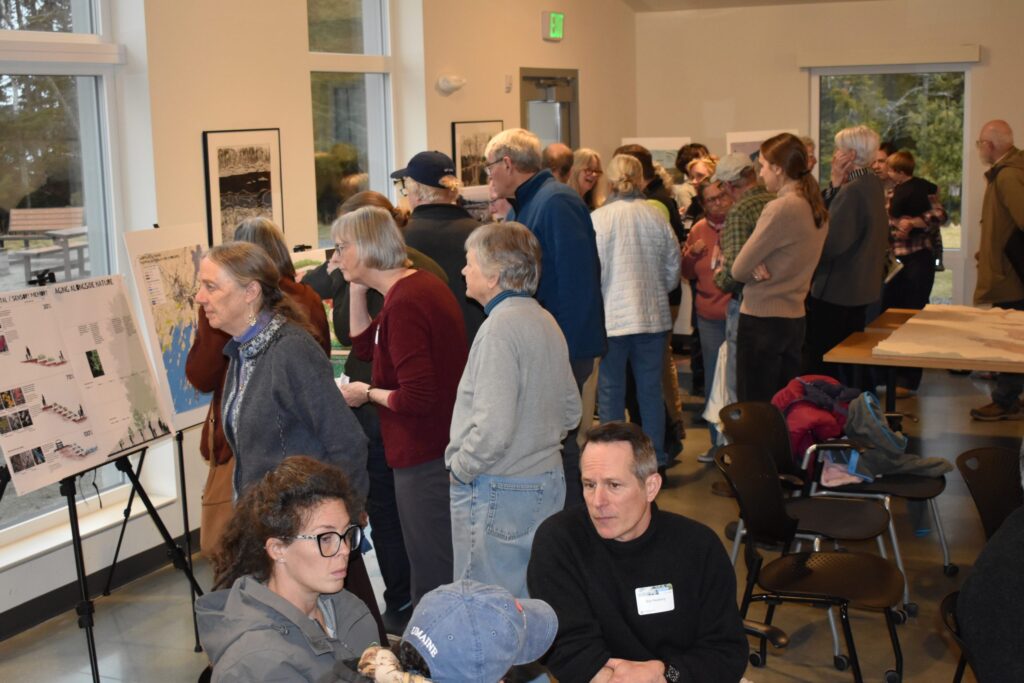
As climate change increasingly affects coastal communities across America, creative solutions are emerging from unexpected places. In Harpswell, Maine, a group of graduate students from the University of Virginia has stepped up to propose innovative adaptations aimed at bolstering the town's sustainability in the face of rising sea levels and other environmental challenges.
More than a dozen projects were developed as part of the Envision Resilience 2025 Midcoast Maine Challenge. This non-profit organization, based in Boston, collaborates with students, educators, and coastal communities to design actionable solutions for climate change. The initiative specifically targeted Harpswell and Bath, where students engaged with local residents and officials to understand their unique challenges.
Jamie Hark, a local landscape designer with Acorn Engineering and a member of Harpswell’s Conservation Commission, played a pivotal role in facilitating these projects. Hark, a graduate of the University of Virginia, noted the urgency of the situation during an open house held on March 13 at the Schiller Coastal Studies Center: “We are truly in unprecedented times here in Harpswell, Maine, the country and the world. It’s going to take a lot of creativity for our next steps.”
The students’ projects varied widely, showcasing diverse approaches to the pressing issues facing the community. For instance, graduate student Michael John “M.J.” Minutoli focused on Harpswell Community School, the town’s only remaining public school. He proposed raising State Route 24, which runs in front of the school, to mitigate the risks of future flooding and erosion due to climate change. His design featured a structure utilizing fallen trees, much like the existing Cribstone Bridge, and included tunnels for students to safely access the adjacent Anna M. Tondreau Preserve.
“I found the body of land right in front of the school was at risk of being eroded with the recurring storm surge,” Minutoli explained. “This felt like a nice opportunity to combine something playful with all this research I had done.”
Other projects included a proposal by student Andie McMann, who envisioned stacking old lobster traps filled with rocks and soil to reinforce the eroding shoreline at Mackerel Cove on Bailey Island. Additionally, Catelyn “Cate” Southwell conceptualized creating in-water mounds from dredging material in Cundy’s Harbor, providing local lobstermen a place to service their boats at low tide.
Michael Luegering, an assistant professor of landscape architecture at the University of Virginia, highlighted the importance of these real-world projects for his students. “Landscape architecture students almost never get to work with real people facing real design problems as part of their studies,” he noted. “It is just a fundamentally different thing to be able to look people in the eye and truly listen to their stories.”
Mary Ann Nahf, chair of both the Harpswell Conservation Commission and the town’s Resiliency and Sustainability Committee, emphasized the local community's need for such initiatives. “Part of the work we do is to bring a heightened awareness to climate change issues, and I think this type of a project will do that,” she stated.
Charlotte Van Voorhis, community engagement manager for Envision Resilience, praised Harpswell for its unique character and community support. “Nowhere really represents the kind of Maine grittiness and the community cooperative support like Harpswell,” she remarked. “Our team has completely fallen in love with this coastline, not only for being the longest in the state but also because of all the community support and kindness that you’ve showed us during this entire challenge.”
The collaboration between students and the Harpswell community illustrates a hopeful response to the challenges posed by climate change. As cities and towns across the U.S. grapple with similar issues, initiatives like the Midcoast Maine Challenge demonstrate that innovative, community-driven solutions may hold the key to a more resilient future.
This Vanguard ETF Could Skyrocket 300%—Are You Ready to Miss Out?

You Won’t Believe Which $120 Dividend Stock Could Save Your Portfolio from Disaster!

The FIRST smartphone with color e-ink just leaked—find out why this could change EVERYTHING!
Discover the Shocking Truth: What Nebraska's Monthly Climate Lab Reveals About Your Future!
Local Middle School & Rotary Club Join Forces—You Won't Believe the Shocking Number of Kids in Need!
Cardinals on the Brink: Will This Shocking NFL Draft Gamble Cost Them the Future?
You might also like: