Trump's Shocking Executive Order Could Change College Sports Forever—Will Your Favorite Team Survive?


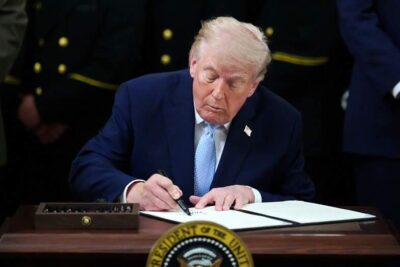
In a bold move aimed at reshaping the landscape of college athletics, President Donald Trump issued an executive order on April 3, 2026, titled “Urgent National Action To Save College Sports.” The order comes at a critical juncture, coinciding with the NCAA Women’s Final Four, and addresses the overwhelming complexities that have come to define college sports in recent years.
The executive order is a response to what Trump describes as a “chaotic state of affairs” that has not only hampered fair competition but also posed a threat to opportunities for student-athletes, particularly in women’s and Olympic sports. “Fair competition cannot occur without a consistent set of rules concerning pay-for-play or player eligibility that cannot be endlessly relitigated in court,” Trump stated in the directive.
University of Utah President Taylor Randall welcomed the executive order, calling it a “meaningful step” toward stabilizing college sports during a period marked by significant disruption. He sees it as a necessary measure to restore equilibrium in an environment where fluctuating transfer rules and financial pressures have become commonplace.
The order includes provisions that could significantly impact the transfer process for student-athletes, limiting them to a single transfer during their five-year eligibility window, with immediate playing eligibility for that transfer. An additional transfer would be permitted for those who have completed a bachelor’s degree. Importantly, there will be “limited exceptions” to these rules, including military and missionary service, a provision likely to be well-received by student-athletes in Utah and beyond.
Randall emphasized that the University of Utah is committed to taking a leading role in navigating these changes, specifically through initiatives like the Utah Brand Initiatives. This program aims to sustain the legacy of Utah Athletics while still prioritizing the university's core academic, research, and health care missions. “College sports are at an inflection point,” Randall noted, underscoring the need for innovative solutions amid evolving challenges in athlete eligibility and financial stability.
Trump's executive order further calls for Congress to act swiftly on legislation that would provide a comprehensive national solution to the financial burdens facing athletic programs. He warned that without such measures, the financial demands of popular sports like football and basketball could jeopardize the existence of women’s and Olympic sports, potentially undermining the overall sustainability of universities themselves.
Despite the sweeping nature of the executive order, its legal enforceability depends on congressional action. As reported by USA Today, the order lacks the authority to be implemented without legislation passed by Congress, which has been slow to address the regulatory landscape of college sports. The American Constitution Society pointed out that an executive order must derive its authority from existing statutes or presidential powers, making the push for legislative backing essential.
However, the order does carry significant weight, serving as a mechanism to pressure Congress into action. It could also have ramifications for universities, as they may face federal funding cuts if they do not comply with the Trump administration's directives.
In a related response, NCAA President Charlie Baker acknowledged the executive order, highlighting that it reinforces existing mandatory protections for student-athletes, including guaranteed health care coverage and mental health services. Baker described the order as a “significant” step toward stabilizing college athletics, but he emphasized that a permanent, bipartisan legislative solution is still necessary.
As college sports organizations and universities brace for the implications of this executive order, the landscape remains uncertain. The balance between maintaining competitive integrity and addressing financial realities is a tightrope that will require careful navigation in the weeks and months to come.
Nessel Drops a BOMBSHELL Lawsuit Against Trump! What This Means for Your Vote in 2024!
College Sports in Turmoil: How Trump's Shocking New Order Could Change Everything!

Investors Stunned: Will American Express's NFL Alliance Crush Competitors or Backfire?
Shocking Twist: Arizona Cardinals to Trade No. 3 Pick? You Won't Believe What They Could Get!

Is LISD’s Future at Stake? Hockenberry's Bold Bond Election Could Change Everything!

Millions of Homes in France Are at Risk: Is Your Dream House Next to Crumble?
You might also like: