
Millions of Homes in France Are at Risk: Is Your Dream House Next to Crumble?

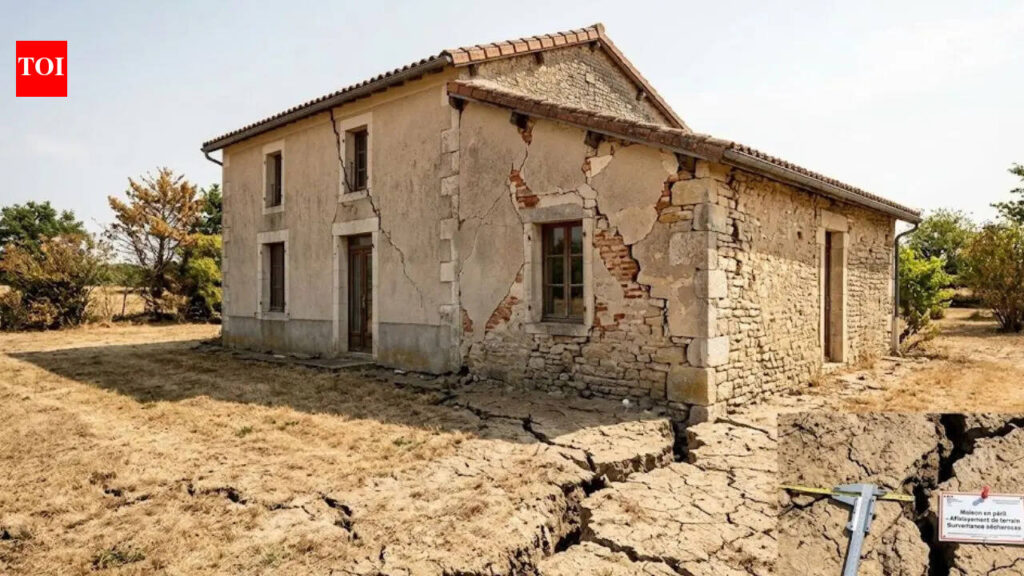
In France, a silent crisis is unfolding as millions of homes face structural risks due to a little-known phenomenon termed 'Shrink-Swell.' This process, especially prevalent in clay-rich soils, causes the ground beneath homes to shrink during dry spells and swell during heavy rains. With climate change intensifying these extremes, the implications for housing stability are becoming increasingly severe.
According to the NHESS Journal, rising global temperatures are leading to more pronounced drying of soils, which subsequently results in significant volume loss in clay minerals. When heavy rainfall follows a period of drought, these minerals rapidly absorb water, leading to dramatic soil expansion. This cycle creates differential settlement, exerting forces on the foundations of structures and heightening the risk of structural failures.
The scale of the impact is staggering. The BRGM (French Geological Survey) reports that over 11.2 million individual dwellings in France are situated in areas designated as medium to high-risk zones, affecting approximately 54 percent of the country's single-detached housing stock. This 'quiet crisis' serves as a physical manifestation of climate change, with increasing numbers and intensity of extreme weather events, such as drought, undermining what were once considered stable foundations.
The ongoing repercussions are not just environmental; they are economic as well. The Caisse Centrale de Réassurance (CCR), a state-controlled organization, highlights the financial toll of soil subsidence, estimating that costs related to this issue could reach around 21.5 billion euros by 2026. Alarmingly, projections suggest that these costs could double by 2050 as much of France shifts from experiencing 'occasional drought' to facing a 'structural hydric deficit.'
Looking ahead to 2065, research from Météo-France and the BRGM indicates a significant decline in soil moisture levels, driven by climate change scenarios outlined by the IPCC (Intergovernmental Panel on Climate Change). The anticipated frequency of extreme droughts—previously occurring every 5 to 10 years—is expected to shorten, resulting in these events transpiring every few years. Such changes pose an even greater threat to the structural integrity of millions of homes across the nation.
The implications of this unsettling trend extend beyond individual homeowners; the entire housing market could be affected. As risks materialize and awareness grows, potential buyers may hesitate to invest in properties within high-risk zones, leading to declines in property values and affecting the overall economy. As climate change continues to alter environmental conditions, the structural safety of homes built on unstable ground may increasingly be called into question.
In conclusion, the phenomenon of 'Shrink-Swell' is emblematic of the broader challenges posed by climate change, manifesting not only in environmental degradation but also in pressing economic concerns. As France grapples with this crisis, it serves as a stark reminder of the urgent need for comprehensive policies and proactive measures to mitigate the risks associated with climate-induced geological changes. The future stability of millions of homes—and the financial wellbeing of their occupants—may depend on it.
Moms for Liberty Just Scored a Shocking Seat at the White House—What This Means for Our Schools!

Easter Lamb Dinner Prices Skyrocket: Find Out How Climate Change is Draining Your Wallet!

Moms for Liberty's Shocking White House Deal: What Trump Promised That Could Change Schools Forever!

You Won’t Believe What Cooper Flagg Achieved Tonight: NBA's Youngest 50-Point Scorer at Just 19!

Giannis Drops a BOMBSHELL: Why He BLASTED the Bucks Amidst Shocking NBA Investigation!

Ashley Parker Angel's SHOCKING Transformation: From Pop Star to Fitness Guru—You Won't Believe His Secrets!
You might also like: