Vermont’s Shocking Plan to Defy Trump’s Election Order: What You NEED to Know Now!


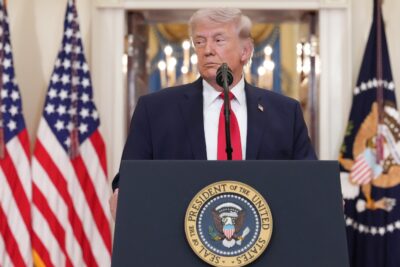
MONTPELIER, Vt. — Vermont officials are preparing to challenge a recent presidential executive order that they label as unconstitutional and a violation of state law. Issued on Tuesday, the executive order from President Trump would empower the Department of Homeland Security (DHS) to utilize various federal databases—including citizenship and naturalization records, Social Security data, and the Systematic Alien Verification for Entitlements (SAVE) data—to compile a list of U.S. citizens eligible to vote. According to the order, the U.S. Postal Service would only distribute mail-in ballots to individuals on this list.
Vermont Attorney General Charity Clark condemned the order in an Instagram video, asserting, “The Constitution is clear that states are given the power to run elections, not the president, and any changes to federal law must be made by Congress, not the president.” The Attorney General's Office had anticipated such a move and has been actively coordinating with a multi-state coalition of attorneys general and the Vermont Secretary of State’s office in preparation for this eventuality, as stated by Senior Advisor to the Attorney General Amelia Vath.
The Vermont League of Women Voters echoed Clark's sentiments, calling the executive order “a direct attack not only on voters but on how elections are run in this country.” In an interview, Vermont Secretary of State Sarah Copeland Hanzas emphasized that she has no intention of altering Vermont's election procedures to comply with the executive order, stating, “In general, any presidential order attempting to govern election law is unconstitutional.” She underscored that election laws are the purview of state legislators and Congress.
This isn't the first time federal directives regarding election laws have faced legal challenges. In January, a federal judge blocked a previous executive order that aimed to govern election law and withhold federal funds from non-compliant states. Copeland Hanzas expressed skepticism over the federal government’s ability to adapt its systems to state rules, stating, “We could be disenfranchising thousands, if not tens of thousands of Vermonters because of the inability of their system to comply with state law.”
Clark and Hanzas raised concerns about the accuracy of the data that the DHS would rely on. Hanzas remarked, “I have zero faith that the Department of Homeland Security knows which Vermonters are citizens.” She referenced a case in Texas where SAVE data inaccurately flagged eligible voters, especially naturalized citizens, as non-citizens, causing confusion about their voting eligibility.
Another critical aspect of the executive order is its requirement for Vermont to share its full voting checklist with the federal government, which includes personally identifiable information—a move that directly conflicts with state law. In a notable development, the federal government is already suing Vermont after Hanzas refused to hand over this checklist last year.
Vermont's current election procedures are designed to ensure that only eligible voters can participate. Any resident can request a mail-in ballot, and registered voters automatically receive ballots for general elections. This system has contributed to increased voter turnout in recent years, according to Hanzas. Local election officials review voting checklists every two years, challenging and notifying individuals who may have moved or who haven't voted in a while. If these voters do not participate in two subsequent general election cycles, they can be removed from the voting rolls.
To further ensure electoral integrity, Vermont utilizes the Electronic Registration Information Center, which consolidates data from multiple states to identify voters who may have moved, passed away, or registered elsewhere. Hanzas stated, “All of these laws are put in place very intentionally to make sure we are not on a whim disenfranchising somebody.”
As the situation develops, Vermont’s commitment to maintaining its election laws and protecting the voting rights of its residents remains strong. Officials are poised to challenge the executive order, emphasizing the importance of state authority in determining how elections are conducted and ensuring that all eligible voters can participate in the democratic process.
Trump's Bold Executive Order Could Change College Sports Forever—Are You Ready for the Fallout?

Is the Flu Really Fading Away? Shocking CDC Stats Reveal What You MUST Know NOW!
Savannah Guthrie's Shocking 'Today' Show Return: What You NEED to Know Before It Airs!

Hawaii’s Shocking Climate Literacy Seal: Will Your Child Get Left Behind in This New Race?

Pete Davidson's $2.27M Home is Hiding a SHOCKING Secret—Will You Miss Out?
You Won't Believe What This Celebrity Did—The Shocking Truth Behind Their Legal Woes!
You might also like: