
Meet the Atlanta Startup That's Racing to Unleash Robotic Warriors—Will This Change Warfare Forever?

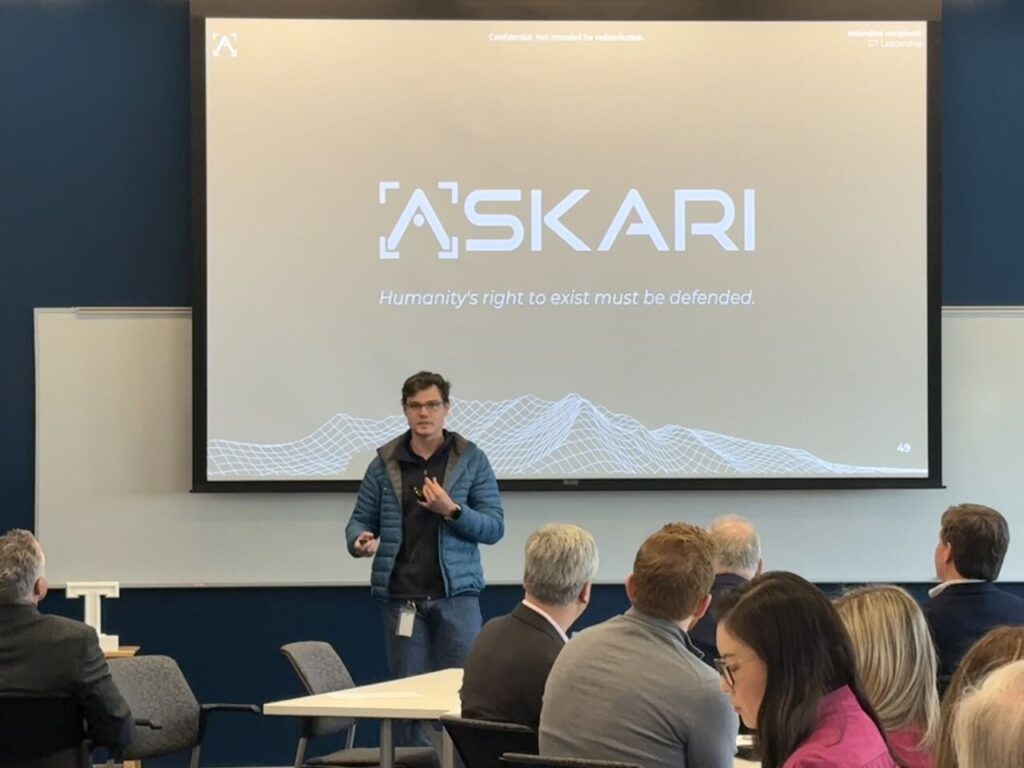
In today’s world, robots seem to be everywhere. Whether they are delivering food or navigating our city streets with autonomous driving, their presence is undeniable. However, there’s a more unsettling aspect to this technological revolution that often goes unnoticed. Atlanta-based entrepreneur Robbie van Zyl highlights this darker side, noting a rising concern: the potential for robotic systems to be used in malicious ways.
Van Zyl, who has been fascinated with robotics for much of his life, now focuses on the implications of these technologies in warfare and terrorism. “The next terror threat will very likely be something that is either enabled by robotics or actually executed by an unmanned system,” he stated in a recent interview with Hypepotamus. This concern is not unfounded. The ongoing conflict between Russia and Ukraine has already shown how unmanned systems, including drones, are changing the dynamics of warfare, influencing tactics and increasing casualties. Closer to home, incidents like the 2024 arrest of a man who attempted to use a drone to attack a power facility in Tennessee underscore the immediate risks associated with these technologies.
The crucial question that arises is whether defensive measures can be implemented before these threats manifest. This is where van Zyl's company, Askari Defense, steps in. Along with co-founders Benjamin Airdo and Marc van Zyl, he is committed to developing an “infrastructure product line that makes a very Terminator-esque outcome impossible.” Askari Defense aims to create low-cost, intelligent kinetic defenses specifically designed to counter robotic warfare threats.
Building For a Safer Future
Askari Defense’s innovative approach includes a range of technologies, such as a fully 3D-printed drone interceptor and a foldable, man-portable interceptor. Their systems rely on thousands of hours of real-world flight data to effectively track and neutralize fast-moving drone threats. However, one critical question looms: how can they ensure that their technology isn’t misused?
Van Zyl emphasizes that the architecture of their systems will help address this concern. By designing the software to distinguish between various target types—such as drones, people, and ground vehicles—they can restrict the use cases for their technology. “We can very much restrict the systems in terms of their use case,” he explained. “It effectively makes our technologies incredibly safe.”
Askari's journey has been anything but linear. Founded in San Francisco, the team relocated to Chattanooga to join Brickyard, a startup incubator, before ultimately settling in Atlanta. All three co-founders are alumni of Georgia Tech, which van Zyl praises as “the greatest institution on planet earth” for its talent, faculty, and infrastructure. Atlanta’s strategic location near national security clients has also played a significant role in their decision to establish a long-term presence in the Southeast.
“We’re really doubling down on the Southeast as being our long-term home,” van Zyl asserted, aiming to position Askari Defense as a top defense company in the region. Acknowledging the existence of “vaporware” in the defense tech sector, he expressed a desire to be the opposite: a company delivering tangible results and reliable products.
As the company scales, it has garnered attention from Southeast-based investors. Prior to its participation in Georgia Tech’s Create-X program, Askari Defense secured pre-seed funding to support its growth. The company is now part of the portfolios of several venture capital firms, including Overline VC, Knoll Ventures, Brickyard VC, and Blackwing Ventures.
Currently operating out of the Biltmore Building in Midtown Atlanta, Askari Defense’s mission is clear: to provide robust defenses against the looming threats posed by robotic systems. Van Zyl’s extensive background, including his role as a propulsion engineer at Skydio and his previous experience at Anduril Industries and UPS, lends credibility and expertise to this ambitious endeavor.
As robotics continue to evolve, the need for comprehensive defenses becomes increasingly critical. With visionaries like Robbie van Zyl and his team at Askari Defense at the forefront, there’s hope for a safer future in a landscape increasingly dominated by automated technologies.
You Won’t Believe What This Celebrity Did—Their Shocking Admission Will Leave You Speechless!
Ex-Soccer Coach from Ohio Charged with 9 Shocking Counts of Sexual Battery—What Happened?

Shocking Study Reveals Forests Hold Key to Saving Our Planet—Are We Ignoring a 1.5°C Crisis?

Wall Street’s Shocking Turn: Why You Could Lose Big If You Don’t Act NOW!

Why Simon Mignolet's Shocking Retirement Will Change Football Forever – You Won't Believe the Details!
You Won't Believe What's Brewing in the Arctic: 5 Shocking Geopolitical Shifts You Must Know!
You might also like: