
Trump's Shocking Announcement: Is the U.S. Really Pulling Out of the Iran War in Just Weeks? Find Out Now!

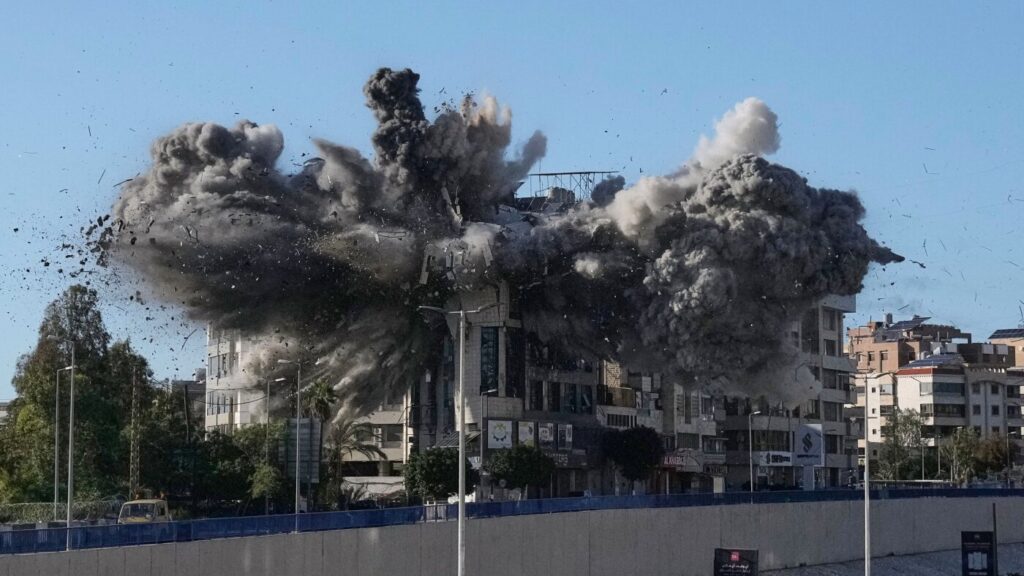
In a dramatic escalation of the ongoing conflict, an Israeli airstrike struck a building in Beirut, Lebanon, resulting in at least seven fatalities, as reported by Lebanon's Health Ministry. This incident is part of a broader regional conflict that has seen significant violence and political repercussions, particularly concerning the U.S. involvement in the Iranian war.
As of Tuesday, President Trump indicated he expected the conflict to conclude within two to three weeks, stating, "we'll be leaving very soon," and assured the American public that gas prices would "come tumbling down." This assertion comes amidst rising tensions, with Trump suggesting he would consider a ceasefire request from Iran, provided they agree to open the crucial Strait of Hormuz, a key maritime passage for oil shipments. However, Iran has rebuffed any claims of negotiating with the U.S., denying making such a request.
In a recent interview with the UK's Telegraph, Trump expressed his frustration with NATO allies who criticized the U.S.-Israeli military actions, hinting at the possibility of withdrawing from the alliance post-conflict. This situation reflects a growing disconnect between the U.S. and its traditional allies, raising questions about the future of international military cooperation.
Meanwhile, Secretary of State Marco Rubio, while defending NATO, indicated that the value of the alliance would need to be "reexamined" after the Iran war concludes. The regional fallout continues, with Israel facing condemnation from European nations for its aggressive military actions in southern Lebanon, particularly against the Iranian-backed militant group Hezbollah. More than 1,300 people have reportedly died in Lebanon since the conflict escalated, with over a million displaced due to ongoing military operations.
The Israeli military claims to have targeted over 400 sites in Iran recently, including air defense systems and a weapons manufacturing facility. Iranian forces have retaliated, launching missile strikes on U.S. military bases in the region, along with attacks on Gulf neighbors. Reports indicate that 14 people, including children, were injured in Israel due to Iranian missile strikes earlier this week.
In a troubling development, American journalist Shelly Kittleson was kidnapped in Baghdad amid rising threats against foreign correspondents in Iraq. U.S. officials had previously warned her about potential dangers. Kittleson, a freelance journalist known for her coverage of Iraq, Syria, and Afghanistan, was in Baghdad on a temporary visa. The State Department confirmed that a suspect tied to an Iranian-backed militia has been arrested in connection with her abduction. Press freedom organizations have condemned the kidnapping, emphasizing the risks journalists face in conflict zones.
On a diplomatic front, British Prime Minister Keir Starmer announced plans for a virtual meeting of 35 nations aimed at discussing how to reopen the Strait of Hormuz. Starmer reiterated that the U.K. would only engage in defensive actions against Iranian threats, emphasizing the challenges ahead in mitigating the war's economic impact on British citizens. Similarly, Australian Prime Minister Anthony Albanese has taken steps to address the rising cost of living due to the conflict, announcing a temporary halving of the fuel tax in an effort to relieve financial strains on Australians.
Iran has made ominous threats against U.S. corporations, accusing them of supporting military actions against Iran. The Iranian Revolutionary Guard has listed 18 American companies, including major names like Nvidia and Boeing, as potential targets, signaling a possible shift in the conflict's landscape. This escalation could have far-reaching implications for American businesses operating in the region.
As the conflict evolves, the humanitarian crisis worsens. The World Food Programme reports that tens of thousands of tons of food aid are currently trapped in ports due to ongoing military actions, exacerbating global hunger and economic instability. The fallout from this conflict is expected to extend beyond the immediate regions involved, with predictions that 45 million additional people could experience acute hunger if conditions persist.
The complexities and dangers of the Middle Eastern conflict continue to unfold, with repercussions not only for the nations directly involved but also for global politics, economics, and humanitarian efforts. As President Trump prepares to address the nation, the international community remains watchful of the developments and their implications for peace and security in the region.
You Won't Believe How Walking Soccer Could Transform Your Fitness Routine—Is It The Next Big Thing?

K-State Women’s Soccer Coach Suspended: What They’re Not Telling You Will Shock You!

New World Toolkit Launch: How Developers Are Cashing in on Bitcoin—Don’t Miss Out on This Goldmine!

DHS's Shocking New Order: What They Don't Want You to Know About National Citizenship Lists!

Why This $100K Job Is Turning Dreams Into Nightmares—You Won't Believe the Secrets!

Luskin's Shocking 'Into the Wilderness' Revival: What You MUST Know Before It Vanishes!
You might also like: