
Is Your Next Smartphone Upgrade the Shocking Device Everyone's Ignoring? Discover What You’re Missing!

Every day, many Americans reach for their smartphones countless times—sending quick replies, checking maps, or searching online. These habitual actions have fundamentally altered how we navigate our lives and work. However, a significant shift in consumer technology is emerging, challenging the need to constantly pick up a device. The question arises: what if you didn’t need to pick up a device at all?
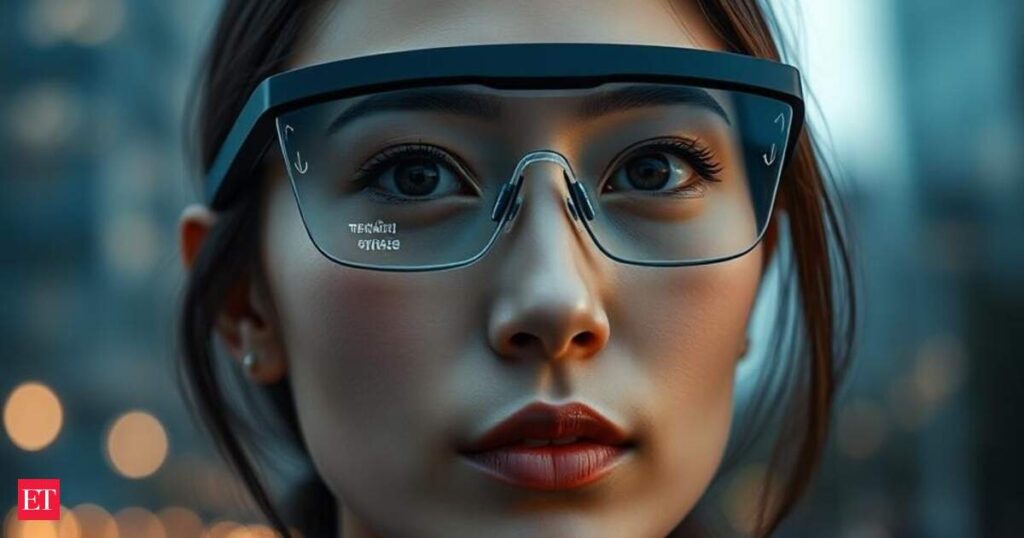
A new wave of technology is on the horizon, propelled by the convergence of artificial intelligence (AI) agents and smart glasses. Each has developed independently, but together, they promise to transform our interactions with digital systems—from screens and typed commands to a more natural and ambient user experience.
📰 Table of Contents
The Evolving Interface
For over a decade, smartphones have seen improvements such as better cameras, faster processors, and sharper displays. Yet, the next leap in technology may not solely rely on hardware advancements but rather on how users engage with this technology. Vineet Shetty, Product & Tech Head (AI/XR) at Kaynes Technology, suggests that “the next wave of consumer computing may not be driven by better smartphones, but by the convergence of AI voice agents and smart glasses.” He emphasizes that the key change lies not in the devices but in the interface itself, moving from touch-driven applications to voice and context-driven systems. “Once that shift happens, the device itself becomes secondary,” he states.
This transition signifies a deeper rethinking of how we interact with technology.
Smartphones heavily depend on touch; every action involves a screen—whether it's opening an app, sending a message, or searching for information. In contrast, smart glasses do not rely on touch. Instead, they utilize voice commands. However, voice commands must be augmented with intelligence for full utility. Shetty points out, “On a phone, your finger is the input. On glasses, voice becomes the input—but voice without intelligence has limited utility.” The distinction is crucial: instead of dictating tasks step by step, users may simply express their needs, allowing the system to understand intent and fulfill requests more intuitively.
Contextual Understanding and Seamless Interaction
Modern AI systems are increasingly adept at understanding context, factoring in elements like location, past behavior, and real-time observations. This capability opens up a new realm of experience for users of wearable technology like smart glasses. For example, directions might appear as subtle overlays during a walk, conversations could be translated instantly, and reminders could surface exactly when needed, all without manual input. The aim is to integrate technology seamlessly into daily life rather than demanding users’ attention.
Moreover, the way information gets displayed is changing as well. Unlike the prolonged viewing of a smartphone, users might experience quick, glanceable updates through lightweight visual cues layered onto their surroundings. Techniques such as optical waveguides—thin, transparent display layers embedded within lenses—facilitate this advancement. Shetty explains, “If voice is the input, this becomes the output layer. It’s designed for glanceable information, not continuous engagement.”
The concept of smart glasses isn’t new, but past attempts faltered due to bulky hardware and limited functionality. Today, however, the landscape is different with technological advancements. AI models are becoming smaller and more efficient, while low-power chips and sophisticated sensors are making wearable devices more practical for everyday use.
Big Tech companies are already gearing up for this shift. Organizations like Meta have launched AI-enabled smart glasses, while tech giants such as Apple and Google invest heavily in AI and spatial computing. The competition now extends beyond just hardware to entire ecosystems. The smartphone era birthed the app economy; smart glasses, if they gain traction, could usher in an AI-driven ecosystem where traditional apps are replaced by intelligent systems that understand user needs.
Despite these advancements, it’s essential to note that smartphones are unlikely to become obsolete overnight. Challenges remain, including issues of battery life, privacy, and social acceptance. The notion of wearing always-on devices that can see and hear raises important questions, as does relying on AI for daily decisions. For many potential users, this transition will require time and adaptation.
As technology continues to evolve, the move towards a more intuitive, context-aware interaction model may redefine our relationship with digital systems. As the convergence of AI and smart glasses progresses, it promises a future where technology seamlessly integrates into our daily lives, allowing us to engage without the constant need for screens.
You Won't Believe the 5 Shocking Snacks Alison Brie Swears By Daily – #4 Will Change Your Life!

Is Canada Next? Shocking Tourism Crisis Looms Amid Rising Costs and Middle East Turmoil! Find Out What You Must Know!

Google Pixel 9's Insane Price Slash to $499—Is Amazon Trying to Clear Stock or Just Teasing Us?

Investors Are Panic-Selling: What NHI's Shocking Move Means for Your Money!
Shocking Price Hikes: Are Your Favorite Tech Gadgets About to Become Unaffordable? Find Out Now!

She Started Social Media at 8—Now a $6M Jury Ruling Says Apps Are to Blame! What Happened?
You might also like: