
3 AI Startup CEOs Reveal Hiring Secrets: Are You Making These Costly Mistakes?

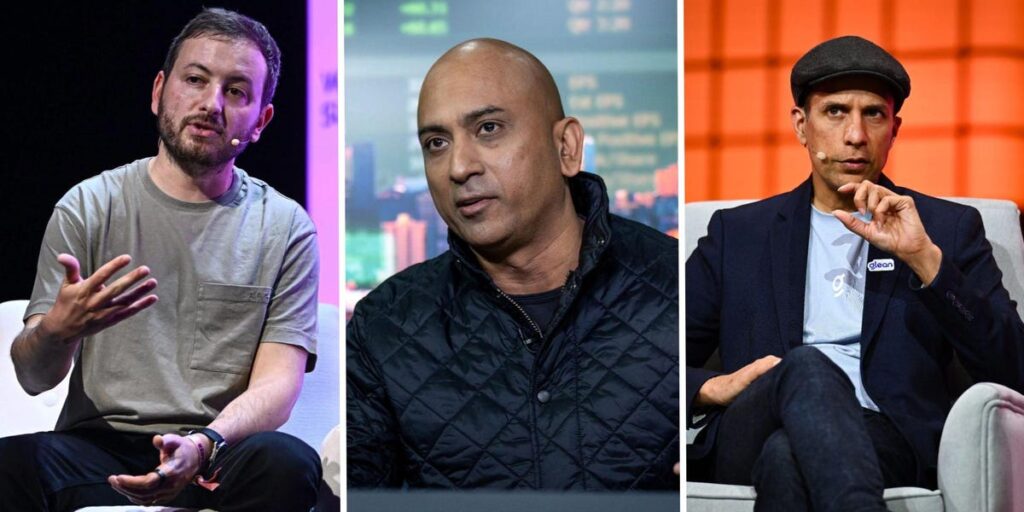
In an era of rapid technological advancement, especially in artificial intelligence (AI), the hiring landscape is undergoing a transformative shift. For many startup CEOs in the AI sector, the emphasis is no longer solely on a candidate's resume but rather on their potential to adapt and thrive amidst constant change. In a recent discussion with Business Insider, three CEOs from AI startups in San Francisco highlighted what they value in candidates and how AI is reshaping their hiring expectations.
With the job market proving increasingly challenging for white-collar workers, these leaders are looking for individuals who are genuinely excited about AI and can demonstrate an eagerness to embrace new tools and technologies. As they build their teams, it's clear that adaptability and curiosity are becoming essential traits for prospective employees.
📰 Table of Contents
Adapting to Change
Arvind Jain, cofounder and CEO of Glean, an AI-powered enterprise search and workplace productivity platform, shared his unique approach to hiring. Jain prioritizes adaptability over specific skill sets. “We rarely hire people for a very specific task,” he explained. “Before adding to our headcount, we always ask whether AI could fulfill that role.” This perspective reflects the broader trend of companies increasingly relying on AI to handle routine functions, prompting a need for employees who can engage with technology and take on varied roles that might evolve over time.
During the interview process, Jain assesses candidates’ familiarity with AI by giving them a challenging task that requires AI assistance. “We want to see if they instinctively turn to AI to solve complex problems,” he said. This method helps distinguish between candidates who are merely proficient and those who are truly innovative in their approach.
Daniel Yanisse, cofounder and CEO of Checkr, a company that leverages AI for background checks, echoed Jain's sentiments on the importance of cultural fit within startup environments. With over 900 employees, Yanisse insists that adaptability is crucial. “People need to be okay with uncertainty and willing to tackle new challenges without too much structure,” he stated.
Yanisse believes that the future of work necessitates a flexible mindset. “Some candidates may resist change, but we need individuals who are excited about what AI can do,” he emphasized. His company has a hybrid work model that encourages collaboration, requiring employees to be in the office at least three days a week. The culture at Checkr also fosters a casual atmosphere—employees often bring their dogs to work.
Passion for AI
Vipul Ved Prakash, the cofounder and CEO of Together AI, a startup focused on enabling developers to train generative AI models, places a strong emphasis on passion over technical qualifications. “We look for excellence, but it doesn’t have to be in a specific domain,” Prakash noted. “We want people who are genuinely interested in AI.” This focus on enthusiasm mirrors a broader trend within the industry, where excitement about AI is seen as a crucial driver of creativity and innovation.
Prakash further explained that his company seeks individuals who are not only dedicated but also eager to make a meaningful impact. “We look for folks who are startup intense, excited about building something consequential,” he said. In this evolving landscape, it’s apparent that the intersection of passion and adaptability is becoming a key criterion for success in the job market.
This shift in hiring criteria reflects a significant trend across the tech sector, as companies strive to remain competitive in a world where AI is increasingly integrated into daily operations. The emphasis on adaptability and genuine enthusiasm for technology indicates a movement away from conventional hiring norms, paving the way for a workforce that is prepared for the challenges and opportunities presented by AI.
As these startups continue to grow and evolve, their leaders are keenly aware that the right hires will not only contribute to their immediate goals but also help shape the future of work in a rapidly evolving technological landscape.
You Won't Believe What Happened to These 7 People—Their Lives Are Changed Forever!
This Surprising Skin Clue Could Revolutionize Dengue Vaccines—Are You Ready for the Shocking Truth?

AGCO’s Shocking White House Move: Could This Transform Valuations Overnight? Find Out Now!

You Won't Believe How India's Smartphone PLI Program Surged Past Targets – What This Means for Your Next Phone!

She’s 94, Looks 75, and Revealed a Shocking Secret That No Dermatologist Has Ever Said—Find Out What It Is!

Iowa's Shocking Tax Hike on HMOs: What This Means for Your Wallet—Don't Miss This!
You might also like: