
Can Tech Save Cardamom Farmers From Losing 70% of Their Crop? The Shocking Truth Revealed!

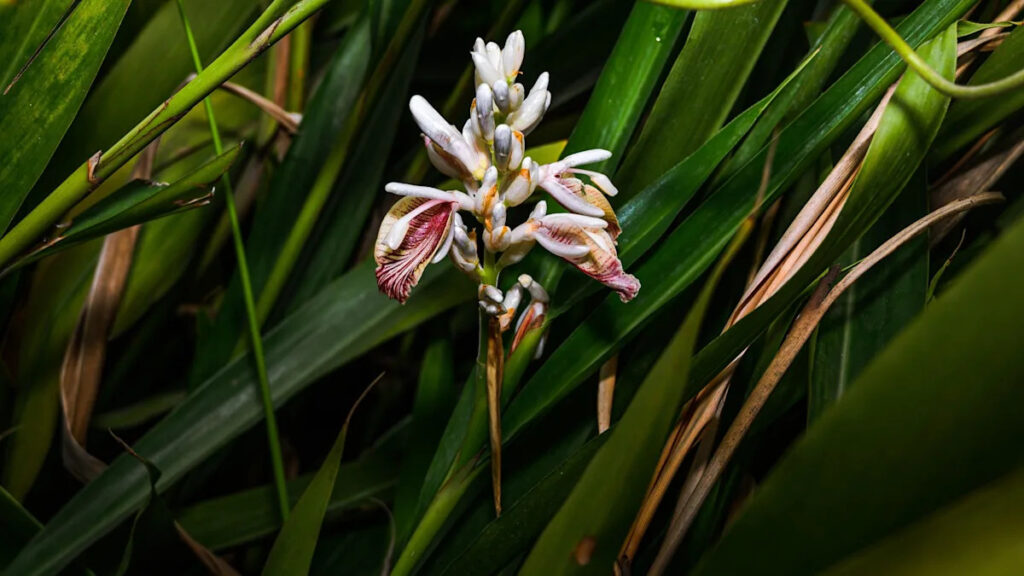
"People often think cardamom is a lucrative crop - it may be. But it's also the toughest crop a farmer can cultivate," says Stanley Pothan, who has been farming cardamom in the southern Indian state of Kerala for decades. Prized for centuries for its complex, aromatic flavor, cardamom is notoriously difficult to grow.
"Cardamom is a very delicate plant - prone to diseases and pest attacks. You have to be constantly in the field, watching every leaf, every flower. It demands attention every single day," Mr. Pothan explains. The plant's sensitivity to weather conditions only adds to the challenges. "Last year's summer was brutal - we lost a significant portion of our crop to the heat. Guatemala, the world's largest cardamom producer, lost almost 60% of its crop that season, and we too suffered badly here in Kerala," he adds.
The repercussions of these challenges have been felt in the global market. Last year, cardamom prices surged by 70% to 1,178 rupees (approximately $13) per kilogram, according to figures from India’s Spice Board. This makes cardamom one of the most expensive spices in the world, typically ranking as the third costliest spice by weight, after saffron and vanilla. While farmers are eager to increase their output, the unpredictable nature of cardamom farming often thwarts their efforts. "One bad summer or unexpected rain can wipe away the entire effort. That's the harsh reality of cardamom farming," says Mr. Pothan.
In a bid to alleviate the burden on farmers, the government-funded Indian Cardamom Research Institute (ICRI) is working to improve farming practices. "Our focus is on crop improvement, pest and disease surveillance, soil management, capacity building, and technology transfer related to cardamom," says A.B. Rameshwari, Director of the ICRI, which operates under the government's Spices Board of India. One of the innovative tools being introduced is a mobile app that allows farmers to monitor soil health and receive tailored recommendations.
"Technology is no longer separate from farming. It is now a daily tool for cardamom growers, from checking soil health on an app to monitoring rainfall and disease alerts on their phones," Dr. Rameshwari explains. Even small farmers are leveraging these digital tools, moving beyond reliance on local advice to actively assess soil quality, moisture levels, and potential disease symptoms right from their fields.
Meanwhile, researchers are focused on developing hardier cardamom varieties. "We are mainly focusing on developing cardamom varieties that are tolerant to major diseases and pests, while also being high yielding and climate resilient," says Preity Chetty, assistant professor at Kerala Agricultural University’s Department of Plant Breeding and Genetics. They have already made significant progress, identifying a cardamom variety that can thrive with limited water supply. Researchers are also delving into the genetic makeup of cardamom, looking for genetic markers that will speed up the breeding of more productive plants. "Unlike other spices, studies on cardamom are limited, especially at the molecular level," Dr. Chetty notes. "There's a lack of molecular markers for reproductive or yield traits, which we are now trying to address."
Once harvested, the pods must be dried, a critical process that has traditionally favored larger farms capable of investing in their own wood-fueled dryers. Smaller farmers often relied on middlemen or neighbors, which could compromise quality. Annu Sunny, founder of the social enterprise Graamya, emphasizes the need for better drying methods: "As cardamom is the queen of spices and a cash crop, many have started cultivation. But it's a very tricky crop. It takes 10 to 12 years to really understand cardamom, how it behaves, what it needs, when to act and when to wait. Every season is like a new experiment," she explains.
To enhance the drying process, Graamya has introduced heat-pump dryers, charging just 10 rupees per kilogram compared to the 14 rupees for traditional wood drying. "The finish of the product is much better, there's no smoke, uneven heating, and the pods retain their natural green color. That's very important because color decides the price," Ms. Sunny adds.
Some farmers are taking an organic approach to cultivation, adding another layer of difficulty. Mathews Geroge, a former banker who switched to farming in 2020, initially struggled with organic methods. "When I first spoke to scientists at the Cardamom Research Institute, they discouraged me, saying cardamom is too sensitive and difficult to grow organically," he recounts. After two years of experimentation and adopting ancient Indian agricultural techniques, he found more success. "Even today, I wouldn't say I've mastered cardamom farming. It's still a challenge. Some seasons are good, some aren't. But now I understand the rhythm of the crop - when to act, when to wait, when to let nature do its job," he explains.
Despite the challenges, Mr. Geroge believes that organic farming can compete with traditional methods. "Sustainable farming begins with reducing input costs. Many farmers think organic means expensive, but if you make your own inputs and understand your soil, you can actually earn better with less dependence on chemicals," he argues.
Labor remains a significant factor in cardamom farming, accounting for about 75% of costs, especially during the harvest season. This skilled work is predominantly executed by women, who possess the expertise to identify ripening capsules. "Harvesting is a skilled job. They may pluck one or two from a bunch and return to the same plant after 45 days for the next round. That's why it's so labor-intensive," Mr. Pothan explains. With limited options for mechanization, especially in tasks like pruning and harvesting, the demand for skilled labor remains high.
As the cardamom industry evolves, both traditional and innovative practices will continue to play crucial roles. "In cardamom, there's no shortcut. You can't automate everything. It's one of those crops that needs both science and soul," Mr. Pothan concludes.
Billionaire Tom Steyer's Shocking Move: Can He Really Oust Newsom and Transform California?

$70 Million Investment in Portland Grain Silos: How Will This Transform the Black Community?

Canada’s Tourism is About to Change Forever in 2026 – Discover the Game-Changing Secrets Now!

Compass Unleashes SHOCKING Allegations Against Zillow—You Won’t Believe What They Claim!

15 Insane Tech Gifts So Unique, They'll Make Your Friends Jealous—Don't Miss Out!

CDC's Shocking Change: Was RFK Jr. Right About Vaccines and Autism? What They Don't Want You to Know!
You might also like: