
Are We Losing a Generation? Shocking Study Reveals 80% of Kids Can't Focus Because of Phones!

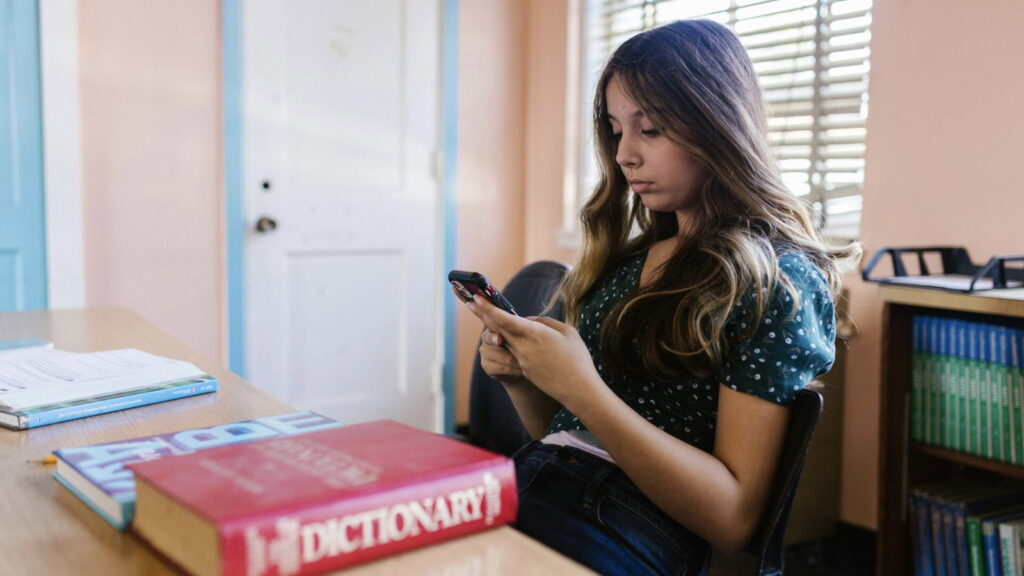
In a sweeping move that reflects growing concerns over smartphone usage among students, over two-thirds of U.S. states have now implemented some form of restrictions or outright bans on cellphones in classrooms. According to recent analysis from CBN, a significant 70% of teachers support such bans during the school day, with 31 states having adopted rules that limit phone use in educational settings.
This trend is underscored by ongoing legislative efforts, such as a bipartisan bill in Michigan that recently passed in the state House and is currently under review in the Senate. In Washington D.C., lawmakers held a U.S. Senate hearing to examine the impact of screens on children, highlighting a nationwide concern that has serious implications for cognitive development and learning outcomes.
Dr. Jared Horvath, a former teacher and cognitive neuroscientist, testified at the Senate hearing, stating, “When tech enters education, learning goes down.” He pointed out that the type of device—whether a phone, laptop, or desktop—does not change its potential negative impact on student learning. “It doesn’t matter who bought it,” he added, emphasizing that even school-sanctioned technology does not guarantee improved educational outcomes. “All of these things are also going to hurt learning, which in turn hurts kids’ cognitive development.”
This issue is not confined to the United States. Sweden has already taken significant steps to combat the detrimental effects of screens in classrooms. Recognizing that the presence of screens can hinder both student engagement and teacher effectiveness, the Swedish government allocated €104 million between 2022 and 2025 to reintroduce printed books into schools, according to IDR.
Emily Cherkin, a faculty member at the University of Washington, echoed Dr. Horvath's concerns during her testimony. “Doesn’t technology make our lives easier and prepare our children for the future? Unfortunately, no,” she remarked, challenging the optimistic claims often made by technology companies. Cherkin pointed out that occupational therapists are now teaching young children the basic skill of turning the pages of a book, while preschool teachers report that toddlers are increasingly reluctant to engage with messy activities. She recounted the story of a teenager who is so addicted to his phone that he seals it in a Ziploc bag and takes it into the shower.
Kim Whitman, co-lead of the organization Smartphone Free Childhood U.S., believes that the current shift toward phone-free schools will be reminiscent of the 1994 federal law banning smoking in schools. “I think in five to 10 years we’ll be asking, ‘What were we thinking?’” she said. Whitman drew a parallel between the negative impacts of both smartphones and smoking, asserting that both are health-harming products that diminish children’s focus, health, and overall well-being.
One psychologist noted a tangible improvement in school environments as students spend less time on their devices: “In the absence of phones, laughter can be heard in the hallways again.” This shift not only fosters a more engaging learning atmosphere but also prioritizes healthy socialization—an essential aspect of growing up that schools should encourage.
As these legislative measures unfold, the conversation surrounding technology in education continues to evolve. The growing consensus suggests a serious reconsideration of how devices are integrated into the classroom, prompting educators and lawmakers alike to seek a balance that maximizes learning while minimizing distractions. The challenge ahead is determining the best path forward that supports students’ academic and social development in an increasingly digital world.
With these legislative moves gaining traction, it remains to be seen how schools across the nation will adapt to a more phone-free environment, and what long-term effects this will have on the future of education.
You Won't Believe What Happens When Access is Denied: Shocking Consequences Revealed!
Is Your New Smartphone Lying? Shocking Truth About Battery Life vs. Price Revealed!

Is Rand Paul Really Serious About a 2028 Run? Shocking 50-50 Prediction Revealed!
Jaguars' Draft Secrets: 3 Shocking Positions They MUST Address to Avoid Total Disaster!

I Baked Every Week for 30 Days—Here’s the Shocking Truth That Changed My Life Forever!

Is Amazon Really Reviving the Fire Phone? You Won’t Believe What’s Behind This Shocking Decision!
You might also like: