
NBA Shocker: Will Seattle’s Last Chance Crumble Under Vegas Pressure? The Clock is Ticking!

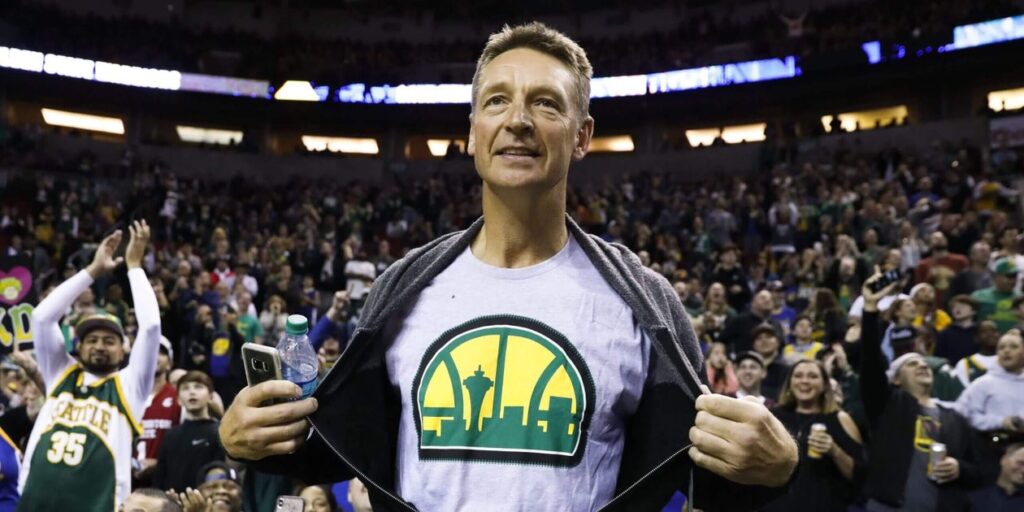
The NBA is set to explore expansion opportunities in two cities: Seattle and Las Vegas. This move, formally authorized by the league’s Board of Governors on Wednesday, could bring the total number of franchises to 32. Both cities have rich basketball histories and fervent fan bases, making them prime candidates for new teams.
The prospect of a team returning to Seattle is particularly significant for many fans. The Seattle SuperSonics were a beloved franchise that relocated to Oklahoma City in 2008, becoming the Thunder after 41 years in the Emerald City. This move is often compared to other historic relocations in sports, such as the Dodgers leaving Brooklyn for Los Angeles. Many still view the SuperSonics' exit as a grievous error, and their return would be seen as a restoration of a lost basketball heritage.
If the NBA moves into Las Vegas, it would signify a culmination of a relationship that has been developing since 2007, when the city hosted the All-Star Game and later established the NBA Summer League. The arrival of a franchise in Las Vegas would follow the establishment of teams from the NFL, WNBA, NHL, and Major League Baseball in the area, marking a significant footprint for professional sports in this entertainment-driven city.
A Brief History of the NBA
The NBA's journey is one of resilience and evolution. Originally, the league emerged from the Basketball Association of America (BAA) in 1946, when arena owners in cities like Boston, New York, and Chicago sought to fill their venues outside of the hockey season. By 1949, the BAA merged with the more established National Basketball League (NBL) to form the NBA, featuring 17 teams, including franchises in cities like Denver and Rochester.
However, the league faced immediate challenges, losing six franchises after its inaugural season. The logistical difficulties of travel and competition for fan interest with other sports made the early years turbulent. Games were often played in small venues, and the quality of play struggled to capture large audiences.
A pivotal moment came in 1954 with the introduction of the 24-second shot clock—a rule initiated by the owner of the Syracuse Nationals, Danny Biasone. This innovation transformed the pace of the game, making it more dynamic and engaging. Following this change, the NBA stabilized, remaining at eight teams for several seasons before expanding further.
Through the 1960s and 1970s, the NBA saw significant changes, including the addition of new teams and the challenges posed by the competing American Basketball Association (ABA). The merger with the ABA in 1976 brought several iconic franchises into the fold, including the Denver Nuggets and San Antonio Spurs, raising the total number of teams to 22.
The NBA continued to grow throughout the 1980s and 1990s, highlighted by the emergence of superstars like Magic Johnson, Larry Bird, and Michael Jordan. Their influence helped elevate the league's profile, making it a staple of American sports culture. By the late 1990s, the NBA had expanded to 29 teams, welcoming international franchises such as the Toronto Raptors and Vancouver Grizzlies.
Since the early 2000s, the league has maintained a stable roster of 30 teams, with the most recent major changes involving franchise relocations rather than expansions. However, the current exploration of expansion suggests a renewed confidence in the market's viability and the potential for growth in burgeoning basketball cities like Seattle and Las Vegas.
The return to Seattle, in particular, has deep emotional ties, with fans holding onto the legacy of the SuperSonics. In 2008, when the franchise departed, the city retained rights to the team's name, logo, and colors, indicating a strong desire to see the team return. The league's potential decision to reinstate the SuperSonics would likely reignite old rivalries and rekindle the passion of basketball fans in the region.
Conversely, establishing a franchise in Las Vegas would take advantage of its burgeoning sports entertainment industry and appeal to a diverse population of residents and tourists alike. The city's successful hosting of major sporting events has demonstrated its capacity to support a professional team, making it an attractive option for the NBA.
In summary, the NBA's consideration of expansion into Seattle and Las Vegas not only marks a possible new chapter for the league but also reflects its evolving landscape. As the sport continues to grow in popularity and reach, the potential return of the SuperSonics and the establishment of a Las Vegas franchise could reshape the future of basketball in America.
Janet Mills vs. Graham Platner: Which Candidate Will Win the Heart of Maine's Female Voters? Shocking Poll Results Inside!

You Won't Believe the 5 Unexpected Stars Shining at Girls Academy Gen. adidas Cup – Find Out Who!

This Unknown AI Stock Plans to Soar to $9 Trillion by 2031—Miss Out and Regret It!

Why This Top Cardiac Surgeon Took a Shocking New Role That Could Change Healthcare Forever!

You Won’t Believe How This Underdog Team Shocked Everyone in Soccer History!

You Won't Believe What This Former Farming College is Turning Into – Shocking Fitness Centre Revealed!
You might also like: