
Is the CDC Now Promoting Trump’s Vaccine Skepticism? Shocking Updates You Can’t Afford to Miss!

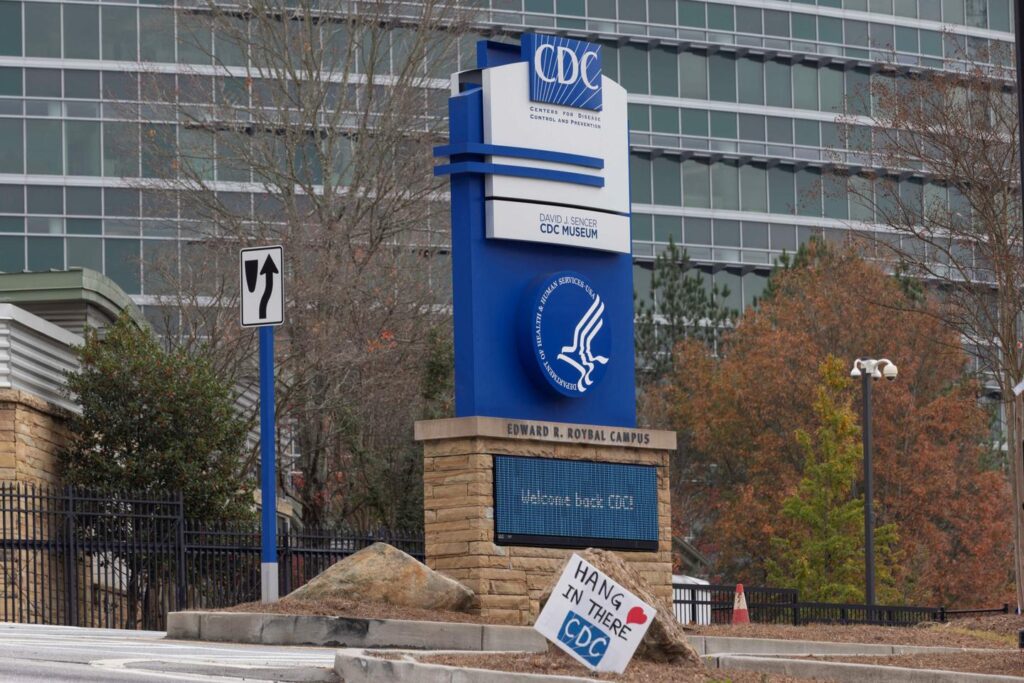
On November 19, 2025, the Centers for Disease Control and Prevention (CDC) made a controversial update to its official website, revising its long-standing stance on the relationship between vaccines and autism. This change has sparked outrage among public health experts and scientists, who have dedicated years to debunking myths linking vaccinations to developmental disabilities.
Previously, the CDC's website asserted that extensive research indicates "no link between receiving vaccines and developing autism spectrum disorder." This statement was backed by numerous high-quality studies, including a comprehensive 2013 CDC study that reinforced the scientific consensus on the safety of vaccines.
However, the recent revision altered this narrative. The updated language now claims that "the assertion 'vaccines do not cause autism' is not an evidence-based claim because studies have not ruled out the possibility that infant vaccines cause autism." The website further asserts that health authorities have "ignored" research supporting a potential link and that the U.S. Health Department has initiated a comprehensive assessment of the causes of autism.
The roots of the vaccine-autism myth can be traced back to a discredited 1998 study that falsely linked the measles, mumps, and rubella (MMR) vaccine to autism. This study was retracted due to fabricated data, and subsequent analyses have consistently refuted its findings. Despite this, anti-vaccine rhetoric has persisted, with prominent figures like Robert F. Kennedy Jr., who serves as the nation's health chief, amplifying these debunked claims.
Amid the backlash, the CDC has retained a header that states, "Vaccines do not cause Autism." Nevertheless, a footnote reveals that this inclusion was a concession made as part of a deal between Kennedy and Bill Cassidy, a Republican senator and medical doctor who chairs the Senate committee overseeing health issues. This arrangement has further fueled concerns among scientists about the integrity of the CDC's messaging.
Public health professionals expressed alarm at these revisions. A CDC union member, speaking anonymously for fear of retaliation, stated, "Staff are very worried and upset about everything happening surrounding vaccines." Similarly, Helen Tager-Flusberg, director of Boston University's Center for Autism Research Excellence, characterized the changes as "terribly disturbing," adding, "I feel like we are going back to the Dark Ages." She emphasized that such shifts undermine scientific integrity and could lead to a resurgence of vaccine-preventable diseases in children.
Demetre Daskalakis, a former CDC director focused on immunization, went so far as to declare, "DO NOT TRUST THIS AGENCY." His resignation earlier this year, prompted by grievances over the agency's handling of vaccine messaging, underscores the internal strife the CDC faces regarding its public health communications.
In contrast, the anti-vaccine advocacy group Children's Health Defense praised the CDC's revisions. CEO Mary Holland expressed gratitude towards Kennedy, indicating that the changes align with the organization's viewpoint.
The implications of the CDC's shift in language are significant. By sowing doubt about the safety of vaccines, critics argue that the agency could inadvertently contribute to vaccine hesitancy, a growing concern in the U.S. where misinformation about vaccines is rampant. According to the World Health Organization (WHO), vaccine hesitancy is one of the ten threats to global health, as it can lead to outbreaks of diseases that were previously under control.
As public health advocates work tirelessly to combat misinformation, the CDC's alterations highlight a troubling intersection of science and politics. With vaccines being one of the most effective tools for ensuring public health, it is imperative for institutions like the CDC to convey clear, evidence-based messages to restore public trust in immunizations.
This situation serves as a critical reminder of the ongoing battle against misinformation in healthcare. As experts call for the CDC to refocus on robust communication strategies grounded in scientific evidence, the potential fallout from this revision could have lasting consequences for public health initiatives aimed at safeguarding children and communities across the United States.
White House SLAMS Democrats Over Shocking Video—What Trump Just Posted Will Leave You Speechless!

You Won't Believe What Happens in HBO's Shocking Season 2 of 'Task' – Here's the Inside Scoop!

NASA's $200 Million Space Telescope is Plummeting! Can This Startup Rescue It Before It's Too Late?

All Time Low's Boston Return: You Won't Believe What They Revealed About Their Sold-Out Show!

Uninsured in Maryland? Act NOW! Gov. Moore's shocking vaccine program could save you a fortune!

Shocking Details Revealed: Which 2025 Men's Soccer Stars Made the All-Academic Team - You Won't Believe Who's Missing!
You might also like: