University Shuts Down Governor Debate Amid Shocking Bias Claims—What’s at Stake for Candidates of Color?

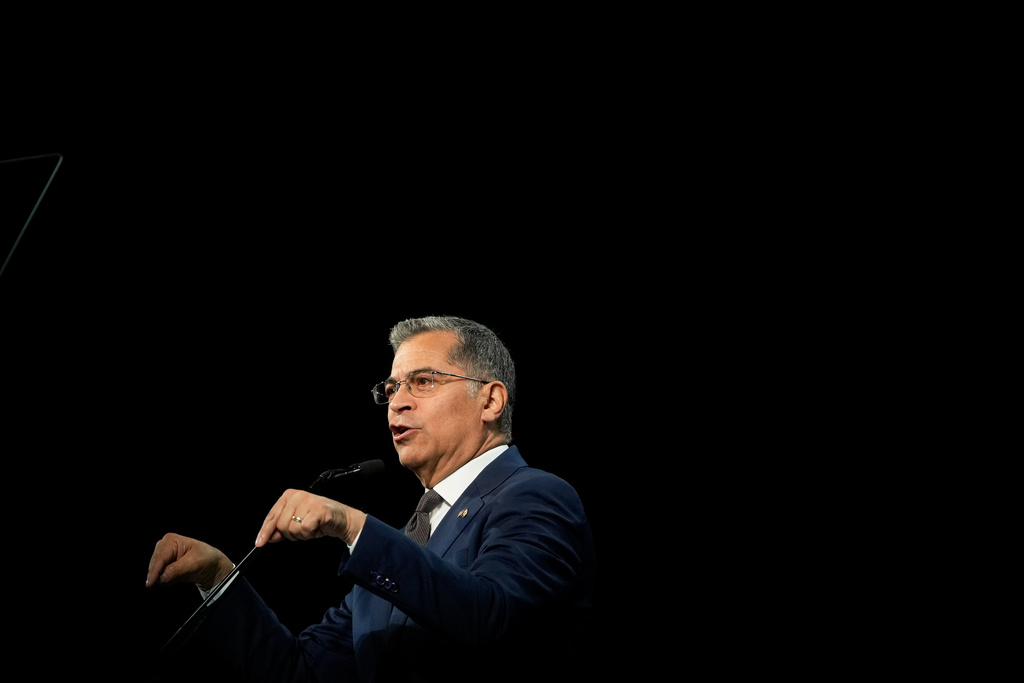
By Sophie Austin, Associated Press
SACRAMENTO, Calif. (AP) — A planned gubernatorial debate hosted by the University of Southern California (USC) has been canceled after accusations of discrimination emerged over the selection criteria for participants. Initially, the debate was set to include five white candidates: Republicans Steve Hilton and Chad Bianco, along with Democrats Tom Steyer, Katie Porter, Eric Swalwell, and Matt Mahan. Notably absent from the roster were four prominent Democratic candidates of color: Antonio Villaraigosa, Xavier Becerra, Betty Yee, and Tony Thurmond.
The controversy intensified as the candidates of color accused the university of systemic bias in its selection process. While USC defended its criteria, stating that they were developed by a public policy professor based on polling and fundraising metrics, the backlash prompted a reconsideration of the debate format. A group of 50 public policy and social science scholars publicly supported the professor’s methodology in a letter to USC’s president, emphasizing the importance of maintaining academic independence from political pressure.
However, after discussions between USC and debate co-host KABC-TV failed to reach a resolution, the university announced the cancellation late Monday. They acknowledged that the debates had become a distraction from critical issues that voters care about, despite asserting that their selection formula was data-driven and widely supported in academic circles.
This cancellation follows a call from Rusty Hicks, chair of the California Democratic Party, urging candidates to reassess their viability in the race. As the June 2 primary approaches, with ballots going out in early May, a recent poll commissioned by the party showed Hilton, Porter, Bianco, Swalwell, and Steyer closely competing, while others lagged behind. Hicks warned that Democrats risk being locked out of the general election under California’s unique top-two primary system, which allows only the two highest vote-getters to advance, irrespective of party affiliation.
The criticism surrounding the debate primarily focused on Mahan's participation, particularly as he entered the race later than many of his rivals but secured significant funding from affluent donors in Silicon Valley. In an interview, Mahan expressed disappointment over the debate's cancellation, advocating for broader participation among candidates to better promote democracy.
The escalation of the controversy came after legislative leaders, including those from the Black and Latino caucuses, publicly demanded that organizers broaden the debate's candidate field. They called for a boycott of the event if USC did not rectify the situation, urging voters to seek alternative methods to learn about the various candidates running for governor.
Villaraigosa, a former mayor of Los Angeles, welcomed the cancellation, stating, “USC made the right call, even if it came late and under pressure.” His remarks highlight a growing discontent regarding inclusivity in political discourse, particularly in a state as diverse as California.
This episode underscores not just the complexities of the gubernatorial race but also the broader implications of representation within political debates. As candidates navigate their paths to the primary, the conversations surrounding inclusion and fairness are likely to resonate well beyond this immediate controversy, shaping voter expectations and candidate strategies in future elections.
You Won't Believe How Hawaii's Luxury Real Estate Market Is Changing—Dina Singer Reveals Shocking Truths!

Unlock the Secret to Outdoor Survival: 5 Shocking Foods You MUST Carry or Risk Disaster!

Cleveland Browns' Bold Free Agency Moves: Are They About to Shock the NFL Draft? Find Out!

Governor's Race Takes a Dark Turn: Debate Canceled—What Shocking Polls Reveal!
You Won't Believe How Cal Poly Pomona’s Sydney Nelson Shocked Everyone with Her All-American Win!
Israeli Startup Shocks Europe: Unveils Game-Changing Anti-UAV Tech—What They Discovered Will Leave You Speechless!
You might also like: