You Won't Believe What This Controversial Columbus Statue Near the White House Reveals!

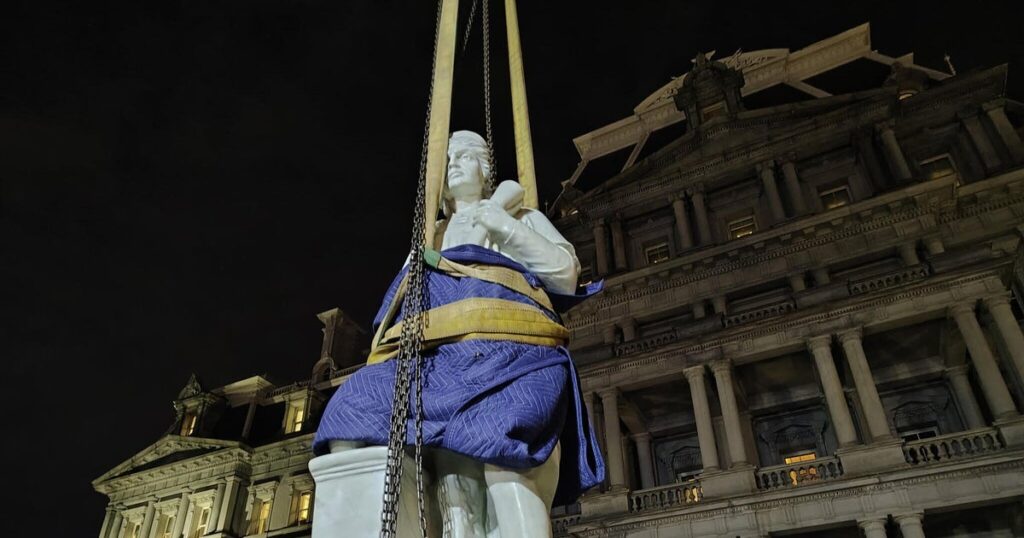
A statue of Christopher Columbus has recently been installed at the Eisenhower Executive Office Building, located adjacent to the White House. This move by the Trump administration marks an attempt to honor the controversial explorer, whose legacy has faced increasing scrutiny in recent years.
The statue in question is a replica of one that was unceremoniously tossed into Baltimore's harbor in 2020 amidst widespread protests against institutional racism. During these protests, many viewed Columbus as a symbol of the oppressive forces that led to the genocide and exploitation of Indigenous peoples in the Americas. In a statement posted on X (formerly Twitter), the White House declared, "In this White House, Christopher Columbus is a hero, and President Trump will ensure he's honored as such for generations to come."
President Trump has long endorsed a traditional view of Columbus, celebrating his 1492 voyage as the beginning of European presence in the Americas and the establishment of the modern economic and political order. However, the narrative surrounding Columbus has shifted significantly in recent years. Increasingly, he is seen as a primary figure in the violent conquest of New World resources and the oppression of its native populations.
"We are delighted the statue has found a place where it can peacefully shine and be protected," stated John Pica, president of the Italian American Organizations United. This organization owns the statue and agreed to loan it to the federal government. The statue, primarily made of marble, was created by Maryland-based sculptor Will Hemsley.
The original statue was toppled by protesters on July 4, 2020, following the death of George Floyd. This act was part of a broader movement to reevaluate historical figures and their impact on society, leading to the destruction or removal of several Columbus statues across the nation.
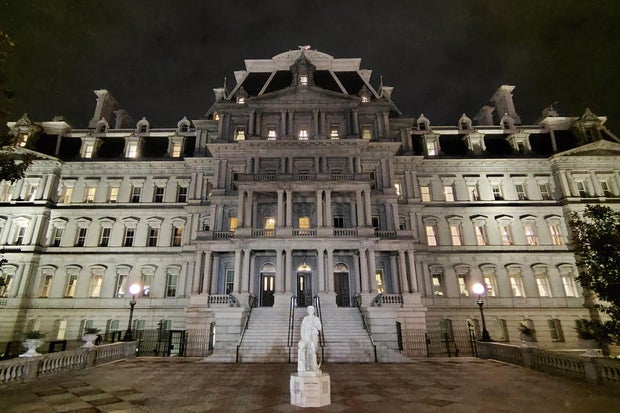
Maryland House of Delegates member Nino Mangione, who was involved in efforts to recover the statue from Baltimore's harbor, expressed enthusiasm over its new location. "It is a thrill and an honor to see his likeness in Washington, D.C., where millions can see it and reflect on his contributions to the United States of America," Mangione stated. He criticized those he referred to as "haters and screamers who want to silence our voices" and urged them to recognize the lasting legacy of Columbus.
In recent years, many municipalities and institutions have replaced Columbus Day with Indigenous Peoples Day as a means of recognizing the contributions and histories of Indigenous communities. Notably, President Joe Biden became the first U.S. president to issue a proclamation marking Indigenous Peoples Day in 2021, reflecting a growing shift in societal values.
Trump has framed the reevaluation of Columbus as a byproduct of "left-wing arsonists" attempting to distort history. Last April, he articulated his intention to revive Columbus Day, asserting that "I'm bringing Columbus Day back from the ashes." He lamented what he sees as a concerted effort by Democrats to undermine Columbus's legacy and, by extension, the Italian American community that holds him in high regard.
The placement of the Columbus statue at a prominent U.S. government site raises questions about how society grapples with its history. While some view Columbus as a pioneering figure, others see him as a symbol of colonialism and oppression. This dichotomy reflects broader cultural and political divides in America today, as various groups continue to negotiate how history is remembered and celebrated.
Bitcoin's Surprising Stability: Is Now the Last Chance to Invest Before a Market Meltdown?
Experts Warn: White House's AI Guidance Could Endanger Your Free Speech—Find Out How!

Is Your Team Ready? Shocking NFL Draft Predictions That Could Change Everything in Just 30 Days!

Shocking Replica of Controversial Baltimore Statue Appears Near White House—What Happens Next?

Sina Ruppenthal's Shocking Guinness Record: How She Defied All Odds by Throwing 10 Men!
Access Denied: The Shocking Truth About What Happened to 1,000 Users Last Night!
You might also like: