
The Shocking Truth: Why 90% of Smartphone Brands Abandoned SD Cards—And What It Means for You!

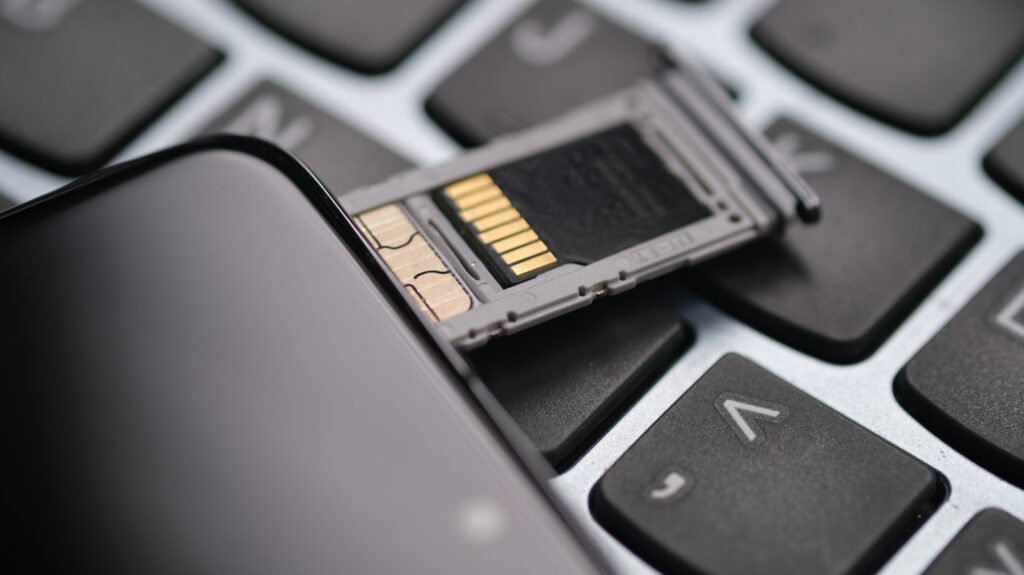
In the ever-evolving landscape of smartphones, the absence of microSD card slots has become a defining trend that many consumers may not have fully realized. Once a staple feature in nearly all Android devices, these slots allowed users to enhance their device's storage capacity easily, a much-needed function in an era when many phones came equipped with just 8 or 16 GB of internal space. However, as we progress into 2023, the landscape has shifted dramatically, leaving many to wonder: when did smartphone brands stop supporting microSD cards?
📰 Table of Contents
Decline of microSD Card Slots: A Gradual Shift
The trend of phasing out microSD card slots began over a decade ago, with reports tracing the disappearance back to as early as 2015. That year marked a pivotal moment when Samsung removed the slot from its Galaxy S6 series devices. Although the company reinstated the feature with the Galaxy S7 in 2016, it ultimately made the controversial decision to eliminate it entirely from its flagship Galaxy S21 series in 2021.
Other manufacturers have followed suit. Huawei eliminated expandable storage in its flagship Mate series starting with the Mate 70 lineup at the end of 2024, and its Nova series also lost this capability with the launch of the Nova 6 in 2019. Meanwhile, Motorola's flagship Edge series ditched the slot in 2021 with the release of the Edge 20 lineup, although some of its budget Moto G series still retain a hybrid slot that supports expandable storage.
The trend is particularly noticeable in the high-end segment of the market. For instance, prominent models such as the Samsung Galaxy S26 series, Motorola Razr Ultra (2025), OnePlus 15, and the Nothing Phone 3 have all opted to forgo microSD card slots entirely. With the exception of some brands like Sony, which still includes these slots in its flagship models, the vast majority of premium smartphones appear to be moving in the same direction.
Why the Shift Away from MicroSD Cards?
The decision to remove microSD card slots has left many consumers questioning the rationale behind it. Two primary reasons stand out: technological advancements and profitability.
Firstly, many smartphone manufacturers argue that the external microSD cards cannot compete with the speed of modern UFS flash storage found in current devices. Although the microSD Express standard promises speeds comparable to SSDs, manufacturers appear reluctant to reinstate these slots. The second and perhaps more significant factor is profit. By eliminating expandable storage options, brands can encourage consumers to upgrade to models with larger built-in storage capacities, a move that can significantly boost revenue.
For instance, Samsung charges $200 to upgrade from 256 GB to 512 GB on the Galaxy S26 Ultra, while Apple similarly charges $200 for a 256 GB storage upgrade on the iPhone 17 Pro. Without the option for a microSD card, users are more likely to opt for higher storage tiers at the time of purchase, as they face the pressure of limited space for apps, photos, and videos.
The practical implications of this trend are noteworthy. Consumers find themselves in a position where they must either pay a premium for built-in storage or face the limitations imposed by lower storage options. While external SD cards once provided a cost-effective solution for expanding storage, their disappearance signals a shift toward a model where consumers are nudged into making larger initial investments.
For many users, particularly those who rely heavily on their devices for photography, videography, or extensive app usage, the decision to drop support for microSD cards can be frustrating. What was once a hallmark of flexibility and personalization in smartphone ownership is now becoming a relic of the past. The trend raises questions about consumer choice and the balance between technological advancement and profit-driven strategies in the smartphone market.
As the industry continues to evolve, it remains to be seen whether the return of microSD card slots will be possible or whether consumers will need to adapt to a world where storage is fixed and dictated by manufacturers. In the meantime, users should consider their storage needs carefully when investing in a new smartphone.
Access Denied? Discover the Shocking Truth Behind 87% of Users Missing Out on This Secret!
NASA's Shocking New Rule: Astronauts Can Now Bring Smartphones to Space—What Will They Share First?

Providence Customers in Health Insurance Chaos: 80% Could Lose Coverage—Are You One of Them?

Parents Are Skipping More Than Just Vaccines—Shocking Stats Reveal 70% Avoiding Vital Newborn Care!

Bitcoin Crashes While SIREN Skyrockets 300%—Are You Missing Out on This Explosive Trend?

Could France’s Municipal Elections Spell Disaster for the Far-Right Ahead of 2027? Shocking Predictions Inside!
You might also like: