
Could France’s Municipal Elections Spell Disaster for the Far-Right Ahead of 2027? Shocking Predictions Inside!

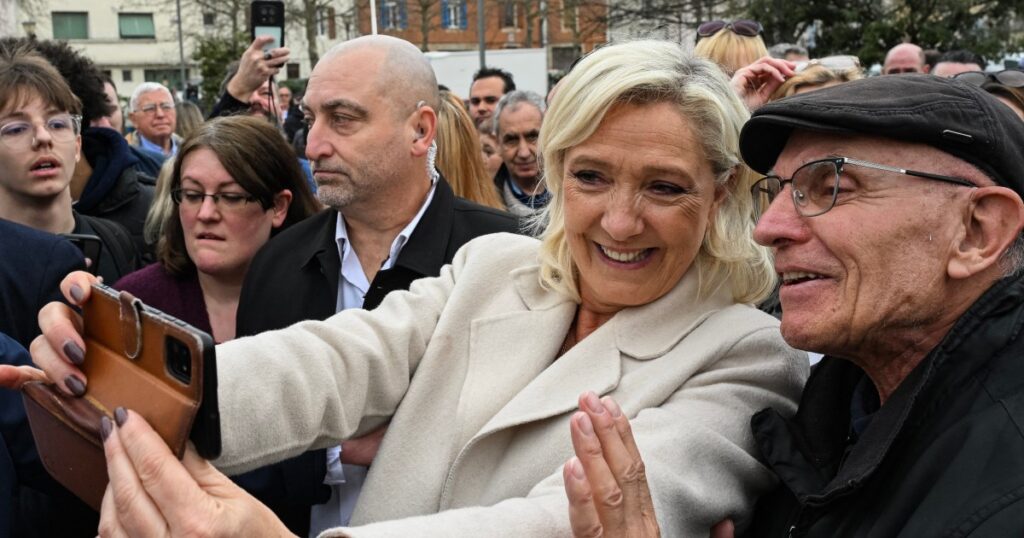
French voters went to the polls on Sunday to elect mayors in key cities such as Paris and Marseille, as well as over 1,500 other municipalities. This election serves as a significant test of the far right’s strength in France and the resilience of mainstream parties as the country approaches the presidential election next year.
In France, mayors hold a unique position as the most trusted elected officials in the country, presiding over nearly 35,000 municipalities ranging from bustling urban centers to tiny villages. Many mayors secured enough votes to win outright in the first round of voting; however, the most contentious races in major cities like Paris and Marseille are headed for runoff elections.
Marseille, France's second-largest city, has become a focal point in the electoral battle, with the incumbent Socialist mayor facing off against the far-right National Rally (RN). In Paris, polls indicate a closely contested race, with either the conservative or leftist candidate being within the margin of error for victory.
Voting commenced at 8 a.m. local time (3 a.m. ET) and was set to conclude between 6 p.m. and 8 p.m. Results were expected to trickle in throughout the evening. By midday, voter participation was reported at 20.3%, which is approximately 1% higher than the first round a week earlier, according to the Interior Ministry.
📰 Table of Contents
Far-Right Challenge
The RN, which is known for its anti-immigration and euroskeptic stance, has faced challenges in making substantial gains in municipal elections. While the party managed to retain several positions in the first round, it did not achieve major victories outside its traditional strongholds in the south and north of France.
Political analyst Anne Muxel, a research director at Sciences Po University, stated, “It’s true that these 2026 municipal elections do not mark a landslide for the National Rally—far from that. But it stands to confirm its territorial integration in France.” The RN's hope of capturing a significant city like Marseille dimmed when hard-left candidate Sébastien Delogu from France Unbowed (LFI) withdrew from the second round to prevent splitting the left's vote.
Meanwhile, in Nice, a city on the French Riviera, a close ally of Marine Le Pen's RN, the renegade conservative Eric Ciotti, appears poised to win against a candidate backed by the center.
Voter sentiments in Marseille reflect a divide. Alain Faiola, 71, a retiree from the city, expressed his intent to vote for the RN, citing dissatisfaction with the current administration: “I want change. Marseille has gone downhill since this mayor has been in office.” Conversely, Nezha Bourray, 26, a first-time voter who recently acquired French nationality, stated, “We voted for the left, logically. Their program interested us more, and we prefer to block the far-right.”
Paris in the Balance
In Paris, where the left has maintained control since 2001, the Socialist candidate, Emmanuel Gregoire, led in the first round. However, a far-right candidate’s decision to withdraw from the runoff has created a tight race that could see Rachida Dati, a conservative former interior minister, potentially wrest control from the left. Malika Sif, 58, who voted for Gregoire in the city’s 18th district, remarked, “I refuse to vote for the extremes. I prefer consensus and balance.”
The municipal elections primarily focus on local issues and often do not predict outcomes for national elections, such as the presidential race scheduled for April 2027. However, they do reveal trends in voter preferences and potential alliances in an increasingly fragmented political landscape.
The impact of alliances—or the lack thereof—between the first and second rounds of elections remains a pivotal question. Recent negotiations among local parties have highlighted divisions on the left. In some cities, such as Lyon and Toulouse, the Socialists have forged alliances with their hard-left rivals from LFI, while in others like Marseille and Lille, no such agreements have been reached. LFI has traditionally struggled in local elections but is focusing more on them this time around.
“We can clearly see that, because of the relatively good performance of France Unbowed in the municipal elections, this party and its leader Jean-Luc Mélenchon are regaining influence in determining the balance of power on the left,” Muxel noted.
Jon Jones Shocks Fans: UFC Refuses $15 Million for White House Showdown—What Happens Next?

Valerie Cherish’s Shocking Return: Can 'The Comeback' Survive a 10-Year Hiatus? Find Out Now!

Mass. Health Aide Program Cuts: Are You Ready for a $1,000+ Monthly Loss? Find Out Why!

You Won't Believe How One Priest's Shocking Move Changed the Game for Washington State!

Shocking 28-Point Defeat: What Went Wrong for Miami (Ohio) Against West Virginia?

Bears Are Breaking Into Backyards Early—Is Your Home Next on Their Buffet List?
You might also like: