
Seniors Are Unlocking Hidden Tech Secrets—Find Out How They’re Winning This Holiday Season!

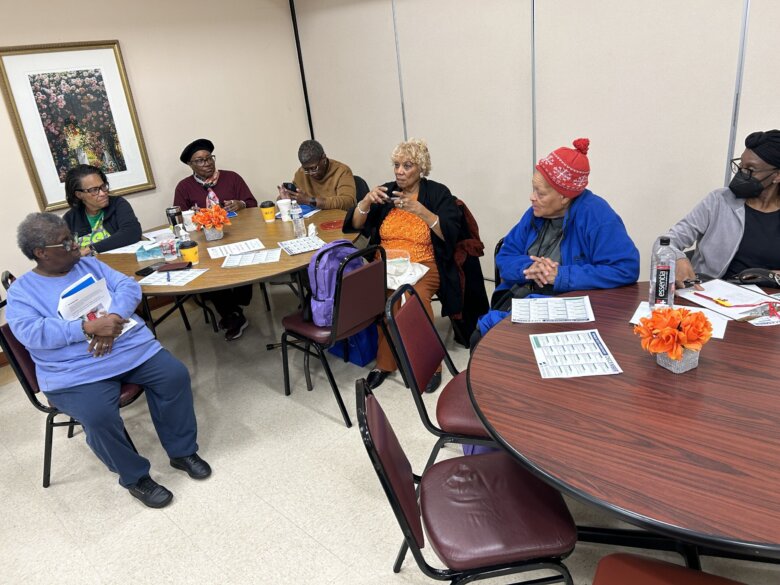
As the holiday shopping season approaches, a crucial initiative in Washington, D.C. aims to equip seniors with the necessary skills to navigate the increasingly digital marketplace safely. Recognizing the heightened risks of scams during this time, the city has ramped up its technology classes designed specifically for older adults. On Wednesday, Adrian Sutton, the digital inclusion coordinator with D.C.’s Office of the Chief Technology Officer, led one such session at the Model Cities Senior Wellness Center in Northeast D.C.
Before the class even began, Sutton was met with a flurry of questions from eager attendees. Participants sought clarity on topics ranging from the unpredictable timing of software updates to personal anecdotes about resetting devices. Sutton engaged the seniors by asking them to differentiate between hardware and software, prompting them to describe what a download is without using the term itself. This interactive approach highlights the importance of understanding fundamental concepts in technology.
One of the key focuses of Wednesday’s session was cybersecurity, particularly the importance of using credit cards exclusively for online transactions. Sutton emphasized, “We want to make sure that they learn about these scams. How to protect themselves from these scams, and to know that everyone kind of gets scammed, so it’s OK to share stories about your scam attempts.” This open dialogue fosters a supportive learning environment, crucial for seniors who may feel isolated in their experiences with technology.
Seniors like Barbara Height, who has worked on computers her entire life, expressed the challenges they face as technology evolves. “I come to this class and learn it all over again,” Height said. “Because they’ve got too much new stuff than what it was I was working with.” Similarly, Carol Arledge-Clomax, a former D.C. government employee, shared her own journey, noting that though she had to adapt to new technology in her career, she still prefers writing paper checks and has reservations about online banking. “I try to keep abreast of scams,” Arledge-Clomax added, recounting close calls with fraudulent attempts, including one involving a seemingly legitimate Amazon customer service number.
The class also featured a video on “spoofing,” a scam technique where caller ID information is manipulated to make it appear as though a familiar number is calling. This kind of practical information is vital as fraudsters become increasingly sophisticated. Sutton advised participants to monitor their online banking apps closely and set transaction alerts to catch any unauthorized activity promptly.
Stephen Miller, D.C.’s Chief Technology Officer, reinforced the message that vigilance is key during the holiday season. “Think before you click,” he urged. “Realize that sometimes the best possible deal in your mailbox might not be real. If something looks to be too good to be true, sometimes it’s just not true.” This proactive approach is integral for seniors who may be more vulnerable to online scams.
Sutton's classes are part of a broader effort by the city to enhance digital literacy among older adults, an initiative that acknowledges the unique challenges this demographic faces in an increasingly digital world. As technology continues to evolve, such educational programs serve as a lifeline for seniors, empowering them to engage safely with the online marketplace.
In a time when scams are prevalent and technology is ever-changing, the importance of these classes cannot be overstated. They not only provide essential skills but also foster a community where seniors can learn from each other, share their experiences, and feel less isolated in their technological journeys.
As the holiday season approaches, these lessons in cybersecurity may prove invaluable, helping seniors navigate their online shopping experiences safely and confidently.
Discover the 5 Stocks Set to Skyrocket in 2026—And the 5 You MUST Avoid to Protect Your Wealth!
You Won't Believe What Happens When You Try to Access This Website Without Updating Your Browser!

You Won't Believe What Lower-Middle-Class Families Do at Thanksgiving That Shocks the Upper Class! 8 Secrets Revealed!

US Startup Shock: Indian CEO Claims Role—But Here's the Dark Truth Behind the Gaslighting!

Is CoStar Group’s 12% Share Plummet a Sign of Disaster? Investors Are Shocked! Discover Why!

Stock Market Shock: Is This 20% Dip Your Last Chance to Grab This UK Gem Before It Soars?
You might also like: