
You Won't Believe What 5 Gay Fitness Experts Discovered About Building Muscle for Bears!

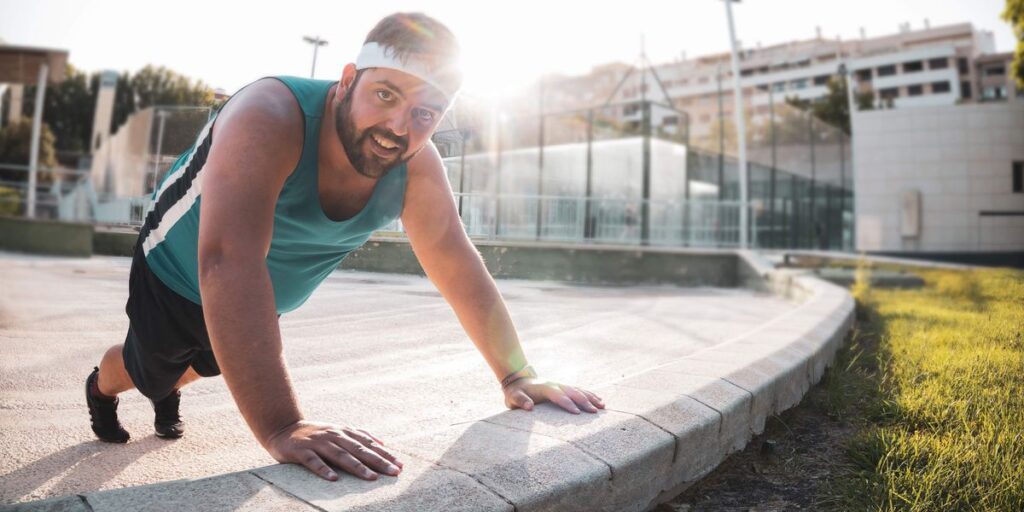
Bear culture, a vibrant subculture within the LGBTQ+ community, traces its roots back to 1979, when the term was popularized by The Advocate in an article titled "Who's Who at the Zoo?” by George Mazzei. Since then, the bear community has flourished, developing its own identity complete with events, cruises, and even a flag. Today, an extensive vocabulary has emerged, distinguishing various types of bears: “cubs” (younger, often smaller bears), “otters” (slimmer and less hairy), and “grizzlies” (larger and usually dominant bears). Surprisingly, there are also “lesbian bears” who add further diversity to this rich culture.
For many in the bear community, the iconic larger body is a point of pride. However, some are looking to gain strength and definition while maintaining their signature bulk. Joe Ghafari, a personal trainer and co-founder of the premium LGBTQ+ fitness retreat Visiting Wrld, emphasizes that the bear aesthetic celebrates “power and presence” rather than the typical shredded fitness model look. “To get that definition without losing the ‘bulk,’ you have to focus on body composition rather than just chasing a lower number on the scale,” he explains. Achieving this means prioritizing strength training to build dense, functional muscle while maintaining a slight caloric buffer to avoid leaning out too much. “It’s about being ‘solid,’ not ‘skinny,’” he adds.
Ghafari’s insights align with those of Cole Francum, a gay Nike trainer and coach at Session Training in New York City. Francum stresses that gaining muscle requires not only strength training but also adequate nutrition to repair muscle damaged during workouts. “Eating enough protein is essential for repairing muscles,” he notes. “And don’t fear carbs—they fuel heavy lifts and help muscles look 'full' because they store water in muscle tissue.”
📰 Table of Contents
Nourishing the Bear
To build muscle while retaining the softness beloved by many bear admirers, careful attention to diet is crucial. Ghafari likens proper nutrition to an “insurance policy” for the hard work put into training. “You cannot live in a massive calorie deficit if you want to keep muscle growing while maintaining your size,” he advises. He suggests consuming between 0.7 to 1.0 grams of protein per pound of body weight to promote muscle growth, while ensuring a balance of carbohydrates and fats for a well-rounded diet.
As Francum elaborates, many people mistakenly focus on eating in a calorie deficit to slim down. But for bears aiming to gain muscle without forfeiting their characteristic mass, maintaining or entering a calorie surplus is essential. “Bears typically identify by their size or shape,” he points out, making it important for them to prioritize adequate caloric intake.
Realizing Results
For those committed to this fitness journey, the results can be gratifying. Initial strength gains may be felt within weeks, but visible changes in body composition typically take longer. “Real structural change, where your clothes fit differently and your muscles look ‘fuller,’ usually takes about 8 to 12 weeks,” Ghafari explains. It’s important to remember that fat loss and muscle gain are not linear processes; individuals should focus on long-term trends rather than daily fluctuations on the scale.
Francum adds that newcomers can generally expect to see noticeable results within their first six to eight weeks of commitment to strength training, especially if they work out three or more times a week. However, more advanced individuals may experience smaller incremental changes over time, emphasizing the need for performance measurement and tracking.
Building a Bear Workout
To achieve the desired physique, both Ghafari and Francum recommend incorporating compound lifts that engage multiple muscle groups. Francum suggests routines that include push, pull, squat, hinge, rotation, counter-rotation, and carry elements to maximize efficiency and results. Basic exercises such as squats, deadlifts, bench presses, overhead presses, and pull-ups are essential. He also recommends doing hypertrophy supersets, alternating between upper and lower body exercises for balanced muscle development.
According to Ghafari, focusing on big, compound movements is vital for developing that iconic bear frame. Key exercises include:
- Barbell Bench Press: Essential for a thick, wide chest.
- Overhead Press: Crucial for "boulder shoulders" and a broad upper-body silhouette.
- Deadlifts: Necessary for total body power and a strong posterior chain.
- Barbell Rows: Important for depth and width in the back.
- Weighted Lunges or Squats: Fundamental for building sturdy legs.
- Dips: Great for developing triceps and achieving that filled-out look in a t-shirt.
If a gym isn’t accessible, Ghafari emphasizes that strength can still be achieved at home through a variety of bodyweight exercises. Push-ups, pull-ups, and Bulgarian split squats can be effective alternatives, and he encourages individuals to maintain progressive overload to ensure workouts remain challenging.
For the bear community, embracing fitness while holding onto their identity is not just about aesthetics but also about empowerment and vitality. As the culture continues to evolve, so does the understanding of strength—something that many bears are now redefining on their own terms.
Why Berlin is Stunned by This Shocking 2023 Election Result—You Won't Believe the Fallout!

Bitcoin Surges Past $70K Again—Is This the Start of a Massive New Bull Run or Just a Trap?
Nevada's Shocking Move: Why March 20 Will Change Everything for Persian Culture!
Is Taylor Frankie Paul's 'Bachelorette' Casting a Risky Move That Could Change Everything? You Won't Believe the Fallout!
Parents Are Ditching Newborn Vaccines: Discover the Shocking Consequences You Won't Believe!
You Won't Believe These 13 Game Day Snacks Are Perfect for One-Handed Eating—Your Friends Will Be Jealous!
You might also like: