
Virginia's Redistricting Vote: Could It Flip Control? Democrats Are Panicking!

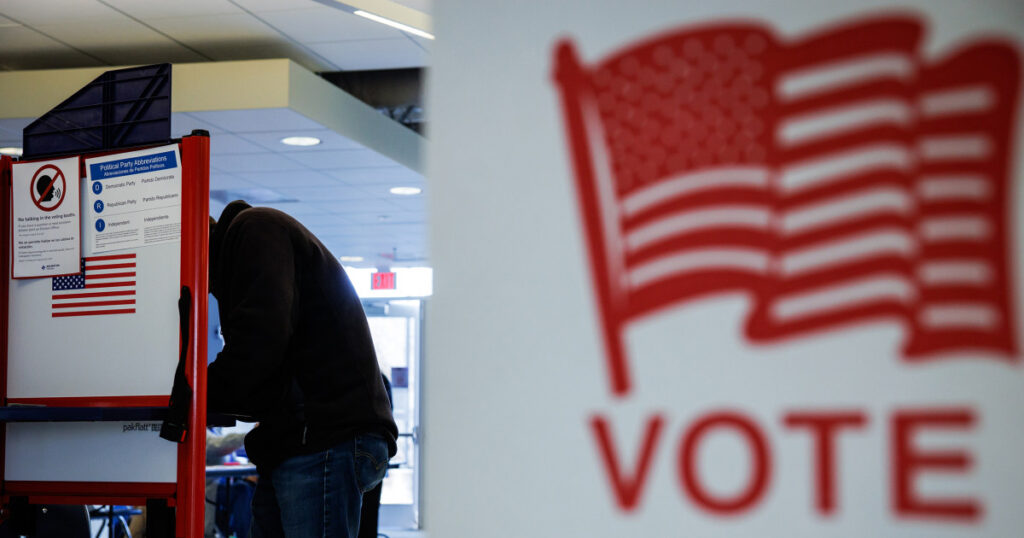
As Virginia gears up for a special election focused on redrawing the state’s congressional map, unease is creeping into the ranks of the Democratic Party. Just a month away from the vote, some Democrats are beginning to worry about the referendum's prospects despite holding significant fundraising and ad spending advantages.
Following last fall’s elections, in which they flipped the governorship and expanded their majority in the state House, Virginia’s Democrats entered 2026 with considerable momentum. However, as the April election approaches, the political landscape in Virginia is proving to be more complex than anticipated. Unlike California, where voters recently approved a similar redrawn map, Virginia is a purple state—one where voters may be less inclined to support a gerrymandered map that benefits one party over another.
Some supporters of the Virginia referendum are acknowledging the challenges of persuading voters to back a map that seems unjust, especially since Democrats have criticized Republicans in the past for similar actions. “It’s not a done deal by any means,” said Rep. Don Beyer, D-Va. “We have to effectively make the case that even though this seems unfair in Virginia, it’s totally fair for America, for those of us who believe that taking back the House is the most significant thing we can do to stop Donald Trump.”
The proposed map has the potential to allow Democrats to gain as many as four of the five congressional seats currently held by Republicans in the upcoming fall elections, pivotal in the battle for control of a narrowly divided House. In contrast, Democrats in California are aiming to secure five of eight Republican-controlled seats.
The campaign thus far has been complicated by the fact that Virginia voters are not used to participating in elections during April. Early voting numbers show some favorable sentiments toward Republicans, which has only heightened Democratic concerns. A recent poll from Roanoke College revealed that 62% of Virginians support the current process for drawing congressional maps, whereas only 44% indicated they would vote for the proposed constitutional amendment.
“It’s very easy to say, ‘Well, California just did this, and therefore the same thing is going to happen in Virginia,’” noted a Democratic operative involved in the campaign, who requested anonymity. “But that ignores the reality that Virginia is a purple state. There are a lot of factors you can’t control about who’s going to be an active participant in this election until the last minute.”
The April election forms part of a broader mid-decade redistricting battle ignited by pressure from Trump on Republican-led states to redraw their congressional maps. In the past year, six states—including Texas, Missouri, and North Carolina—have enacted new maps, while Democrats have pushed back with their own effort in California.
The process in Virginia has been particularly intricate. Lawmakers had to pass a constitutional amendment to bypass the state’s bipartisan redistricting commission over two separate legislative sessions, with an election held in between. While the Virginia Supreme Court has allowed the special election to move forward, it has also reserved the right to rule on the legality of the measure post-election.
Despite these hurdles, the main group supporting the redistricting referendum, Virginians for Fair Elections, has established a formidable financial foothold, having spent or reserved $17.2 million on ads from January 1 through April 21. In stark contrast, the opposing group, Virginians for Fair Maps, has allocated only $1 million during the same time frame.
Ads from Virginians for Fair Elections have amplified the urgency of the situation, framing the redistricting process as a necessary reaction to Republican-led initiatives. One ad features former President Barack Obama urging Virginians to vote against Republican efforts to “steal enough seats in Congress to rig the next election.” Meanwhile, ads by Virginians for Fair Maps have criticized the process used by Democrats, framing it as a partisan maneuver that harms Virginians and undermines the bipartisan redistricting commission established by voters in 2020.
As the special election approaches, both parties are mobilizing their bases. Former Republican Rep. Eric Cantor, co-chair of Virginians for Fair Maps, expressed optimism, noting a growing sense of anger among voters regarding the redistricting effort. “We have seen a marked increase in energy and, frankly, anger on the part of the voters,” he stated, suggesting that this sentiment could lead to heightened voter turnout in Republican strongholds.
With time running out, Democrats face a critical challenge in convincing voters to support a gerrymandered map as a temporary fix in the fight against Trump’s influence. “We don’t like doing it. It is temporary, and the alternative is to roll over and let the bad guys cheat,” Beyer concluded.
Amazon's Shocking 'Star Trek' Smartphone Plans Revealed: Will It Succeed Where Fire Phone Failed?
Access Denied? Discover the Shocking Reason 85% of Users Are Locked Out – You Won’t Believe the Consequences!

You Won't Believe How Colorado's Food Program Shockingly Fed 15 Million People—Find Out Why It Matters!

You Won’t Believe How Pretzel Trends Will Transform Healthy Snacking by 2034! 7 Shocking Facts Inside!

Jay Chou’s Shocking Move with Tencent Music: You Won't Believe What Happens Next!
Your Browser Is NOT Supported: 3 Shocking Reasons You NEED to Update NOW or Risk Losing Everything!
You might also like: