
US Startup Shock: Indian CEO Claims Role—But Here's the Dark Truth Behind the Gaslighting!

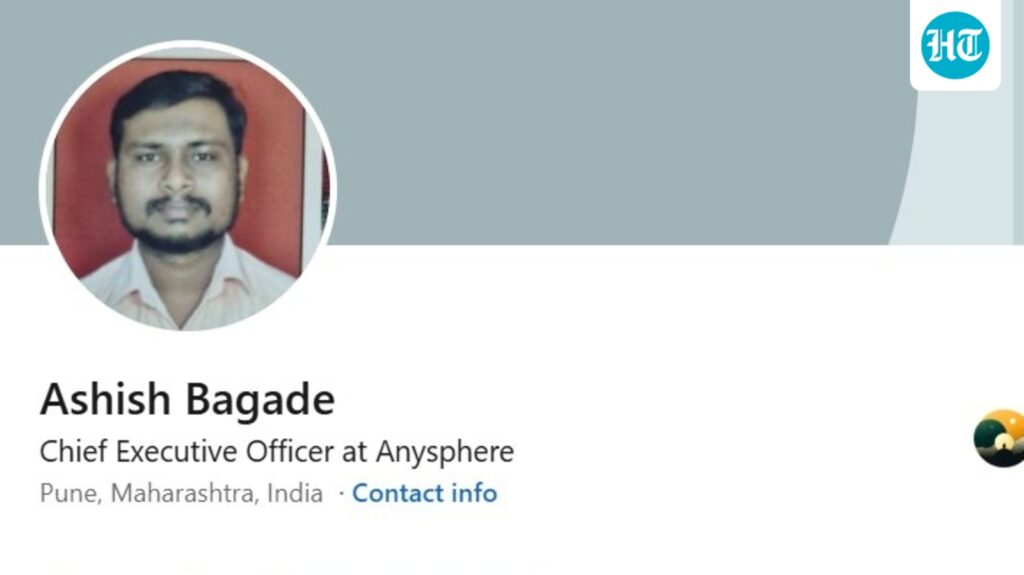
In a curious case of online deception, Ashish Bagade, a Pune-based individual, has listed himself as the CEO of Anysphere, a company valued at $29 billion and known for its AI coding assistant, Cursor. This misleading portrayal raises significant questions about the credibility of professional networking platforms and financial data services, highlighting how easily misinformation can spread in the digital age.
Bagade's claim first came to light thanks to venture capitalist Zach DeWitt, who shared a screenshot of Bagade's LinkedIn profile on the social media platform X. In his post, DeWitt said, “A random guy (Ashish Bagade) from India lists himself as Co-CEO of Cursor (Anysphere).” This prompted widespread discussion about the nature of self-representation on platforms like LinkedIn, which currently lacks any verification mechanisms. DeWitt, who is also a partner at Wing Venture Capital, noted that even PitchBook, a respected financial data provider used by numerous investors, listed Bagade as a co-CEO of Anysphere, further complicating the narrative.
The actual CEO of Anysphere is Michael Truell, who founded the San Francisco-based startup in 2022 with his MIT classmates. Truell's leadership has propelled Anysphere into the spotlight, primarily due to the innovative capabilities of Cursor, which has become a prominent tool in AI-driven development.
Bagade’s actions have drawn amusement and concern from other users online. Many labeled it a classic example of "gaslighting," a term often used to describe manipulation that causes someone to doubt their own reality. Some users even invoked the name of Soham Parekh, an Indian tech worker previously accused of multiple incidents of deception involving job titles in the United States. One commenter on X remarked, “It always felt weird to me that on LinkedIn anyone can just set any job title they want. No verification at all.”
This incident prompts a deeper examination of the implications of self-representation online. As one user pointed out, “LinkedIn has zero verification when it comes to titles and job experience. Anyone can claim to be anything over there. But PitchBook including it is stupid. Basically, they have no credibility anymore if they can’t even verify anything.”
The ease with which Bagade manipulated his online presence underscores a broader issue in the digital landscape, where the lines between truth and falsehood can blur easily. This case raises questions about the responsibility of platforms like LinkedIn and PitchBook in ensuring the accuracy of the information presented by users and companies alike. The lack of verification not only enables individuals to misrepresent themselves but also casts a shadow over the credibility of associated platforms.
As the digital economy continues to expand, the stakes associated with online identity become increasingly significant. For investors and professionals, the validity of information can impact decision-making and trust across the board. The Bagade incident serves as a reminder that in a world where digital presence can seemingly hold more weight than tangible credentials, the need for verification processes is more crucial than ever.
While many find humor in the absurdity of Bagade's claims, it also serves as a cautionary tale. The digital landscape is rife with potential for misinformation, and as users navigate this space, understanding the limitations of online platforms can help mitigate the risks associated with self-representation. The question remains: how will platforms like LinkedIn evolve to ensure the authenticity of their users, and what accountability will they take in the face of such instances?
Is CoStar Group’s 12% Share Plummet a Sign of Disaster? Investors Are Shocked! Discover Why!

Stock Market Shock: Is This 20% Dip Your Last Chance to Grab This UK Gem Before It Soars?

You Won't Believe How This Top-Rated Fitness Tracker Is Under $50 – Get Yours Before They're Gone!

You Won't Believe What the Allina Health President Revealed About NUMC's Future—Find Out Now!
Shocking Legal Battle: You Won't Believe What This Famous Celebrity Did to Avoid Jail Time!

Why Are Thousands Questioning Vaccines? Shocking Letters Reveal Hidden Truths!
You might also like: