
Is Your Food Safe? Discover the Shocking Truth Behind Dairy Safety & Startups Revolutionizing Agriculture!

In recent months, Serbia's agricultural landscape has undergone significant changes, with a clear focus on improving competitiveness through standardization and more strategic decision-making. This shift is evident across multiple sectors, from **vegetable seedling production** to advanced **mycotoxin control** in dairy farming. As the country positions itself for greater efficiency, the message that emerges is clear: strong systems are becoming just as crucial as high-quality products.
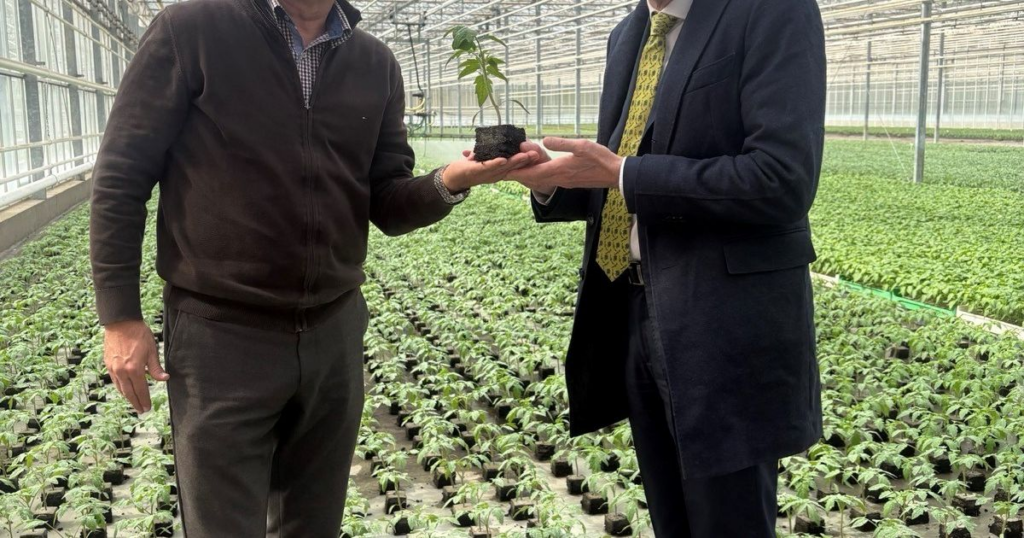
Grow Rasad, a specialized seedling producer, epitomizes this trend by concentrating on one of the most vital stages in horticulture: delivering uniform, high-quality seedlings. Established with Serbian and Dutch capital, the company employs modern facilities to create stable microclimatic conditions, ensuring that seedlings reach transplanting in optimal condition. This approach aims to promote more even growth, earlier development, and higher yields. Moreover, Grow Rasad collaborates with seed suppliers across the Serbian market, offering a wide variety of vegetable hybrids and seedling formats tailored to grower needs. However, border delays remain a persistent challenge, potentially jeopardizing the timely delivery of these essential products across the **Western Balkans**.
For professional producers, the value of Grow Rasad’s offerings extends beyond the seedlings themselves; it includes the support provided in terms of **container seedlings**, **peat cubes**, and **rockwool cubes**, all accompanied by expert agronomic advice on irrigation, nutrition, and crop protection. As the broader horticultural sector evolves, the importance of a standardized and robust start to production cannot be overstated.
In parallel, the dairy industry faces its own pressing challenges, particularly concerning **aflatoxin control**, a significant food safety issue. At a recent conference organized by **ProGnosis Biotech**, titled "Aflatoxin B1 and M1: Challenges and Prevention in the Livestock and Dairy Industry," the focus was on early detection and proactive management of aflatoxin contamination. The discussion highlighted the necessity of a full-chain perspective—from predicting raw milk contamination to monitoring solutions for aflatoxins and antibiotic residues. This comprehensive approach signals a shift in the dairy sector, where mycotoxin management is increasingly seen as an operational necessity rather than just a laboratory concern.
Currently, the regulation permits a maximum concentration of **0.25 μg/kg** for **AFM1** in raw and heat-treated milk until **November 30, 2026**. After this date, Serbia plans to align with the **EU** threshold of **0.05 μg/kg**. Amid rising climate pressures, the urgency of implementing faster diagnostics, stricter sampling protocols, and better feed-risk management becomes critical for the dairy industry. Effective mycotoxin control will no longer be optional; it is essential for compliance and market viability.
On a different front, **Smartsy**, a Serbian startup, is making strides in the realm of animal welfare by developing smart dog houses equipped with temperature control and camera monitoring. This innovation addresses a growing concern among pet owners, allowing them to leave their dogs safely at store entrances while they shop. Recently, Smartsy secured a **EUR 500,000** investment during the Austrian show **2 Minuten 2 Millionen**, gaining critical backing from investor **Alexander Schütz**. This funding will facilitate the company’s expansion plans into **Germany, Austria,** and **Switzerland**. With installations already planned in **Vienna**, Smartsy is positioned to become a standard in pet-friendly retail infrastructure.
Developed under the **SEE UP accelerator** and supported by the **Center for Digital Transformation of the Serbian Chamber of Commerce**, Smartsy’s success reflects a broader trend within Serbia's innovation ecosystem. It underscores the potential for locally developed hardware solutions to gain international traction and thrive beyond domestic markets.
As Serbia continues to enhance its production and innovation systems, the emphasis on standardization and strategic decision-making is expected to yield significant benefits across various sectors. From agriculture to technology, the country is poised to navigate the evolving challenges of the modern marketplace, establishing itself as a competitive player on the European stage.
Discover the Shocking Truth Behind Rowan County's 2026 Public Health Week—You Won't Believe What They're Hiding!
White House’s Shocking AI Bill: 5 Details That Could Change Your Life Forever!

Weyauwega-Fremont Election: Shocking Write-In Candidates Could Change Everything—Are You Missing Out?

Wisconsin's Power Shift: Who Will Lead After LeMahieu's Shock Retirement? You Won't Believe the Candidates!

You’ll NEVER Guess the Top 19 Costco Healthy Snacks – #7 Will Shock You!

You Won't Believe What Happened After 50 Years of Service in the Governor's Office! 🎉
You might also like: