Are France's Biggest Cities Really on the Brink of Electing Far-Right Mayors? Shocking Polls Reveal the Truth!

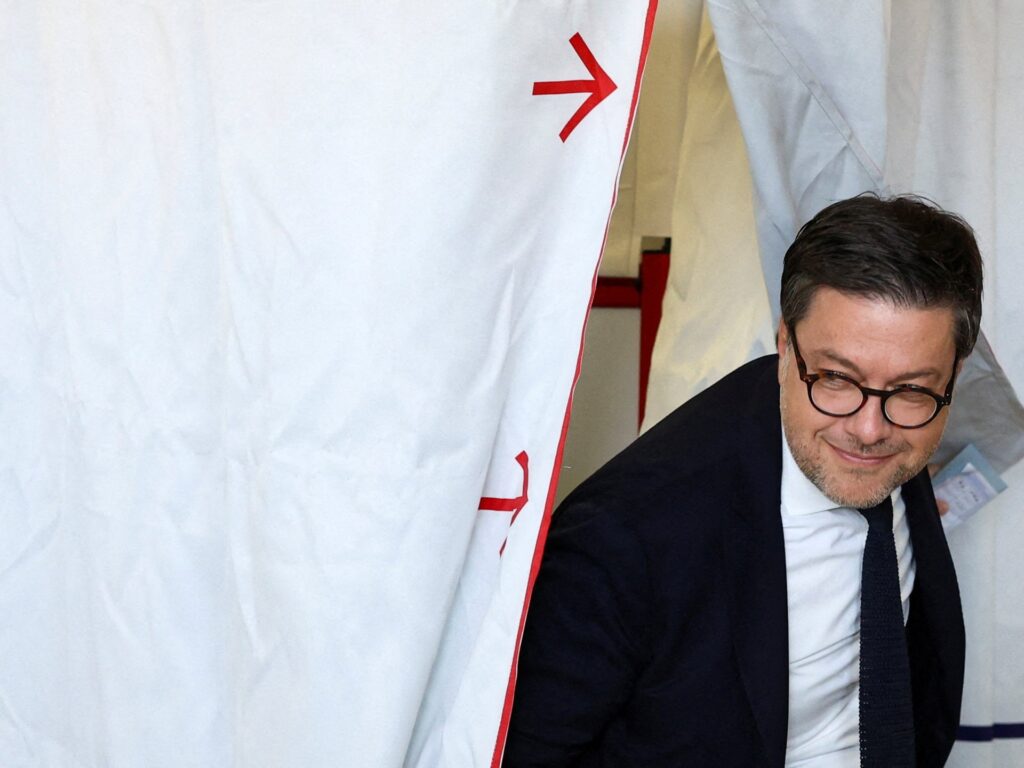
Paris, France – As France approaches a crucial moment in its political landscape, local elections are set to take place this Sunday. These elections are particularly significant as they will determine mayors and city council members across the nation, serving as a barometer for broader political sentiments just one year ahead of the presidential vote.
The first round of voting revealed a mixed bag for the far-right party, the National Rally, which fell short of its ambitious expectations but still made notable gains in key southern cities such as Nice, Toulon, and Marseille. While the party had hoped to secure a solid foothold in medium-sized cities, it was unable to achieve the sweeping victories it desired. Jean-Francois Poupelin, a journalist with Marsactu in Marseille, observed that "the results are worse than expected for the National Rally, and the far right in general." However, he noted that the party will see an increase in the number of municipalities it contests, expanding from 17 to 24 municipalities since the last mayoral election in 2020, while also leading in 60 others.
The elections are not without their tensions; in Marseille, incumbent mayor Benoit Payan faces a challenging run-off against Franck Allisio, the National Rally candidate. Poupelin expressed concern, stating, "We might be in for a few unpleasant surprises," particularly as the left-wing party France Unbowed withdrew from the race, fearing the shift towards the far-right.
Another pressing issue is voter turnout, which reached just 57 percent in the first round, marking the second-lowest participation in the history of France’s Fifth Republic. This trend is particularly pronounced in working-class neighborhoods, where abstention rates are higher. Poupelin remarked, "Abstention will be a key issue in both the second round of the municipal elections and the presidential election, because voter abstention generally works in the National Rally’s favour."
For residents like Baptiste Colin, a 31-year-old theatre production assistant in Marseille, the lack of interest in the elections is striking. “A lot of people around me didn’t vote. There’s a lack of interest,” he said. Many citizens struggled to understand the new voting procedures, which required them to vote separately for both the arrondissement mayor and the city mayor. Colin worries about the implications of the National Rally’s rise: “The far right is effectively becoming the new right,” he added, noting that the center-right has significantly declined in influence.
Political analysts are keeping a close eye on these elections as they could signal a transformation in France’s political landscape. Rim-Sarah Alouane, a legal scholar at the University Toulouse Capitole, expressed concern about the increasing normalization of the far right. “We are witnessing an evolving relationship between the traditional right-wing party and the far right,” she stated, highlighting the growing permeability between these two factions.
The results of this election cycle, according to Alouane, might not just reflect local dynamics but could also have enduring implications for national politics. “The first round of the elections does not simply reflect local dynamics. It reveals deep transformation within the French party system itself,” she said, emphasizing that no single political force currently appears capable of dominating the national arena.
Despite fears of the far-right party gaining traction, Alouane reassured that while they may not have achieved significant immediate gains, their gradual success is alarming. “The far right is slowly but very surely gaining more and more voters,” she noted, pointing out that whether voters are motivated by conviction or opposition to other parties, their presence is becoming increasingly normalized.
Once the far right secures power, like in several municipalities, they often manage to retain it for years. Poupelin highlighted that their policies typically focus on tax cuts and public safety while targeting social services that cater to vulnerable populations. In cities like Fréjus, community centers that once served as key support structures have been closed, leading to a deterioration of social cohesion in those areas.
As voters head to the polls on Sunday, Colin remains cautiously optimistic. “There’s still a glimmer of hope that it’s not a total loss. There are still some gains on the left,” he expressed. He even joked about the weather, wishing for unfavorable conditions to encourage higher voter turnout. “The weather wasn’t great last weekend, which actually encouraged people to go vote instead of going to the beach," he said. "I hope it doesn’t turn out to be nice on Sunday either.”
You Won't Believe What This Celebrity Revealed – It Could Change Everything!
Shocking! Why the White House Just Pulled $50M for Gaza Condoms – What Are They Hiding?

13-Year-Old Whale Shocks Crypto World: How a $332 Bitcoin Bet Turned into LIFE-CHANGING Profits! You Won't Believe the Numbers!
Access Denied? Discover the 5 Shocking Reasons 90% Are Ignoring This Urgent Secret!

You Won't Believe How This Cancer Survivor Plans to Conquer the Fitness World!

Meta's Shocking Leak: 5 Hidden Secrets Exposed After AI Gone Rogue – What They Don’t Want You to Know!
You might also like: