
Shocking! Why the White House Just Pulled $50M for Gaza Condoms – What Are They Hiding?

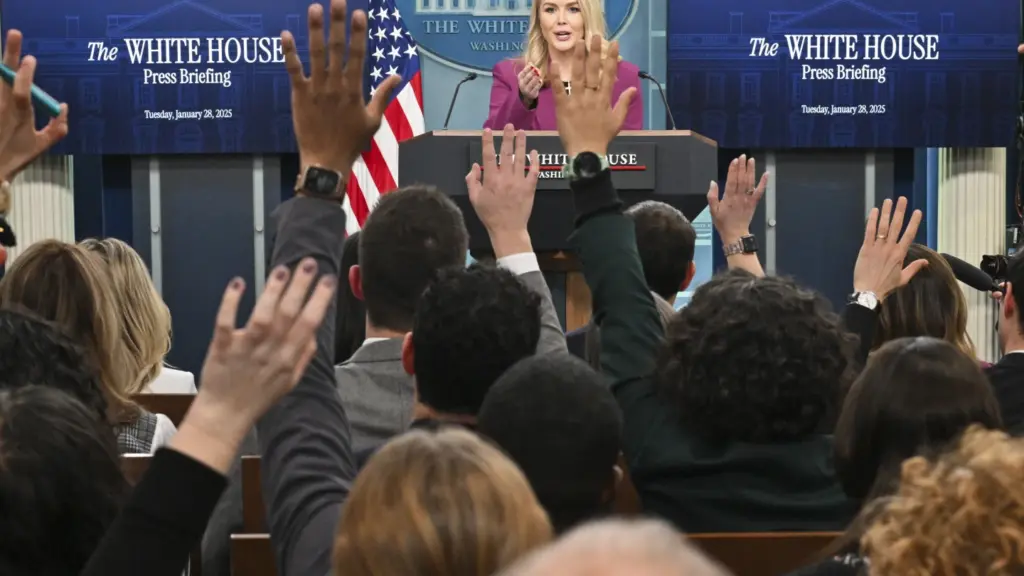
In a surprising move, White House Press Secretary Karoline Leavitt announced on Tuesday that the Trump administration has frozen a planned disbursement of $50 million in federal funds earmarked for "condoms in Gaza." This decision was reportedly made after the Office of Management and Budget and the newly established Department of Government Efficiency identified the funds as a misuse of taxpayer dollars.
Leavitt described the allocation as a "preposterous waste of taxpayer money," emphasizing the administration's commitment to being responsible stewards of federal funds. “That’s what this pause is focused on,” she said during a press briefing.
This freeze on foreign aid is part of a broader initiative ordered by President Donald Trump to reevaluate federal spending across various programs. The White House has stated that this action aligns with the administration's agenda as it seeks to cut expenditures that do not fit its policy priorities.
The funds were associated with a family planning and reproductive health program run by the U.S. Agency for International Development (USAID), which operates in 41 countries. Notably, Gaza and Israel are not currently listed as recipients of U.S. aid under this program, raising questions about the specific allocation and its intended use.
In terms of health precautions, the U.S. Department of Health and Human Services advises travelers to Israel, including the West Bank and Gaza, to bring "latex condoms" with them to prevent illness or injury. This recommendation was updated as recently as August 5, 2024.
This isn’t the first time condoms in Gaza have drawn attention. In 2020, the militant group Hamas used condoms inflated with helium as makeshift firebombs targeting Israel. Trump's announcement highlighted this fact, drawing laughter from attendees during a ceremony on January 29, when he signed the Laken Riley Act. “We identified and stopped $50 million being sent to Gaza to buy condoms for Hamas, $50 million,” Trump stated. “And you know what’s happened to them? They’ve used them as a method of making bombs. How about that?”
At the same press briefing, Leavitt was asked about Trump's decision to remove security details for former officials under threat from Iran. She reiterated the president’s stance that taxpayers should not fund lifelong security for government servants, suggesting that individuals could pursue private security options.
When pressed about potential investigations into the Biden administration’s decisions regarding funding for the United Nations’ Palestinian aid agency, UNRWA, and the removal of Yemen’s Houthi rebels from the State Department's list of designated Foreign Terrorist Organizations, Leavitt indicated that such investigations were not currently being discussed. “It wouldn’t be a bad idea, considering that the Houthis certainly are terrorists,” she added, signaling the administration's critical view towards the Houthi leadership.
This development regarding foreign aid, particularly the freeze on funds directed toward Gaza, reflects the Trump administration's broader strategy to scrutinize and align federal expenditures with its political and ideological goals. The implications of this decision will likely resonate not only through financial channels but also in diplomatic circles, as aid to conflict zones remains a contentious issue in U.S. foreign policy.
13-Year-Old Whale Shocks Crypto World: How a $332 Bitcoin Bet Turned into LIFE-CHANGING Profits! You Won't Believe the Numbers!
Access Denied? Discover the 5 Shocking Reasons 90% Are Ignoring This Urgent Secret!

You Won't Believe How This Cancer Survivor Plans to Conquer the Fitness World!
Meta's Shocking Leak: 5 Hidden Secrets Exposed After AI Gone Rogue – What They Don’t Want You to Know!

Bitcoin's Shocking Surge: Will You Be Rich by 2026? Experts Predict $76,876—Don't Miss Out!

Polymarket's Shocking $10M Gamble: What Brahma's Acquisition Means for Crypto's Future!
You might also like: