
“March Madness Takes a Dark Turn: What the Experts Are NOT Telling You About College Sports Chaos!”

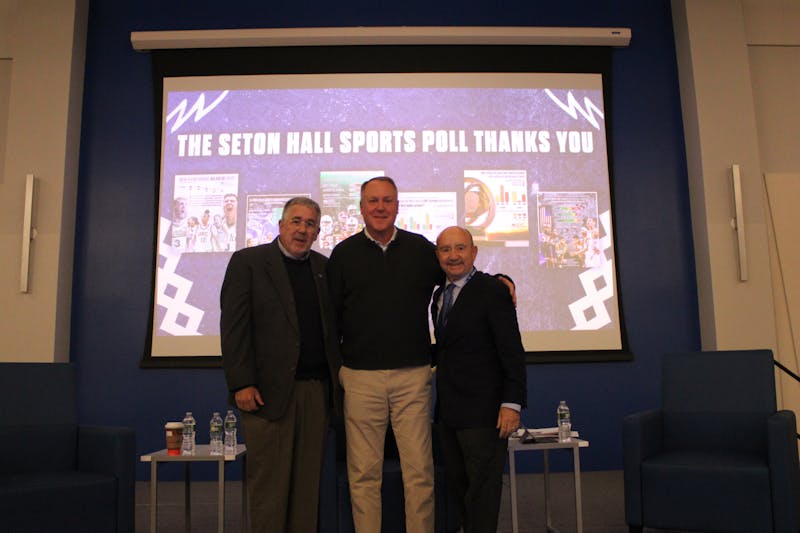
On March 16, Seton Hall University hosted an insightful panel discussion titled “March Madness: At the Root of College Sports Chaos,” which explored the evolution and current landscape of college athletics. Featuring prominent figures including Professors Len DeLuca and Michael Smith from the Stillman School of Business, along with Seton Hall's Director of Athletics and Recreation, Bryan Felt, the event delved into the rich history and pressing issues surrounding college sports.
One of the most poignant moments shared was a reflection on the 1989 National Championship game, where the Seton Hall Pirates fell short against the Michigan Wolverines, losing 80-79 due to a controversial foul call in the final seconds. Despite the bitterness surrounding that loss, Felt noted that players and alumni consistently speak about the game with respect, showing the character instilled by former head coach P.J. Carlesimo. "Even today, they don't speak poorly of the referees or the calls," Felt said, highlighting the enduring pride of the Seton Hall community.
A significant topic of discussion was the impact of NIL—short for "Name, Image, and Likeness"—on college athletics. This recent policy change allows student-athletes to profit from their own likenesses, opening new avenues for financial compensation. While Felt acknowledged the fairness this brings to athletes, he also pointed out that it creates a disparity in recruitment. Major programs like Duke, Kentucky, and Florida now have a substantial advantage due to their larger budgets, leaving smaller institutions struggling to compete.
Seton Hall's own financial situation was a focal point during the NIL discussion. After not being selected for the NCAA tournament on "Selection Sunday," the Pirates opted to decline an invitation to participate in a non-NCAA postseason tournament. This decision, as articulated by head coach Shaheen Holloway, was strategic—aiming to invest in the future rather than spend time on games that wouldn't provide long-term benefits. "The goal is to get a head start on next season," Holloway explained. Retaining key players such as junior guards Adam “Budd” Clark and Tajuan Simpkins, as well as freshman forward Najai Hines, is crucial in an era where the transfer portal allows athletes to switch schools freely, complicating talent retention.
DeLuca strongly endorsed the notion of compensating student-athletes, arguing that as educational institutions, networks, and sponsors reap significant financial rewards from college sports, it is only just that players share in the profits. This sentiment is underscored by recent legal developments, particularly the case of Alston v. NCAA, which has been pivotal in pushing college athletics toward a more equitable framework.
The panel concluded with a historical perspective on the NCAA, an organization founded in 1906 primarily to address concerns about player safety. What began as a protective measure has transformed into a multi-billion dollar industry, with March Madness generating enormous viewership and revenue annually. As this industry evolves, especially with the introduction of NIL, the financial stakes continue to rise.
This event underscored the profound changes within college athletics—from initial safety concerns to the contemporary challenges surrounding NIL and fairness in recruitment. While March Madness captivates audiences nationwide, it also serves as a mirror reflecting the complexities and ongoing transformations in the world of college sports.
For more insights and updates, Jaden Highsmith, assistant editor of The Setonian’s Sports section, can be reached at [email protected].
You Won't Believe How Much Childcare Tax Credits Just Changed—Governor Ayotte's Shocking Announcement!

Northeast Real Estate on the Brink: 5 Shocking Trends You MUST Know Before It’s Too Late!

You Won't Believe How Latonya Style Is Revolutionizing Your Fitness Routine – Don’t Miss This!
Is Baltimore's Blackbird BioHub the Secret Weapon to Outpace Silicon Valley? You Won't Believe What's Happening!
You Won’t Believe How Evergreen Girls Soccer Snatched Victory in a Nail-Biting Season Opener!

NBA's Funniest Star? You Won't Believe What Obama Thinks About Anthony Edwards!
You might also like: