
Is Your Dream Home in Florida Actually Hurting the Planet? Discover the Shocking Truth!

By Cynthia Bressan, Tikkun Economic Consulting
In the realm of real estate, luxury has historically been synonymous with prime location, stunning design, high-quality materials, and exclusive amenities. However, in Florida, a state grappling with significant environmental challenges, the traditional markers of luxury are being redefined. Do features such as comfort, status, and exclusivity still accurately reflect what it means to live in luxury in today’s complex landscape?
Florida’s allure is largely tied to its geography. The state's coastal living, warm weather, and access to waterways have made it a prime destination for domestic and international buyers alike. Cities like Miami, Naples, and Palm Beach have become global icons of lifestyle-driven investment. Yet, the very environmental conditions that make these areas desirable—from stunning ocean views to endless sunshine—also introduce considerable risks, particularly when it comes to property values and safety.
Issues such as sea-level rise and tidal flooding are gradually eroding the value of properties in flood-prone areas. Additionally, the increasing threat of hurricanes and storm damage results in soaring repair costs, unstable insurance markets, and climate-related pricing. These factors have a tangible impact on the financial landscape of Florida, influencing insurance policies, financing conditions, and long-term property valuations.
In this high-risk environment, traits such as durability, adaptability, and resilience are becoming the true hallmarks of modern luxury. Eco-friendly design is redefining what it means to own high-end real estate. Homes constructed with recyclable steel, reinforced concrete, hurricane-resistant windows, and metal roofs not only provide energy efficiency but also promise enhanced durability against climate threats. This shift emphasizes the importance of structural integrity over mere aesthetics.
Furthermore, eco-friendly homes prioritize well-being. They are equipped with non-toxic materials, advanced air filtration systems, and designs that maximize natural light while integrating nature into living spaces. Increasingly, high-net-worth buyers are placing a premium on wellness-focused design over decorative extravagance. This trend not only enhances prestige but also differentiates properties in a competitive market through green certifications, adding credibility and long-term investment appeal.
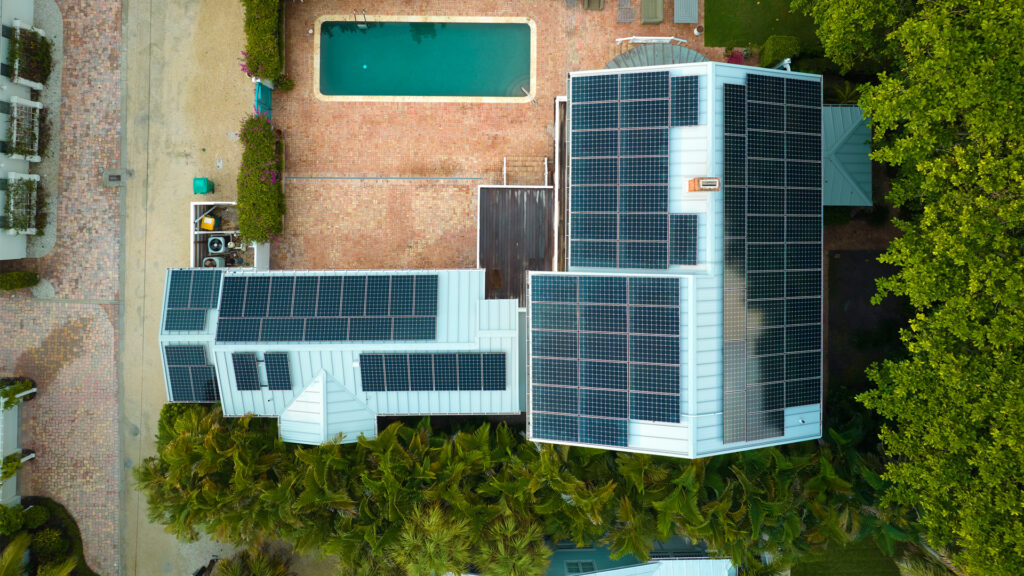
Beyond aesthetics and comfort, eco-luxury is a reflection of climate responsibility, demonstrating innovation and social awareness. The economic implications are also significant. While the initial costs associated with sustainable homes can be higher, long-term savings often outweigh these upfront investments. Homes that integrate energy-efficient features, such as solar panels, can reduce electricity costs by up to 70%, depending on installation size and regional climate conditions, according to the U.S. Department of Energy.
Moreover, eco-friendly homes typically incur lower maintenance costs over time. The combination of superior insulation, impact-resistant windows, and durable materials extends the lifespan of properties, thereby minimizing renovation expenses. In this way, sustainable luxury represents a smart investment—lower energy bills, less maintenance, higher resale value, and increased protection against future energy price volatility.

The market dynamics are already shifting. According to the 2025 Home Trends Report by Realtor.com, attributes such as efficiency, sustainability, and nature-inspired design are gaining traction, while traditional markers of opulence are falling out of favor. Insurance markets are adapting as well, with many providers now offering discounts for environmentally friendly homes. Some insurers are providing up to 10% discounts on policies for homes that incorporate smart, eco-efficient systems, highlighting a growing recognition of the importance of climate resilience.
As Florida's real estate market continues to evolve, buyers are increasingly valuing structural safety and resilience over purely cosmetic upgrades. Sellers are investing in property enhancements before listing, while lenders and appraisers are beginning to factor resilience into property valuations. Builders are adapting their designs to meet these shifting expectations.
In light of these changes, true luxury in Florida is no longer solely defined by breathtaking ocean views or lavish materials like imported marble. Instead, it is characterized by resilience, sustainability, wellness, and long-term value. In today’s climate reality, luxury is increasingly about how well a home can endure the test of time and the elements.
Cynthia Bressan is an economist and the founder and CEO of Tikkun Economic Consulting. Banner photo: A home covered with rooftop solar panels (iStock image).
For more insights, sign up for The Invading Sea newsletter and consider supporting our work by making a donation. If you're interested in submitting an opinion piece, please reach out to Editor Nathan Crabbe.
Eagles Fans STUNNED by A.J. Brown’s Shocking Response to Jaylen Waddle Trade – You Won’t Believe What He Said!

Jets Rookie Malachi Moore Shockingly Turns ONE Chance Into a $1M Payday—You Won’t Believe How!

Evanston's Tuesday Secrets Unveiled: 7 Shocking Revelations You Can’t Afford to Miss!

SHOCKING: Democrats Demand a Staggering $10 Billion in DHS Funding—What Happens Next Will Change Everything!

Federal Judge STUNS Nation: Why RFK Jr's Vaccine Council Was Just BLOCKED! Shocking Details Inside!

Samsung's Shocking Move: Why the Tri-Fold Galaxy Z FriFold is Now DOA—Don't Miss the Inside Scoop!
You might also like: