
FDA's Shocking New Cannabis Policy: What You MUST Know Before It's Too Late!

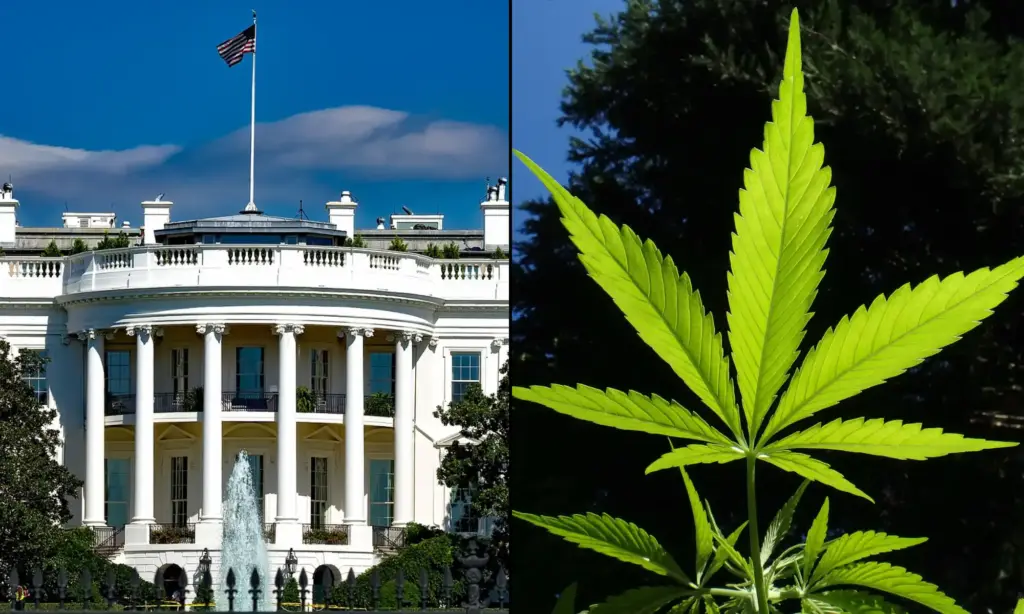
The Food and Drug Administration (FDA) has recently submitted a proposed enforcement policy regarding cannabis products to the White House, focusing specifically on the regulatory landscape surrounding cannabidiol (CBD). This submission, which falls under the jurisdiction of the U.S. Department of Health and Human Services (HHS), was acknowledged by the White House Office of Management and Budget's (OMB) Office of Information and Regulatory Affairs (OIRA) on Friday.
While the exact contents of the proposal, titled “Cannabidiol (CBD) Products Compliance and Enforcement Policy,” have not been disclosed, its origin at the FDA suggests its relevance, especially given the agency’s recent missed deadlines. The FDA failed to meet a congressional mandate to publish a comprehensive list of known cannabinoids in anticipation of significant changes to federal hemp laws set for later this year.
Industry observers speculate that the new policy may relate to an executive order signed by former President Donald Trump in December. This order included provisions for federal health insurance coverage of CBD for specific patient groups. However, the Centers for Medicare & Medicaid Services (CMS) is handling that rulemaking and was not involved in submitting this new policy to OIRA.
Under the appropriations legislation signed by Trump, many hemp products legalized during his first term through the 2018 Farm Bill will face renewed prohibitions starting in November. Despite this, the legislation also mandates that the FDA and other relevant agencies conduct studies on the cannabinoid marketplace and create comprehensive lists of cannabis components.
The FDA had 90 days to provide three critical lists:
- All cannabinoids known to the FDA that can be naturally produced by cannabis;
- All tetrahydrocannabinol class cannabinoids recognized by the agency as naturally occurring within the plant;
- All other cannabinoids that have effects similar to those of tetrahydrocannabinol class cannabinoids.
Moreover, the agency was instructed to clarify the term “container” concerning THC serving sizes in hemp products. This term is defined as the innermost packaging that directly contacts a final hemp-derived cannabinoid product, such as a jar, bottle, or box. The deadline for submitting these lists was February 10, but the FDA has yet to fulfill this obligation.
While it's uncertain whether the new policy submitted to OIRA is directly related to the FDA's responsibilities regarding cannabinoid lists, some industry insiders believe it could represent a significant step toward expanding federal health insurance coverage for CBD products. An executive from a hemp company collaborating with CMS revealed that the agency is finalizing rules to extend federal health insurance coverage options for CBD products, following the executive order aimed at rescheduling marijuana from Schedule I to Schedule III of the Controlled Substances Act (CSA).
Mehmet Oz, the CMS administrator, discussed the CBD initiative during the signing ceremony for the executive order, crediting Trump and HHS Secretary Robert F. Kennedy Jr. for their relentless push for change and research in this area. Plans are in place for a pilot program that would enable eligible patients to access hemp-derived cannabidiol covered by federal health insurance plans, with a projected launch date of April.
However, the broader rules surrounding this Medicare pilot program remain undisclosed. CMS’s website outlines how the agency is navigating hemp-related issues as part of various regulatory frameworks, including the LEAD and the Accountable Care Organization (ACO) models.
A key question remains regarding the specifics of coverage eligibility. As outlined by Oz in December, the coverage would primarily target individuals aged 65 and older who qualify for Medicare. Chronic pain, particularly in relation to cancer, has been mentioned frequently, but the criteria for CBD eligibility may encompass additional conditions.
Previously, CMS issued a final rule in April that stated marijuana and CBD from federally legal hemp were ineligible for coverage under its Medicare Advantage program and related services. However, the agency is now revising this policy, having announced changes affecting marketing, communications, drug coverage, and enrollment processes as part of a broader rulemaking initiative unveiled late last year. This initiative explicitly addresses cannabidiol coverage.
The proposed rule aims to amend existing regulations that currently classify all “cannabis products” as ineligible for coverage. The new policy would only exclude those cannabis products deemed illegal under applicable state or federal laws, including the Federal Food, Drug, and Cosmetic Act. This change indicates that patients residing in states where such products are legal could potentially make valid insurance claims for these alternative treatment options, provided the products remain federally legal.
Nonetheless, there remains the possibility that the new policy submitted for OIRA review might be unrelated to either the FDA's cannabinoid list or the CMS health coverage developments. The FDA has faced criticism for its hesitance to establish regulations that would allow for the lawful marketing of CBD in food supplies, which could indicate a range of regulatory challenges this proposal might address.
Dana Walden's Shocking Disney Shakeup: Who's Really in Charge Now? You Won't Believe the Surprising Choices!

Disney's Shocking Leadership Shakeup: What Dana Walden's Move Means for Your Favorite Films!
You Won't Believe What Happened After This Celebrity's Shocking Legal Battle!

Local Manufacturing Shake-Up: How Saudi Arabia's New Defense Deal Could Change Everything!

Business Tycoon Rom Reddy Shockingly Declares Candidacy for SC Governor—What’s His Hidden Agenda?

Tech Whiz Uses ChatGPT to Code a Cancer Vaccine—Will It Save His Dog's Life Before Time Runs Out?
You might also like: