
Discover the Hidden Truths of Our Oceans: Parvathi Nayar’s Shocking Exhibition Reveals Climate Crisis!

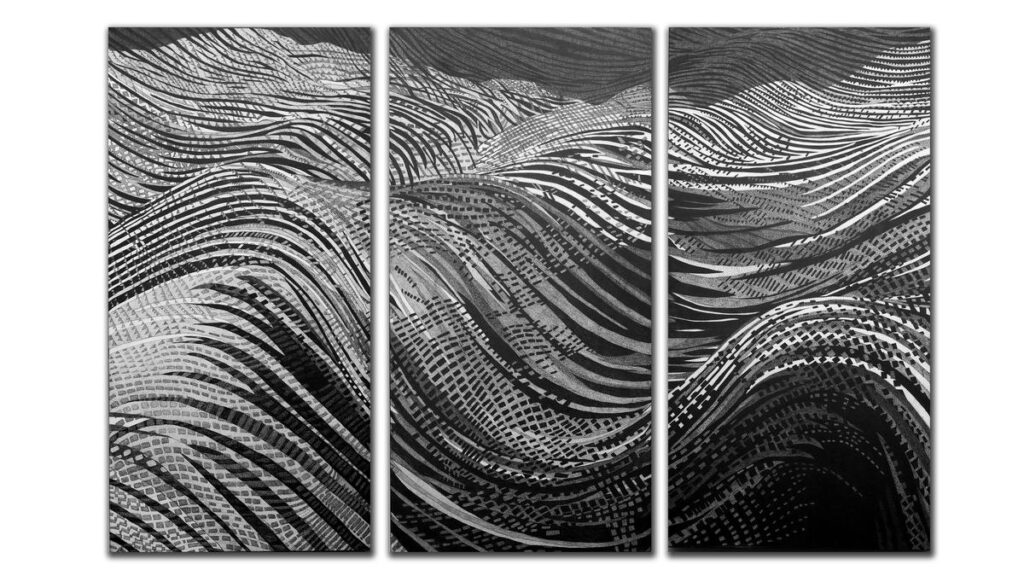
In an era dominated by climate conversations and ecological concerns, Chennai-based artist Parvathi Nayar is making waves in the art world with her latest exhibition, The Primordial, at Muziris Contemporary in Mumbai. This exhibition, which opened on March 12, 2026, marks the artist's first solo showcase in Mumbai in nearly two decades, bringing attention to the ocean not just as a physical entity but as a fundamental link to our past and future.
Nayar's impressive body of work spans disciplines including installation, photography, and video, with a keen focus on climate change and ecological themes. The Primordial brings together these elements through a series of works centered on water, salt, and pepper—materials rich in both natural and historical significance.
“It revolves around the things we think of as primordial—the ocean, water, salt. In many ways, the show is centered around the idea of the ocean, which is something I’ve been working with for a while,” Nayar explains. For her, the ocean serves as a connective force that has shaped the movement of ideas, people, and commodities over millions of years. “The ocean does not actually keep us apart,” she adds. “It joins us together through our navigation of it. Trade and exploration have all happened over the ocean.”
In addition to new works, Nayar's exhibition features pieces from the past decade, including the Pepper Series, which was displayed at the 2014 Kochi-Muziris Biennale. This segment highlights the sea as a conduit, particularly in the context of pepper, a once-coveted commodity in the global spice trade. Nayar's commentary on historical European traders who sailed to India in search of “black gold” serves as a reminder of the ocean's role in connecting people across time.
One of the standout pieces in the exhibition is titled The Grain That Moves the World. Nayar reflects, “I was thinking about how, in those times, the search for pepper led to extraordinary journeys—new discoveries were made, new lands were reached, and new people who had never encountered each other before suddenly came into contact.” This artwork serves as a tribute to the transformative power of exploration spurred by the ocean.
Climate change is an ongoing undercurrent in Nayar's work, with salt being another pivotal element in this exhibit. Historically referred to as “white gold,” salt carries a dual meaning in Nayar’s art. “It’s a triptych where salt crystals are magnified and become larger in every panel. On one level, you see this ballet of crystals, but if you think about it, you begin to ask: why are they growing? Why are things rising? It evokes the rise of sea levels and salinity as a byproduct of climate change,” she reveals.
The exhibition retains Nayar's signature style of intricate graphite drawings, composed of countless dots. “In a way, the dot represents the smallest indivisible particle, like electrons or protons that form the physical world,” she explains, emphasizing the fundamental connections between all elements of life.
Beyond traditional visual art, The Primordial features a short film titled Pull, which focuses on fishermen and brings attention to the lives of those who inhabit coastal landscapes. Through the interplay of salt, pepper, and expansive graphite oceans, Nayar effectively reminds viewers that the ocean is not a separate entity, but deeply intertwined with human existence.
This compelling exhibition is on display at Muziris Contemporary, located in Colaba, Mumbai, until May 1, 2026. The gallery is open from 11 AM to 7 PM, except Mondays, and admission is free. Nayar's work serves as a vital reminder that art can confront significant global issues while fostering a deeper understanding of our connection to the natural world.
You Won't Believe These 10 Under-the-Radar Costco Finds That Are Healthy, Cheap, and Disappearing Fast!

Africa's Shocking $40 Smartphone Initiative: Will It Really Bridge the 4G Digital Divide? Don't Miss Out!

PhonePe’s Shocking Stock Delay: What This Means for Your Investments Right Now!

Anthropic's Shocking Showdown with the Pentagon: Will Legal Tech Firms Survive the Fall?

Is a Stock Market Meltdown Looming? Shocking 2026 Predictions Under Trump You Can’t Ignore!

Why Is Everyone in Washington Suddenly Obsessed with This ONE iPhone Feature? You Won't Believe the Shocking Reason!
You might also like: