
Why Did This Brave Iranian Soccer Star Just Withdraw Her Asylum Claim? The Shocking Truth Revealed!

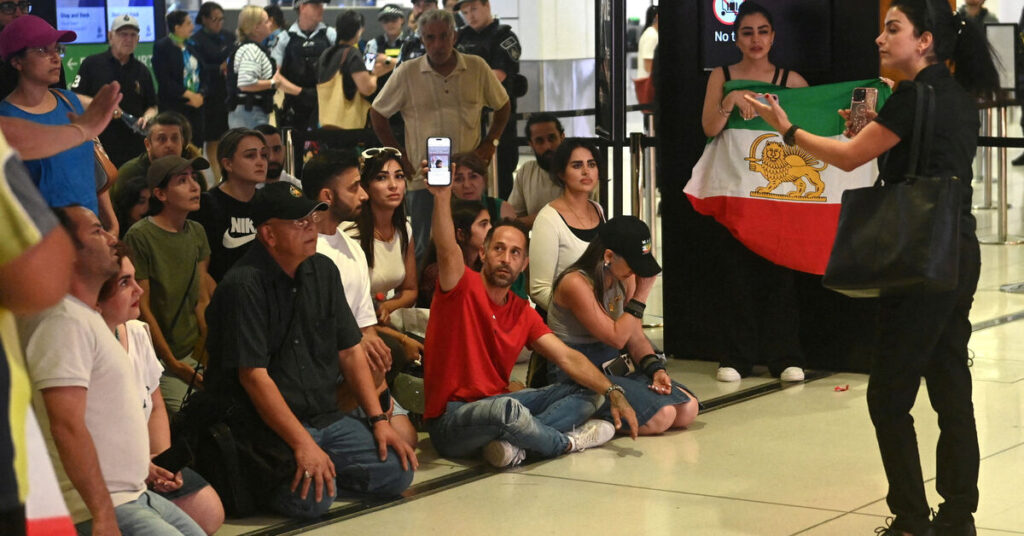
In a significant turn of events, a fifth member of the Iranian women's soccer team has withdrawn her claim for asylum in Australia, as reported by Australian media on March 16. This decision leaves only two of the original six players and one support staff member still seeking asylum due to fears of persecution upon returning to Iran. These concerns were heightened after the players notably did not sing the national anthem during a women's Asian Cup match earlier this month, raising alarms about their safety.
The players who have chosen to return are expected to reunite with the rest of their squad in Kuala Lumpur, where the team has been based since departing from Sydney last week. Australian Assistant Minister for Foreign Affairs, Matt Thistlethwaite, expressed respect for the decisions of those opting to return home while affirming continued support for the two members still in Australia. "This is a very complex situation," Thistlethwaite remarked during an interview with Sky News.
The Iranian team is currently in a holding pattern in Malaysia as they seek to travel to a third country, as immediate return to Tehran is not feasible due to ongoing conflict in the region, as indicated by the Asian Football Confederation (AFC). The Iranian Football Association announced that the team expects to return to Tehran soon to be "embraced by their families and homeland." However, AFC General Secretary Windsor John revealed that the team is actively exploring alternative destinations, as they are still waiting for flight connections.
While reports suggested that the players' families might be under pressure from authorities in Iran, John stated he could not confirm these claims. He added that the players had not communicated any safety concerns. "We have spoken to the team officials. We have spoken to the coaches, the head of delegation. They are actually in high spirits," he noted. "I personally met them. They are not demotivated, or they didn't look afraid."
The backdrop to this situation is particularly complex, as the Iranian team's campaign in the Asian Cup coincided with escalating geopolitical tensions. Just as the tournament commenced, the United States and Israel launched air strikes on Iran, resulting in the death of the Islamic Republic's Supreme Leader, Ayatollah Ali Khamenei. This surge in conflict adds another layer of risk and uncertainty for the players as they navigate their futures.
U.S. President Donald Trump praised Australian Prime Minister Anthony Albanese for allowing the women to remain in Australia, stating on social media that the United States was prepared to take the players if Australia did not. This statement underscores the international concern surrounding the players' well-being and highlights the broader implications of geopolitical conflicts affecting individual lives.
As the Iranian squad awaits its next steps, the drama surrounding their asylum claims reflects not only personal struggles but also the impact of international relations on sports and human rights. The coming days will be crucial for the remaining players as they consider their options and the safety of their families back home.
You Won't Believe Who the Boston Celtics Just Signed for 5 Years—This Changes Everything!

Bitcoin Hits $74K! Could This Be the Last Chance to Invest Before a Massive Drop?

Warriors Shockingly Fall Short Against Knicks—Find Out How This Game Changes Everything!

OnePlus Shocker: New Phone Specs Leaked—You Won't Believe What It Can Do!

You Won’t Believe What Dahua Technology Revealed at Intertraffic 2026 – The Future of AI Is Here!

Lovable Exec Drops Bombshell: Why LLM Labs Terrify Her More Than 5 Disruptive Startups!
You might also like: