
Why This Governor’s Dark Secrets Make Negan Look Like a Teddy Bear—Shocking Revelations Inside!

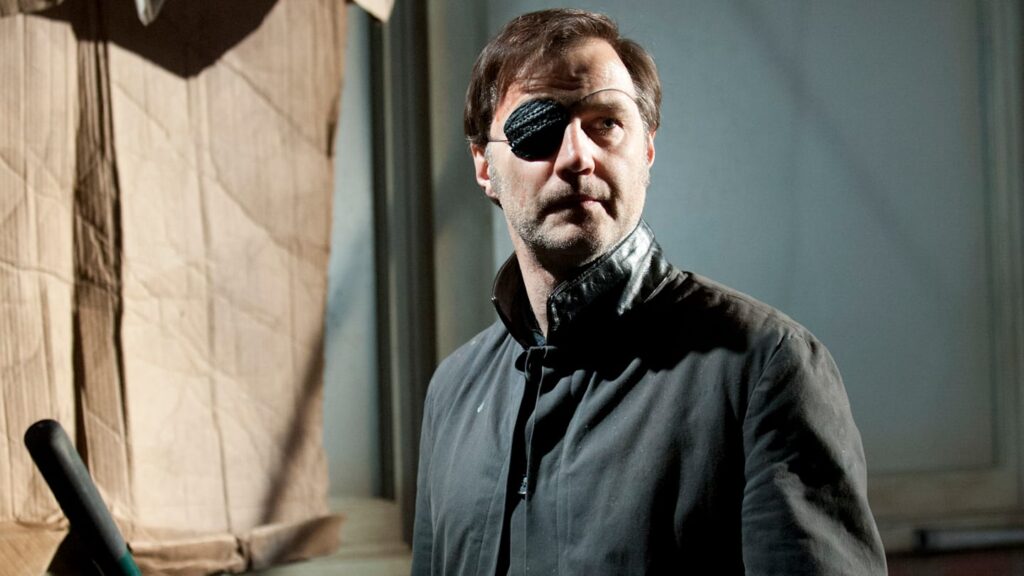
When fans of The Walking Dead engage in debates about the most terrifying villain, the name that often rises to the top is Negan, portrayed by Jeffrey Dean Morgan. With his brutal introduction, that infamous barbed-wire bat, and a chilling presence that could dominate any scene, Negan has become a staple of villainy in the series. However, a deeper analysis suggests that the Governor, played by David Morrissey, might actually embody a more profound kind of terror.
Negan was a complex character—cruel, theatrical, and ruthless in maintaining control—but he was also predictable. His brutality followed a twisted, yet clear, code that survivors could understand. Those under his rule were acutely aware of the boundaries. If someone crossed them, they faced the consequences. This predictability, however disturbing, provided a framework in a world utterly devoid of order. In contrast, the Governor wielded terror through deception, crafting an illusion of safety within his community of Woodbury.
In the apocalyptic landscape where humanity had crumbled, the Governor offered a glimmer of hope—an idea that normal life could once again flourish. This veneer of stability made him magnetic; survivors viewed him as a protector, which ultimately made him far more dangerous. Behind his calm facade lay a man whose need for control bordered on obsession. His paranoia simmered just beneath the surface, ready to boil over with devastating consequences. Entire communities were obliterated simply because they posed a threat to his fragile dominion.
The Governor’s violence often took on a deeply personal quality. His conflict with Rick Grimes and the prison group escalated from mere territorial disputes into something far darker and more personal. Unlike Negan, who openly embraced his tyrannical nature, the Governor’s descent into madness was gradual and insidious. When confronted with failure, he didn’t retreat; instead, he doubled down, becoming increasingly ruthless with each setback.
One of the most chilling examples of his volatility occurred when he ruthlessly massacred his own Woodbury soldiers after they expressed reluctance to continue fighting. These were individuals who trusted him, who believed in the safety and community he had constructed. Yet, the moment they disappointed him, he exterminated them without a second thought. This unpredictability is what makes a villain truly frightening; it is far more alarming to face a man whose brutality is erratic compared to one who is consistently malevolent.
The Governor’s instability was another key aspect that added to his terrifying persona. In one moment, he could appear thoughtful and compassionate, discussing the need to protect his people, and in the next, he could erupt into acts of unimaginable violence. With Negan, there was no facade—everyone knew they were dealing with a tyrant. But with the Governor, the transition from hero to monster was gradual, making it all the more dangerous.
That psychological manipulation created a unique form of fear. People didn't just obey the Governor out of fear; they followed him because they believed he was their best chance at survival. By the time they comprehended who he truly was, they were already ensnared within the web of his influence.
This is why the Governor emerges as a more disturbing villain than Negan. While Negan was terrifying in his own right, he was transparent about his malicious intentions. The Governor, however, concealed his darkness beneath charm, intelligence, and leadership. He weaponized trust and transformed hope into a perilous force. In a world filled with walkers and ruthless survivors, this hidden cruelty proved to be far more chilling. Sometimes, the most frightening villain isn’t the one who openly declares himself a monster; it is the one who initially convinces you he’s the good guy.
As fans continue to dissect the layers of villainy in The Walking Dead, both Negan and the Governor offer different kinds of fear that resonate deeply. With all 11 seasons of the series available on Netflix, viewers can explore these characters and the unique threats they embody in the relentless world of survival, morality, and power.
Is Nature’s Survival Against Human Impact Dwindling? Shocking Data Reveals Alarming Trends!

Is This the Game-Changer Bay FC Needed? Emma Coates Sparks Shocking Transformation—Find Out How!

Why 45 Days of Crypto Panic Could Cost You Thousands: Shocking Insights Revealed!

Hungary's Election Chaos: What 2024 Showdown Between Rivals Could Mean for Your Future!

Is This Canadian Startup's Combat Drone the Future of Warfare? F-35s at Risk!

XRP and Solana ETF Holders Are Holding On for DEAR LIFE—Find Out What Bloomberg Says Will Happen Next!
You might also like: