
Finance is in CRISIS: Why Octopus AI’s SHOCKING New Strategy Could Save You Thousands!

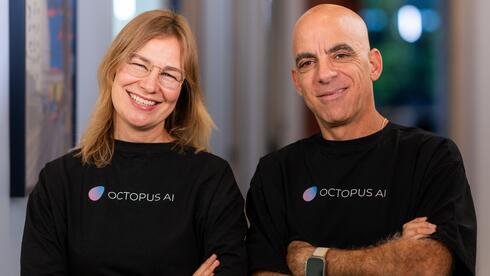
Lena Levin, founder and CEO of the Israeli fintech startup Octopus AI, has a vision to reshape the financial landscape of enterprises. Launched in 2023 with co-CEO Eran Raichel, Levin’s journey began from a place of frustration, aiming to challenge the traditional notion of finance as a passive observer within businesses. “The idea was born out of pain and frustration, and a refusal to accept ‘that’s just how finance works,’” she stated. Levin and Raichel recognized that the core issue wasn’t a lack of data or tools, but rather finance’s absence from the active conversations that dictate organizational direction.
Octopus AI aims to change the dynamics by employing proactive AI financial workers that automate financial planning tasks. This innovation intends to help companies achieve their financial objectives by embedding these digital workers into the fabric of business operations. According to Levin, traditional finance teams often find themselves “drowning in analysis while the business had already moved on,” leading to missed forecasts and delayed decisions. The founders believe that finance should not just react; it should anticipate and guide.
Central to Octopus AI's mission is the concept of “multiple financial truths.” Different departments often report conflicting financial statuses—accounting might say a company is over budget, while financial planning and analysis (FP&A) claims otherwise, and budget owners insist they hit their targets. “The uncomfortable reality is all of them may be right,” Levin explained. The solution lies in a system that clarifies these discrepancies, translating one financial narrative into another in real-time and fostering an environment of shared decision-making.
The potential impact of AI in finance can't be overstated. A recent study published in ScienceDirect notes that companies implementing AI tools see improved investment efficiency, largely due to enhanced information transparency and stronger internal controls. This is a shift from the question of whether AI can fit into finance to why any organization would operate without it.
The global market for AI is poised for explosive growth, with grand View Research estimating it could exceed $1.8 trillion by 2030. Specifically, the AI in finance sector is projected to grow from $38.36 billion in 2024 to around $190.33 billion by 2030, reflecting a compound annual growth rate (CAGR) of 30.6%. This expanding market creates a fertile ground for Octopus AI, which is already seeing action with two digital financial employees deployed in enterprise environments.
Unlike traditional software that often adds layers of complexity, Octopus AI aims to simplify by operating across existing financial tools. Major enterprise platforms such as IBM, SAP, and Oracle are considered partners rather than competitors. While these established systems handle data and processes, they have not been designed to actively engage in financial decision-making. As Levin pointed out, “Finance doesn’t need more software; it needs protectiveness.” Octopus AI’s solution mediates the different financial realities, connecting insights and driving decisions without contributing to the existing complexities.
Octopus AI’s recent $550,000 pre-seed investment will be primarily directed toward enhancing computational power and algorithmic efficiency. Levin emphasized that the company is not simply building a chatbot but is instead developing a “multi-tentacled neural architecture” that can interact with various layers of digital systems. An impressive 85% of the funds will be allocated to securing advanced computational resources and recruiting top engineers to refine their AI models.
The unique expertise of Levin and Raichel is a driving factor behind Octopus AI’s ambition. Levin, a certified public accountant (CPA) and holder of an MBA, has a wealth of experience working with enterprise CFOs, ensuring that the product addresses structural financial issues rather than merely symptoms. Raichel, with over a decade in data engineering and AI development, previously led R&D efforts at Amplio, focusing on technologies that process unstructured data.
As Octopus AI prepares for broader market rollout in 2026, it is already changing the landscape of financial management in enterprises. By enabling finance teams to act proactively rather than reactively, the startup hopes to redefine what it means to achieve financial clarity and operational efficiency in a rapidly evolving business environment.
How a COVID-19 Crisis Transformed Nirav Shah: The Shocking Truth Behind His Run for Maine Governor!

Is Planet Fitness About to Skyrocket? Shocking Analyst Ratings After CFO Shake-Up!

Is Nirav Shah's COVID-19 Experience the Secret Weapon Maine Needs? Discover the Shocking Truth!

Meta's Shocking Move: Why Instagram's Biggest Feature is Disappearing—Are You Ready for This?

Is Your Computer Science Degree Obsolete? Perplexity CEO Reveals Shocking AI Shift!

Is Climate Change Sabotaging the Winter Paralympics? 5 Shocking Stats That Will Make You Rethink Everything!
You might also like: