
Is Your Vote Safe? Shocking Twist in National Assembly Vote Threatens Democracy!

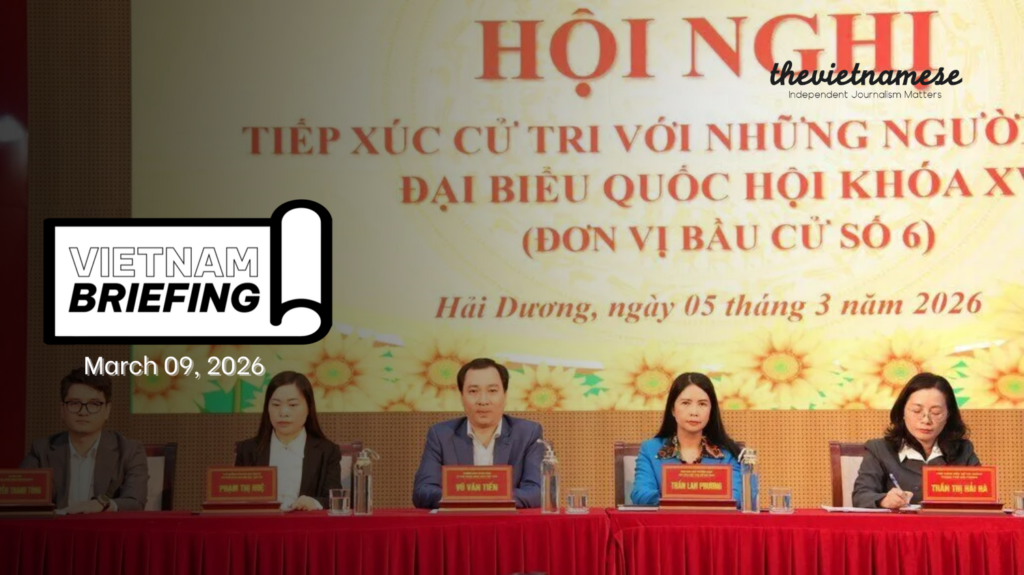
As Việt Nam gears up for the March 15, 2026, election of its 16th National Assembly, the political landscape is revealing unusual dynamics. Recent reports indicate that senior government officials are competing for parliamentary seats against their own subordinates, raising significant questions about the integrity and fairness of the electoral process.
This phenomenon is evident in multiple electoral districts, where high-ranking officials are running alongside lower-level employees from the same government agency. For instance, a deputy director from a provincial finance department is contesting in the same electoral unit as a subordinate from his department. This setup not only blurs the lines of professional hierarchy but also potentially creates conflicts of interest. Employees may feel pressured to align their political views with those of their superiors, limiting genuine competition.
The Vietnamese electoral framework is notably rigid, with candidates typically pre-selected through a multi-stage nomination process dominated by the Communist Party and the Vietnam Fatherland Front. This system effectively narrows the candidate pool before ballots reach the voters. In many districts, the number of available parliamentary seats is only slightly fewer than the candidates, making outcomes appear predictable even before voting occurs.
Moreover, the intertwining of election administration and political candidacy has come under scrutiny with the candidacy of Lê Quang Mạnh, a senior official overseeing the National Election Council. Mạnh, who serves as secretary-general of the National Assembly and chairman of the National Assembly Office, is running in electoral district No. 7 in Ho Chi Minh City while simultaneously managing the election process. Current laws do not prohibit such dual roles, yet this arrangement raises concerns about impartiality and the possibility of conflicts arising should disputes emerge in his electoral district.
Beyond the election dynamics, the political climate in Việt Nam is also punctuated by ongoing human rights concerns. The family of Hồ Duy Hải, a death row inmate convicted in a controversial case, has petitioned for a review of his sentence, which has been upheld for nearly two decades. The family's latest request, submitted on January 6, 2026, to the Supreme People’s Procuracy, seeks to challenge the cassation decision from May 2020 that confirmed Hải's death sentence amid claims of legal irregularities. Critics argue that the case has been marred by significant investigative flaws and insufficient evidence, reflecting broader concerns over Vietnam's judicial processes.
In a separate but related issue, the treatment of activist Trịnh Bá Phương has drawn international attention. United Nations experts have called on the Vietnamese government to explain potential human rights violations involving Phương and his family. These allegations include arbitrary detention and harassment, which highlight ongoing tensions between the state and activists advocating for civil liberties and land rights in Việt Nam. The government has acknowledged the UN's request and is preparing its response, even as concerns about the well-being of activists like Phương and his mother, Cấn Thị Thêu, continue to escalate.
As the election approaches, the candidate lists reveal additional peculiarities. High-ranking party members are often assigned to compete in districts distant from their home provinces, where they may lack local support. For example, Nguyễn Thanh Nghị, a Politburo member, is running in Đắk Lắk Province, despite having no prior ties to the region. This practice of placing officials in unfamiliar districts underscores the structured nature of electoral politics under Việt Nam's single-party system.
The upcoming elections, set to occur across 182 electoral districts, will determine deputies for a five-year term from 2026 to 2031, with results expected by March 25 and the new legislature convening its first session in early April. The complexities surrounding candidate selection and the interplay between administrative hierarchies and electoral processes demonstrate how political representation is organized within the confines of a tightly controlled system.
This electoral landscape—marked by conflicting interests, human rights issues, and unusual candidate matchups—paints a picture of a political environment that is both intriguing and fraught with challenges. As voters prepare to head to the polls, the implications of these dynamics could resonate far beyond the immediate electoral outcomes, affecting the broader discourse on governance and civil rights in Việt Nam.
Rams Shock NFL: Trent McDuffie Becomes the $100M Man—What This Means for the League!

35 ChatGPT Hacks Real Estate Agents Swear By—#12 Could Change Your Career Forever!

Is the Finalissima Venue in Jeopardy? UEFA & Conmebol's Shocking Meeting Could Change Everything!
You Won't Believe What Secrets This Page Is Hiding – Click to Find Out Why Access is Denied!

New Zealand's Shocking Move: Will AI Scribes Save Lives or Cause Chaos in Mental Health?

NBA Coach SHOCKS Fans: Is Derrick White Really a Top 5 Player? The Truth Will Leave You Speechless!
You might also like: