
Korea’s Bold Move: Will This Shocking Public-Private Partnership Save Startups or Doom Them?

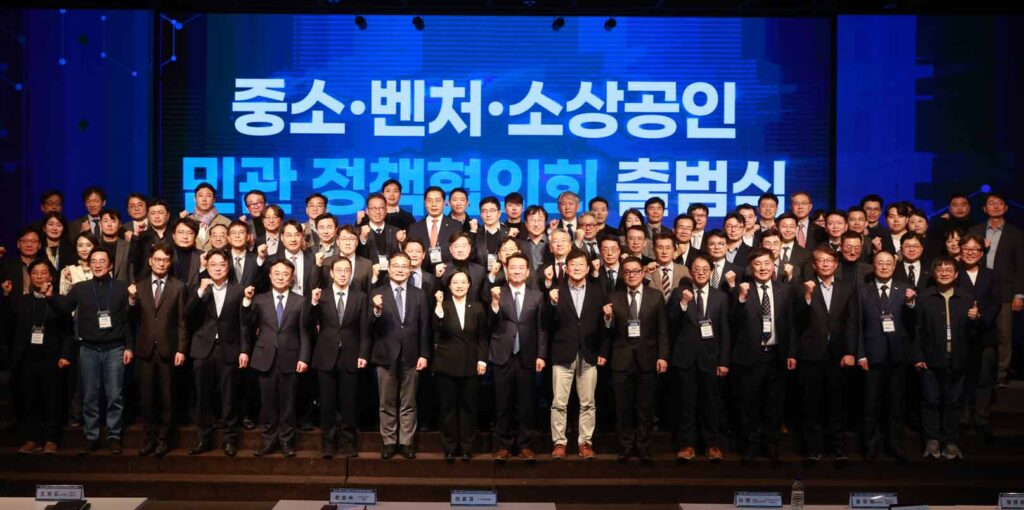
South Korea is taking significant steps to bolster its startup ecosystem with the recent launch of the Public–Private Policy Council for SMEs, Ventures, and Small Business Owners on March 5, 2026. This initiative, organized by the Ministry of SMEs and Startups (MSS), aims to create a collaborative environment where government officials and market actors can work together to review existing policies and propose new reforms designed to enhance the nation’s small and medium-sized enterprises (SMEs) and startup landscape.
Comprising 72 members from various sectors, including business, academia, venture capital, and industry associations, this council is set to operate for one year. Key figures leading the initiative include MSS Minister Han Seong-sook and Lee Kwang-jae, the former Secretary-General of the National Assembly. They aim to address pressing issues within the SME and startup framework, organizing members into four divisions focused on SMEs, startups and venture companies, small business owners, and shared growth and fair competition.
The council's establishment coincides with South Korea's broader objective to restore the “growth ladder” for SMEs, ventures, and small merchants—a structured pathway allowing companies to transition from early-stage entrepreneurship to venture financing and ultimately scale-up growth. During the launch, Minister Han encouraged private sector experts to provide candid feedback on the ministry's current considerations, emphasizing a shift towards a more performance-oriented support system amid the ongoing AI transformation era.
“We ask for open and candid opinions regarding the ministry’s current considerations, including a paradigm shift in SME policy during the AI transformation era, promoting growth, and reforming support systems to become more performance-oriented,” said Minister Han.
In advance of this inaugural meeting, council members submitted over 50 policy proposals. Discussions are set to cover vital topics such as:
- Accelerating AI and AX transformation among SMEs
- Revitalizing venture investment and the KOSDAQ market
- Expanding AI education for small business owners
To enhance communication and practical relevance, the council will also hold regular meetings to discuss proposed policy agendas and solutions. Co-chair Lee Kwang-jae outlined five critical policy topics that the council plans to examine, including:
- Addressing the so-called “Peter Pan syndrome” in SMEs, where businesses struggle to grow beyond a certain size
- Implementing an immediate payment system for supplier invoices
- Increasing venture investment inflows including pension capital
- Preventing technology misappropriation
- Shifting the economy from subsidy-dependent support toward investment-driven growth
Lee referenced a study from the Sustainable Growth Initiative (SGI) under the Korea Chamber of Commerce and Industry, which estimates that regulations based on company size may lead to a GDP loss of approximately 111 trillion KRW. This statistic underscores the urgency of reviewing how companies are categorized and exploring financial tools that could assist firms in managing cash flow challenges.
As the council embarks on its mission, Minister Han highlighted the importance of incorporating field-level perspectives into policy design. She encouraged private experts to share insights on issues under review, including:
- Adjusting SME policies toward growth-oriented frameworks
- Restructuring support systems based on performance evaluations
- Adapting policies to the evolving AI landscape
The council's launch is a reflection of South Korea's commitment to rebuilding its startup ecosystem. The government has previously made substantial investments in capital expansion and structural policy announcements aimed at enhancing venture investment and fostering startup growth pathways. Instead of merely creating additional funding programs, this initiative signals an effort to institutionalize dialogue between policymakers and private sector stakeholders, thereby aligning government strategies with the realities of the market.
For global investors watching Korea's venture ecosystem, this council could represent a significant shift towards more responsive and effective governance in the startup space. However, the real test will be whether the recommendations generated from this initiative can lead to actionable policy changes that address existing gaps and challenges.
Ultimately, the establishment of the Public–Private Policy Council illustrates a recognition that rebuilding Korea’s startup growth ladder not only requires financial resources but also necessitates ongoing dialogue between policymakers and the ecosystems they aim to support. As the council progresses, its impact on the regulatory landscape and the broader startup environment will be closely monitored.
Colombia’s Epic Congress Battle: Who Will Claim Power as Shocking Candidates Emerge?

Messi’s Stunning Playoff Surprise: You Won't Believe What He Did Against D.C. United!

Discover the 5 Surprising Snacks That Could Save Your Heart—#3 Will Shock You!

Iceland’s Ice Is Melting Faster Than You Think—Discover the Shocking Truth Behind Climate Change!

Big Tech & Big Ag's Shocking Takeover: Are Farmers Losing Their Livelihoods Forever?

You Won't Believe How Much Money This Local Community Raised for Kids in Need—Find Out How!
You might also like: