
This London Neighborhood is Giving Away FREE Solar Panels to Low-Income Families—Are You Missing Out?

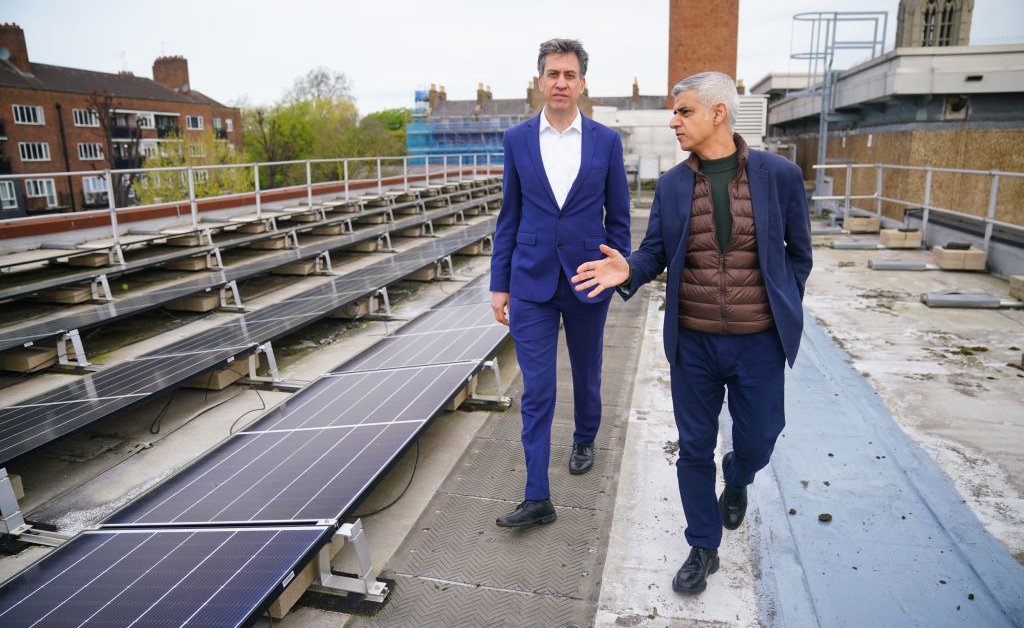
In 2019, Hackney Council set an ambitious goal to decarbonize the London borough, emphasizing the need for greater energy efficiency in council-owned buildings, known as council estates. However, the journey towards implementing solar-powered microgrids to achieve this goal has proven to be challenging, not just for Hackney but across the United Kingdom.
While microgrids have been successfully deployed in commercial and industrial settings, regulations have historically restricted tenants in apartment buildings from switching energy suppliers. This limitation means that solar power could only be utilized for communal areas, with any resulting savings benefiting the landlord rather than the residents. Reg Platt, CEO of Emergent Energy, a company specializing in energy services, has spent decades navigating energy policy and regulation. He understands the challenges posed by these restrictions. “My motivation has always been around how you deploy these technologies as fast as possible,” he states. “We need to create a model financing solar PV and other in-household energy technologies that doesn't rely on any government backing.”
To address these issues, Emergent was founded in 2016 to connect low-income housing projects and apartment residents with the benefits of solar energy. Platt actively lobbied for regulatory changes that would enable his company to supply electricity directly from locally installed solar panels to residents. This shift would allow them to enjoy the benefits of cheaper, cleaner energy.
As of late 2024, Emergent signed a groundbreaking contract with Hackney Council to launch a pilot program that provides solar energy to 10% of the estate’s residents. The council hopes to expand this to 60% as they continue outreach efforts. Sarah Young, Hackney's cabinet member for climate change, environment, and transport, reported that participating residents have already achieved a 15% reduction in their energy bills. This step is particularly significant in a U.K. grappling with energy costs that remain about a third higher than pre-Ukraine invasion levels.
Microgrids, essentially miniature electricity networks, allow for direct energy consumption, reducing costs for residents. “A microgrid is like a mini version of the electricity networks that we have across a nation or a state,” explains Ronan Bolton, a professor of sustainable energy at the University of Edinburgh. “Rather than having the supplier contracting directly with the producer and the consumer, the producer and the consumer are more directly connected. That creates more economic value because they're offsetting the retail cost of purchasing electricity.”
The appeal of community-led clean energy initiatives is growing in the U.K. Currently, there are 614 community energy organizations, an increase of 24% since 2021. For example, in Bristol, a resident-led group in a low-income area secured £4 million in 2022 to build a wind turbine project without government funding, driven by frustration over rising energy prices.
The Hackney solar initiative is community-owned, meaning it is insulated from the fluctuations of private energy markets. Young emphasizes, “All the benefit goes to the residents.” The council anticipates recovering its initial investment of £2 million (approximately $2.6 million) and envisions using excess energy for other projects aimed at enhancing sustainability, such as battery storage or electric vehicle charging stations.
The pilot program spans 27 buildings housing 750 apartments, but the potential for expansion is immense, with four and a half million social housing properties across the U.K. and countless other residential apartments remaining untapped, according to Platt.
In January, Edward Miliband, the U.K.’s Secretary of State for Energy Security and Net Zero, launched the Warm Homes Plan, a £15 billion (about $20 billion) initiative aimed at reducing energy bills and emissions by upgrading millions of homes with insulation, heat pumps, and solar panels. This program was announced at the Hackney project site. Additionally, the government recently allocated £1 billion (around $1.3 billion) for community clean energy initiatives targeting buildings like libraries and recreation centers.
Platt believes this funding could further propel the Hackney initiative. “We think that what we're doing is directly aligned with what the government wants to achieve,” he notes. “And we provide them a means to scale up solar extremely fast, supporting social housing and low-income residents with bill savings while simultaneously bringing assets into national and municipal ownership.”
Moreover, widespread implementation of similar projects could translate to cheaper and cleaner energy for all, not just those with the financial means to invest in solar solutions. Young advocates for ensuring that energy transitions benefit everyone involved: “We strongly believe in a just transition to net zero. It’s essential that it’s not just those who can afford it who benefit from this energy transition.”
Are You the Next Face of Yakima Valley? Shocking $5,000 Scholarship Awaits—Apply Before It’s Gone!

Derek Simpson's Shocking Transformation: Can St. Joseph's Really Become UNSTOPPABLE?

Insurtech Revolution: How Nassau's Program Could Change Your Life—Don’t Miss Out!

This Revolutionary Green Hydrogen Breakthrough Could Save Our Planet—Are You Ready to Embrace It?

Unlock the Shocking Truth: This One Healthy Habit Can Slash Your Heart Risks More Than Meds!

Dow Plummets 350 Points After Shocking 1,200 Dive—What’s Driving Oil Prices Through the Roof?
You might also like: