
Startup Shocking the Industry Secures $28M: Is Green Fertilizer Really the Future? Find Out Now!

The Impact of PlasmaLeap's Innovative Tech on Agriculture and Carbon Emissions
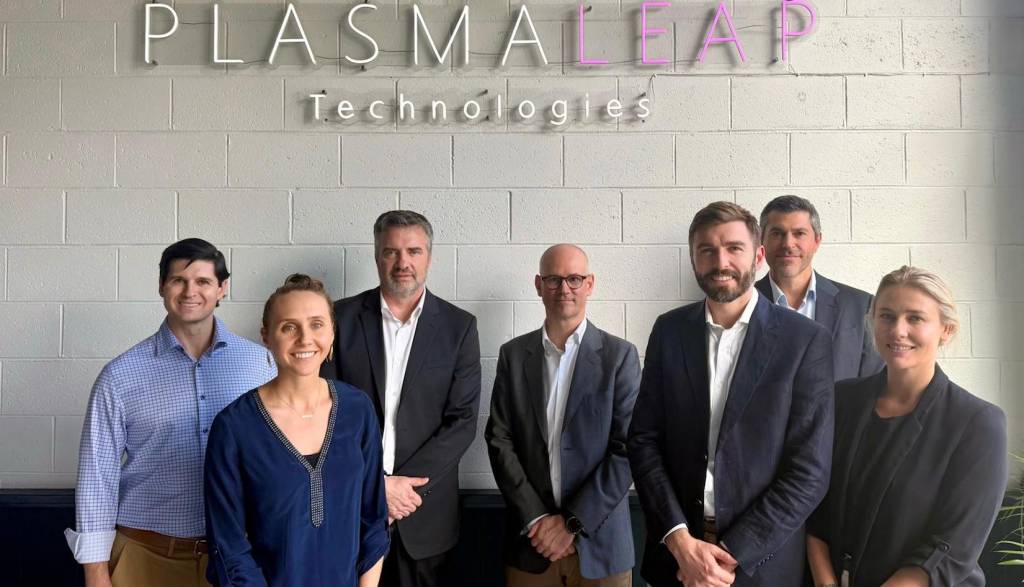
PlasmaLeap Technologies, a Sydney-based startup, has successfully secured $20 million (approximately A$28 million) in a Series A funding round aimed at revolutionizing fertilizer and fuel production while significantly reducing carbon emissions. The funding, which closed in January, was co-led by notable entities including the Gates Foundation, Investible, and Yara Growth Ventures, the venture capital arm of nitrogen fertilizer producer Yara International. Additional investors included Twynam, GrainCorp Ventures, Uniseed/UniSuper, Artesian, SVG Ventures, and Ravensdown’s Agnition Ventures, a Kiwi fertilizer cooperative.
The capital raised will be directed toward establishing first-of-their-kind fertilizer hubs in New South Wales and Tasmania, facilitating expanded field trials, and advancing PlasmaLeap’s core technology. This initiative is part of a broader strategy to incorporate sustainable fuels and energy systems into their operations.
Founded in 2019 and emerging from the University of Sydney, PlasmaLeap focuses on developing zero-emissions chemical reactors designed for the synthesis of green fuels and chemicals. This innovative technology empowers farmers to produce sustainable nitrogen fertilizer directly on-site or at local hubs. This capability not only mitigates emissions and cuts input costs but also reduces dependency on lengthy supply chains.
PlasmaLeap's modular reactors are game-changers in the production of ammonia and nitrate, utilizing only air, water, and renewable electricity. Given that ammonia serves as the primary ingredient in most nitrogen fertilizers—a core input for agriculture worth around $100 billion annually—its production, transportation, and application remain significant sources of carbon emissions.
In discussing the implications of this funding, PlasmaLeap CEO and co-founder Frere Byrne remarked that the backing from strategic and institutional investors validates both their technology and the substantial opportunity it presents. He stated,
“This funding allows us to move from successful trials into real-world deployment, demonstrating how clean, decentralized fertilizer and chemical production can transform agriculture, reduce emissions and guarantee sovereign security of critical resources like food and fuel.”
Byrne further emphasized that the technology not only enhances national food security but also stabilizes input costs for growers while generating high-quality carbon credits. Additionally, there is potential for producing synthetic hydrocarbons from biogas, syngas, or other low-carbon feedstocks.
Stian Nygaard, investment director at Yara Growth Ventures, praised PlasmaLeap’s technology as a breakthrough platform for lower CO2 emissions fertilizer production. He expressed optimism about the technology's potential to scale competitively and reduce the climate impact of farming. Similarly, Ben Lindsay of Investible highlighted their unique approach, stating,
“PlasmaLeap is unlike anything we’ve seen in the green ammonia space and their technology is defining a new category in distributed sustainable fertilizer production.”
PlasmaLeap's innovative approach also positions the company as a recipient of notable accolades. It has received a grant from the Gates Foundation, was named the 2025 winner of SVG Thrive, and is a finalist in the Petronas Future Tech 4.0 competition, in addition to being nominated for the Earthshot Prize in 2024.
The recent funding marks a significant step for PlasmaLeap as it moves toward real-world applications, promising not only to transform agricultural practices but also to contribute meaningfully to global efforts to combat climate change. With food security and stable costs now intertwined with sustainable practices, PlasmaLeap’s role in this evolving landscape appears more critical than ever.
Michael Irvin's SHOCKING 2026 National Champion Prediction Will Leave You Speechless!

Trump's SHOCKING Return to the White House Correspondents' Dinner—What He'll Reveal Will Blow Your Mind!

You Won't Believe the Shocking Statistics Behind World Birth Defects Day—Are Our Policies Failing?

Shocking NFL Trades! Maxx Crosby’s Future in Jeopardy; Khalil Mack’s 2026 Secrets EXPOSED!

Shocking Vaccines You MUST Get Before Your Florida Trip in March 2026 – Are You Prepared?
Home Services Disruption: How Pronto's Shocking $25M Fundraise Could Change Your Life!
You might also like: