Padilla Shocks Panel with Bold Questions: Is Trump Really Trying to Steal Our Elections? You Won't Believe the Responses!

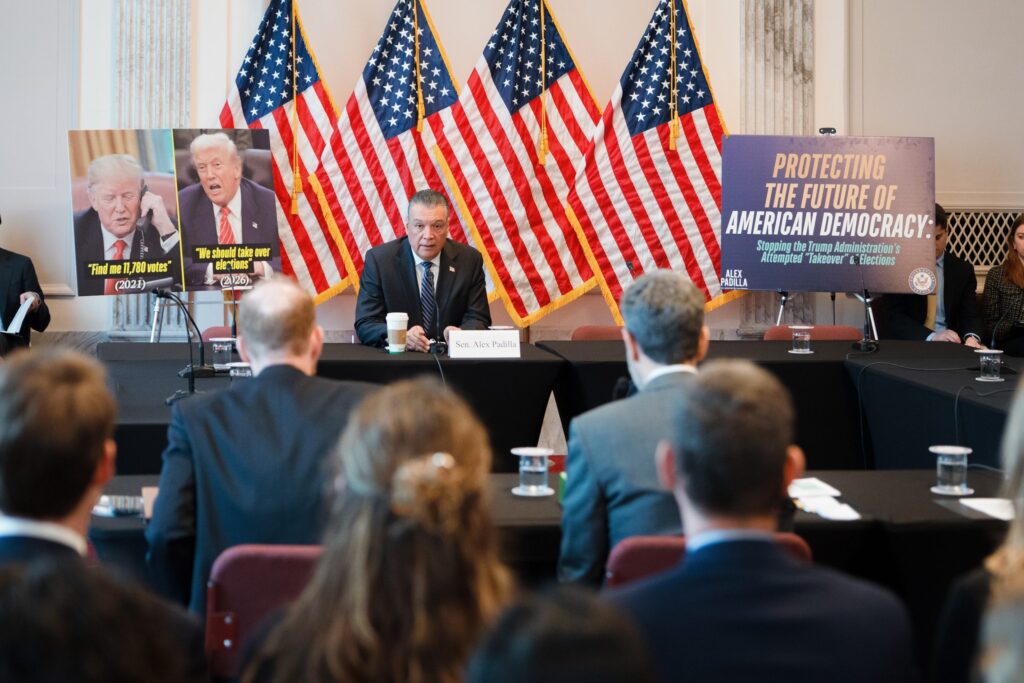
WASHINGTON, D.C. — In a pressing forum on democracy, U.S. Senator Alex Padilla (D-Calif.), who serves as the Ranking Member of the Senate Committee on Rules and Administration, convened a spotlight discussion titled “Protecting the Future of American Democracy: Stopping the Trump Administration’s Attempted ‘Takeover’ of Elections.” The event featured a panel of elected officials and election experts who examined the ramifications of the Trump Administration's recent actions, including an executive order perceived to threaten voting rights and reports of an FBI raid in Fulton County, Georgia, that raised concerns over election integrity.
Among the panelists were Mo Ivory, a Commissioner from Fulton County, Georgia; Rob Bonta, California’s Attorney General; Norm Eisen, the Founder of Democracy Defenders and former U.S. Ambassador to the Czech Republic; and Stephen Richer, former Maricopa County, Arizona Recorder and CEO of Republic Affairs. Their insights spanned a range of critical issues affecting the immediate future of American democracy.
During his questioning, Padilla directed attention to Attorney General Bonta about the joint efforts of Democratic state attorneys general to combat Trump’s controversial executive order aimed at “election integrity.” This executive order, issued in March, has faced significant backlash from legal experts as being unconstitutional.
PADILLA: “Through that case or others, can you speak to the value of the coordination and collaboration amongst attorney generals in this fight?”
BONTA: “The coalition, the collaboration, the partnership among the Democratic attorneys general has been incredibly powerful. We speak regularly, every week, and it’s led to at least 59 lawsuits in less than that many weeks, with an 80% victory rate, protecting critical rights and freedoms like birthright citizenship and voting rights.”
Padilla also inquired about the implications of the FBI's recent actions in Fulton County, which included an unlawful seizure of ballots from the 2020 election. He emphasized the need for transparency and accountability amid allegations of political maneuvering. Commissioner Ivory provided reassurance regarding the ongoing preparations for the upcoming midterm elections.
IVORY: “Fulton County election workers are steadfast in their devotion to administering the elections. I immediately went down there to support them, and to assure voters that elections are secure and fair.”
In terms of legal concerns, Richer raised critical points about the warrant that authorized the FBI raid, specifically mentioning the involvement of Kurt Olsen, a White House lawyer known for propagating election denial claims. Richer argued that key omissions in the affidavit behind the warrant could undermine the investigation’s credibility.
RICHER: “My concerns with the affidavit were threefold. It omitted important material from previous investigations and did not analyze the credibility of the witnesses cited.”
Padilla then turned his questioning to Ambassador Eisen regarding the potential of the Trump Administration declaring a national emergency to impose sweeping changes to federal elections, including restrictions on vote-by-mail options. Eisen firmly stated, "There is no national emergency with respect to our elections," and emphasized that attempts to impose voter ID laws would be unconstitutional.
EISEN: “There is no election emergency, nor would the voter ID and other ideas that the President is trying to force on us be appropriate.”
The forum was part of ongoing efforts by Senate Democrats to highlight threats to election security and integrity, stemming from actions taken during the Trump Administration. Padilla underscored the need for vigilance and collaboration moving forward, stating, “We’ll continue to stay in touch, not just to coordinate and collaborate, but to organize to defend our democracy, not just this November, but for future generations.”
This spotlight series underscores the importance of engagement in the political process, as well as the potential consequences of anti-democratic actions. The next discussion is expected to address further implications of proposed legislative changes that threaten to disenfranchise millions of eligible voters.
Your Community's Future Hangs in the Balance: Don't Miss THIS Shocking Election Next Month!
You Won't Believe What Happens When Your Request Gets Denied – 7 Shocking Consequences!

Urgent Alert: 50 Measles Cases Linked to Major Airport - Are You at Risk?
AG Nessel's Bold Move: Is the Kennedy Vaccine Schedule About to Face a Game-Changing Attack?

Alberto Carvalho's Mysterious $10 Million Real Estate Empire: What LAUSD Doesn't Want You to Know!

You Won't Believe How This Tech Giant Just Lost $20 Billion Overnight—Find Out Why!
You might also like: