
AG Nessel's Bold Move: Is the Kennedy Vaccine Schedule About to Face a Game-Changing Attack?

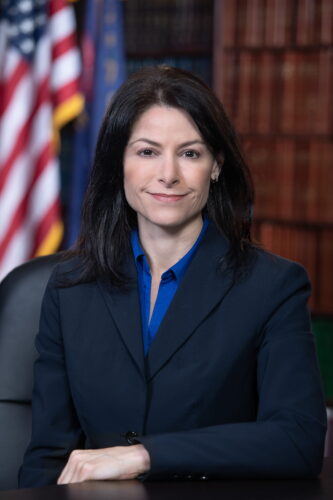
LANSING — Michigan Attorney General Dana Nessel has joined a multistate lawsuit that challenges the Trump administration’s recent overhaul of the nation’s childhood immunization schedule. The complaint names Health and Human Services (HHS) Secretary Robert F. Kennedy, Jr., Centers for Disease Control and Prevention (CDC) Acting Director Jay Bhattacharya, alongside the CDC and HHS as defendants in this legal action.
At the heart of the lawsuit is the January 5 decision memo issued by the CDC, which removed the universally recommended status for seven key childhood vaccines. These include vaccinations against rotavirus, meningococcal disease, hepatitis A, hepatitis B, influenza, COVID-19, and respiratory syncytial virus (RSV). The complaint also critiques the decision to replace the Advisory Committee on Immunization Practices (ACIP), a federal panel of experts that has long guided vaccine policy in the U.S.
Nessel highlighted the significance of childhood vaccinations, noting that they have prevented an estimated 508 million cases of illness, 32 million hospitalizations, and 1.1 million deaths among U.S. children born in the last three decades. "This achievement has been made possible in large part by leading medical scholars and public health experts who have served on ACIP and established the science-based childhood vaccination schedule that federal agencies, states, and parents have confidently relied on for decades," Nessel stated.
Following a December 2025 decision by the reconstituted ACIP to eliminate the recommendation for a universal hepatitis B birth dose—a vaccine that can be up to 90 percent effective in preventing perinatal infection—concerns have escalated over the CDC's approach to vaccine recommendations. Nessel indicated that the CDC has embarked on an “ideological attack” on routine childhood vaccines.
In her press release, Nessel pointed out that the January 5 decision was not grounded in new scientific evidence or any formal recommendations from a legitimate ACIP but instead relied on superficial comparisons to nations like Denmark while dismissing essential differences between those countries and the United States. "Lower vaccination rates will lead directly to higher rates of infectious disease," she warned. "For Michigan and other states, this means a greater strain on their Medicaid programs, more money spent combating misinformation, and wasted resources decoupling state laws, regulations, and public guidance from ACIP’s and CDC’s now-untrustworthy recommendations."
Nessel reaffirmed the safety and effectiveness of the pre-Kennedy childhood immunization schedule, asserting that these vaccines are critical for protecting not just children but public health as a whole. Further emphasizing the importance of vaccines, Dr. Natasha Bagdasarian, Michigan's chief medical executive, has issued a standing recommendation urging healthcare providers and families to follow the child and adolescent immunization schedule produced by the American Academy of Pediatrics and the American Academy of Family Physicians.
"Childhood vaccines are proven to save lives, and the overhaul of the nation’s immunization schedule has only shown unnecessary confusion and anxiety for parents who are trying to make the best, most informed decisions for their children," Nessel said. "Our children deserve recommendations that are guided by science, and I will continue working to protect Michigan families and ensure that health decisions remain rooted in facts and in the best interests of our communities."
Dr. Bagdasarian echoed Nessel's concerns, stating, "For decades, vaccines have played a critical role in the prevention and control of infectious diseases and significant reductions in childhood illnesses and fatalities. The recent changes announced by the federal government are causing confusion for families and have contributed to recent declines in vaccination rates. Unless we can increase immunization rates, we will continue to experience outbreaks of vaccine-preventable diseases, and potentially devastating health impacts."
The plaintiff states in the lawsuit, which includes attorneys general from Arizona, California, Colorado, Connecticut, Delaware, Maine, Maryland, Minnesota, New Jersey, New Mexico, Oregon, Rhode Island, Wisconsin, and the Governor of Pennsylvania, are seeking to declare the Kennedy immunization schedule and the new ACIP appointments unlawful, aiming to enjoin, vacate, and set aside both the new immunization schedule and the controversial appointments.
This lawsuit underscores a pivotal moment in U.S. public health policy, reflecting deepening divisions over vaccination and its implications for community health. As debates on vaccine efficacy grow louder, the outcome of this lawsuit could have significant ramifications for healthcare practices not just in Michigan, but across the nation.
Alberto Carvalho's Mysterious $10 Million Real Estate Empire: What LAUSD Doesn't Want You to Know!

You Won't Believe How This Tech Giant Just Lost $20 Billion Overnight—Find Out Why!

Could the Unthinkable Link Between Giraffes and Poop Save an Entire Species? You Won't Believe How!

Samsung's Shocking Giveaway: Win the $1,200 Galaxy S26 Ultra & Buds4 Pro—But Time is Running Out!

You Won't Believe How NS's Shocking Deal with Georgia Tech Could Transform Rail Careers Forever!

Is Your Home at Risk? The Alarming Climate Change Gap Experts Are Ignoring!
You might also like: