
EU’s Bold Move: Will Green Steel Save the Economy or Spell Disaster? Discover the Shocking Truth!

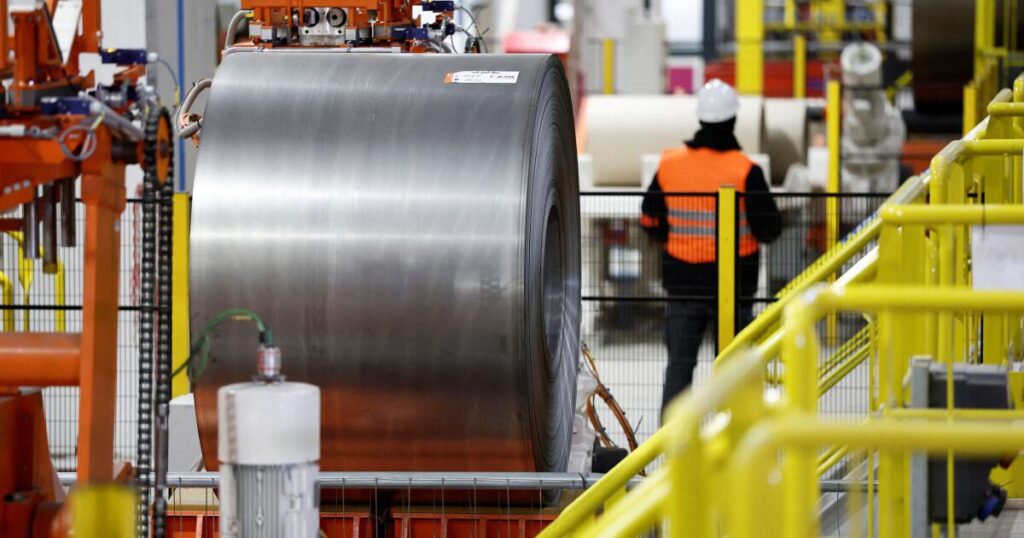
The European Union (EU) is placing a strong emphasis on the production of **green steel** as part of its strategy to revitalize the continent’s industrial sector. This initiative comes in response to growing pressures to remain competitive with major players like the **U.S.** and **China**, particularly as steel production is a significant contributor to climate change.
According to a draft seen by **Bloomberg**, the **European Commission**, the EU's executive body, plans to promote low-carbon steel usage by introducing certification measures. This will be coupled with efforts to stimulate demand, especially in the automotive sector, through the upcoming **Industrial Accelerator Act** set to be unveiled next week. The commission aims to classify steel based on the **emissions** generated during its manufacturing process, with specific thresholds to be defined later.
Under these proposals, EU governments will need to ensure that at least **25%** of the steel procured through public contracts and subsidy programs is low-carbon. Methods such as using **scrap steel** and **electric arc furnaces**, along with the adoption of **green hydrogen**, are highlighted as key strategies for producing steel with reduced carbon emissions. Similar regulations are expected to be established for **aluminum** and **cement** as well.
Steel and cement are prioritized due to their status as the largest industrial emitters, collectively accounting for over **6%** of the EU’s annual **greenhouse gas emissions**. The push for low-carbon steel is part of a wider effort to address the industrial decline attributed to high energy costs, stringent regulations, and competition from cheaper imports. The **Industrial Accelerator Act**, often referred to as the "Made in Europe" act, aspires to ensure that manufacturing constitutes **20%** of Europe’s economic growth by **2035**.
This new legislation proposes a variety of conditions aimed at favoring local companies in investment decisions made by EU member states and foreign firms. Such a shift would represent a significant departure from the **free-trade** policies that have dominated EU thinking for decades.
The criteria for “made in Europe” will encompass production within the EU’s **27 member states** as well as from **trusted partners**—countries with which the EU has free trade agreements and aligns with its security and resilience objectives. The automotive industry is seen as a crucial market for green steel produced within the EU. In a related move, the European Commission indicated plans to reverse its ban on combustion engines to allow for reductions in emissions through the use of low-carbon steel.
This ambitious initiative signals not only the EU’s commitment to reducing its carbon footprint but also its strategic pivot towards enhancing domestic manufacturing capabilities in the face of international competition. As discussions unfold, the practical implications for industries, policymakers, and consumers alike remain to be fully realized.
Redmi Note 15 Pro+ 5G: Why This Xiaomi Phone Turns Beach Days into Total Disasters!

This Indian AI Startup Just Defeated ChatGPT—Is Your Job Next? Here’s the Shocking Truth!

BSE's Shocking Move: Why This $2 Billion Deal Could Change Stock Trading Forever!

Gillespie County GOP's Shocking Decision: Why Hand-Counting Primaries is Being Cut—You Won't Believe the Consequences!

CBS Sports Shocker: Why 60 Minutes Is Abandoning Its NYC Home After Decades—You Won't Believe the Reason!

Nuggets Shock Fans by Signing Ex-Hornets Star: What This Means for Their Championship Hopes!
You might also like: