
Is a 2026 Stock Market Crash Inevitable? Shocking Revelations About Trump's Tariffs and Fed Warnings!

The recent performance of the S&P 500 index has caught the attention of investors, especially amidst rising concerns about its valuation. As of late September, the index has appreciated about 3% despite Federal Reserve Chair Jerome Powell's warnings about its high valuation. This uptick, while positive, raises questions about the sustainability of such growth in light of potential economic headwinds, particularly the tariffs imposed by the Trump administration.
Powell's caution was clear: the Federal Reserve indicated that equity prices are "fairly highly valued." The index's forward price-to-earnings (PE) ratio stood at 22.2 at the end of January, significantly above the 10-year average of 18.8. Such elevated valuations are reminiscent of previous economic bubbles, such as the dot-com era and the Covid-19 pandemic, periods during which the S&P 500 saw declines of 49% and 34%, respectively. Historical trends suggest that when valuations are this high, the likelihood of a correction increases.
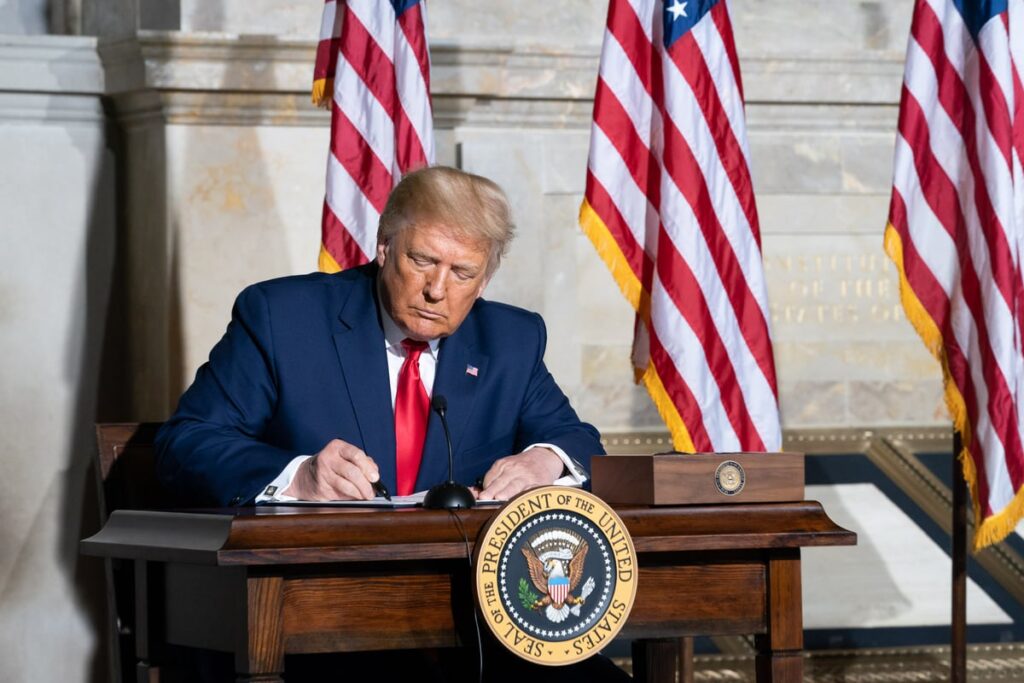
Compounding these concerns are the tariffs introduced under the Trump administration, which have raised the average tax on U.S. imports to around 13%, the highest level in nearly a century. While Trump has insisted that these tariffs primarily impact foreign producers, recent studies tell a different story. Research from the National Bureau of Economic Research indicates that U.S. companies and consumers bore 94% of the tariff costs by 2025. Similarly, a study from the Federal Reserve Bank of New York found that U.S. entities paid the bulk—86%—of the tariffs, while foreign exporters absorbed only 14% of the costs.
Further emphasizing this point, a study conducted by the Kiel Institute concluded that American importers and consumers shoulder nearly all the tariff burden, with only 4% of the costs absorbed by foreign exporters. The Congressional Budget Office (CBO) estimates that foreign companies will absorb just 5%, with the remaining 95% being divided between U.S. businesses and consumers. This raises a critical issue: every dollar siphoned away by tariffs reduces the purchasing power of American consumers, ultimately slowing economic growth.
The economic implications of these tariffs are concerning, particularly for stock market stability. The CBO has indicated that the imposition of tariffs will lead to lower real GDP than would have been the case without them, which could negatively impact corporate earnings. Given that stock values are typically calculated as a multiple of those earnings, a contraction in growth could precipitate a market drop. With the S&P 500 already under scrutiny for its high valuations, any economic slowdown could trigger a sharper correction.
In light of these factors, is it time for investors to panic and sell off their portfolios? Financial experts often caution against trying to time the market. While the current valuations are concerning, there are also potential mitigating factors. For instance, advancements in artificial intelligence could lead to productivity gains that may counterbalance the economic weaknesses attributed to tariffs. Therefore, rather than making drastic changes to investment strategies, a more measured approach is advisable. Starting with small positions and avoiding investments in stocks that one wouldn't feel comfortable holding during a downturn can provide a safety net for investors.
As we look ahead, it's crucial for investors to remain vigilant and informed. The interplay between tariffs, economic growth, and stock market valuations creates a complex landscape. Understanding these dynamics is essential for navigating the current market environment and making informed investment decisions.
Are You One of the 70% of Adults Ignoring These Deadly Vaccines? Find Out Now!

Bavarian Nordic's $22.5M Mpox Vaccine Deal: Is This a Game-Changer or a Risky Gamble?

4 Shocking Truths About Your Posture That Could Change Your Life—Don’t Let Humpback Win!
Your Browser is Outdated: 5 Shocking Risks You Didn’t Know You Were Taking!

Africa’s Health Future in Jeopardy? Shocking New Deal Could Change Everything!
You Won't Believe What Happens When This Request Gets Denied—Are You Next?
You might also like: