
You Won’t Believe How Climate Change is Shattering Greenland's Inuit Lives—Find Out What’s at Stake!

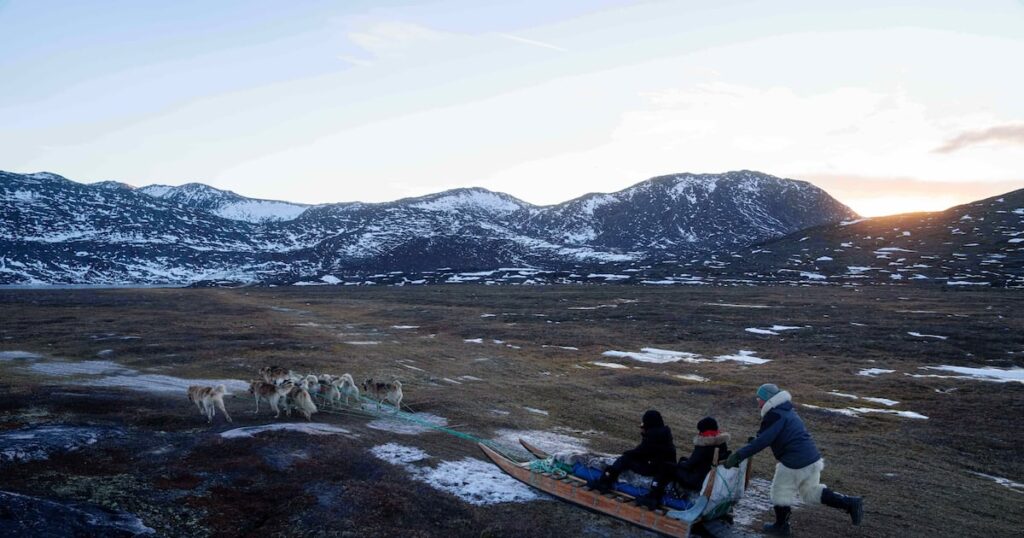
In the heart of Ilulissat, Greenland, 62-year-old Jørgen Kristensen reflects on a childhood steeped in the companionship of sled dogs. Growing up in a village in northern Greenland, his early years were marked by friendship with these resilient animals, especially during moments of bullying at school. As he recounts, “The dogs were a great support. They lifted me up when I was sad.” This bond blossomed into a successful career as a five-time Greenlandic dog sled champion, embodying the deep-rooted connection between the Inuit culture and their loyal sled dogs.
However, climate change has drastically altered the landscape Kristensen has known and loved. This winter, for the first time in his memory, he has encountered a January devoid of snow or ice. Instead, he maneuvers his sled over earth and rock, a stark contrast to the icy terrain that once defined his surroundings. “It’s the first time I can remember when there has been no snow — or ice in the bay — in January,” he shared with the Associated Press.
Rising temperatures are wreaking havoc in Ilulissat, melting permafrost, causing buildings to sink, and leading to cracked pipes. The nearby Sermeq Kujalleq glacier, renowned for its rapid ice movement, is retreating at an alarming rate, contributing significantly to global sea level rise. According to the United Nations cultural organization UNESCO, this glacier sends more icebergs into the sea than any other outside Antarctica, and as it continues to melt, the implications extend far beyond Greenland. NASA has reported this glacier's declining mass contributes to rising oceans from Europe to the Pacific Islands.
Kristensen recalls that in the 1980s, winter temperatures regularly hovered around -25°C (-13°F). Today, he experiences days where temperatures can soar above freezing, occasionally reaching 10°C (50°F). This trend has forced him to adapt; he now collects snow for his dogs to drink during journeys, a practice once unnecessary. “If we lose the dog sledding, we have large parts of our culture that we’re losing. That scares me,” he says, his voice tinged with emotion.
Loss of Cultural Heritage
The absence of sea ice profoundly impacts the way of life for Greenlanders. The ice sheets historically served as expansive “big bridges,” linking communities and hunting grounds across the Arctic. Kristensen lamented, “When the sea ice used to come, we felt completely open along the entire coast, and we could decide where to go.” The current lack of ice signifies not just a change in climate but a potential loss of identity and cultural heritage.
Kristensen is not alone in his concerns. Sara Olsvig, chair of the Inuit Circumpolar Council, highlighted how the warming climate has made life increasingly perilous for northern fishermen, who have transitioned to boats due to inadequate ice conditions. The shift from snow to rain has turned ice dangerous; rain-formed ice can appear like water, posing severe risks on the sea. “Climate change is affecting us deeply,” Olsvig said, noting that the Arctic is warming three to four times faster than the global average.
The glacier, a vital part of Kristensen’s life and the broader ecosystem, has receded approximately 25 miles during his lifetime. Karl Sandgreen, head of Ilulissat’s Icefjord Center, described how pollution is exacerbating the melting. He noted that debris from volcanic eruptions and soot from ships darken the snow and ice, reducing its reflectivity and accelerating melting. This faster ice loss has implications for global sea levels and raises questions about future mineral exploitation in the region.
In this tumultuous climate, Kristensen takes on the role of a guide, sharing the beauty and urgency of Greenland’s glaciers with tourists. He emphasizes the need for education, asserting that teaching children about the importance of ice and oceans is essential for future conservation efforts. “If we don’t start with the children, we can’t really do anything to help nature. We can only destroy it,” he warns.
As Kristensen navigates the changing landscape, he embodies the intersection of personal history and broader environmental shifts. His journey reflects a microcosm of the Arctic’s struggle against climate change and the fight to preserve a unique cultural heritage, reminding us that the melting ice is not just a story of loss, but also one of resilience and adaptation.
Caleb Williams' 2026 Bears Offense Goal Will Shock You—Is This the End for Chicago?

Caitlin Clark’s Bold Statement: “I’d Rather RETIRE Than Live Like LeBron!” You Won't Believe Why!
Governor's Shocking Rejection: No Income Tax for Families Earning Under $1M—What’s the Real Cost?
You Won't Believe What Happens When Access to This Page Is Denied - Shocking Truth Revealed!

Bitmine Just Unveiled a Game-Changing Ethereum Strategy—Are Your Investments at Risk?
Dow and Nasdaq Holding Steady—But Are Warner Bros. and Paramount Stocks About to CRASH? Find Out Now!
You might also like: