
Why Is Rubio Calling Orbán ‘Essential’? Shocking Financial Moves Ahead of Election!

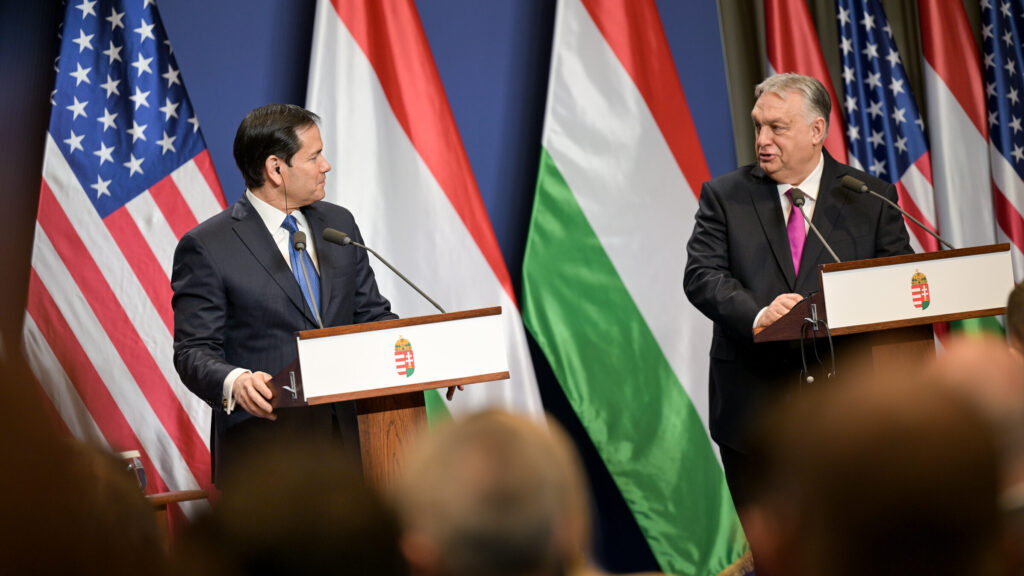
In a significant display of diplomatic support, U.S. Secretary of State Marco Rubio praised Hungarian Prime Minister Viktor Orbán during a press conference in Budapest on February 16. Rubio described Orbán’s leadership as ‘essential’ to American interests, emphasizing the growing ties between the two nations ahead of Hungary's parliamentary elections scheduled for April. “President Trump is deeply committed to your success,” Rubio stated, reinforcing the notion that U.S. interests are aligned with Hungary’s stability and growth as long as Orbán remains in power.
Rubio's visit, which followed his attendance at the Munich Security Conference and a stop in Bratislava, culminated in the signing of a civilian nuclear cooperation agreement aimed at enhancing U.S.-Hungarian energy relations. This partnership is particularly vital as it aims to reduce Hungary's reliance on Russian energy. The secretary of state noted that exemptions from American sanctions on Russian oil imports will remain valid as long as Orbán’s government is in place, providing reassurance amidst potential external economic challenges.
The recent U.S. support has drawn skeptical reactions from various media outlets in both Hungary and the West, especially given the history of Trump's administration's ties with Orbán. The financial protective measure discussed, which seems to be akin to a currency swap agreement similar to one previously established with Argentina, indicates a strategic endeavor to bolster Hungary's financial position ahead of crucial elections.
Rubio also articulated U.S. acceptance of Hungary's multi-vector foreign policy, which includes strengthening economic ties with nations like China. He clarified, “We understand that every country in the world has to deal with the reality of their geography, of their economy, of their history, and of the challenges of their future.” His comments reflect a nuanced U.S. foreign policy strategy that seeks to balance its interests with those of its allies.
Orbán reciprocated by claiming that U.S.-Hungarian relations have never been stronger, citing an unprecedented seventeen American investments in Hungary since January of the previous year. He highlighted the restoration of visa-free travel for Hungarians to the United States as another sign of strengthening ties. Orbán's administration has also been invited to join the newly established Board of Peace in Washington, where he will represent Hungary.
The prime minister underscored the importance of energy agreements that have emerged from this partnership, stating they ensure a secure national energy supply. With Hungary's exemption from restrictions on Russian oil and gas, he noted, the country is positioned to offer “extremely cheap energy in international comparison.” Furthermore, Orbán expressed confidence that under Trump’s leadership, the ongoing war in Ukraine could have been avoided, and he suggested that Hungary is prepared to host a peace summit in Budapest.
As Hungary approaches its parliamentary elections, Orbán has accused Ukraine of interfering in the electoral process, arguing that Kyiv seeks a Hungarian government more favorable to its European Union aspirations. He asserted the resilience of Hungarian democracy, stating the next government will reflect the will of the Hungarian people, countering opposition claims of potential electoral manipulation.
In conclusion, the recent developments highlight a profound shift in U.S.-Hungarian relations, characterized by strong diplomatic support from Washington amid geopolitical tensions. As both nations continue to navigate their respective challenges, the implications for Hungary’s upcoming elections and broader European dynamics remain significant.
Is Your Startup Ready? Discover How AI's Shocking 'Second Wave' Will Leave You Behind!

You Won't Believe What Cape Girardeau Did This Valentine's Day—Shocking Revelations Inside!

You Won't Believe How SoFi Just Transformed Bitcoin into a Game-Changer for Fintech!

You Won't Believe How Many Americans Are Paying for Longevity Tests—Is Your Health at Risk?

You Won't Believe How Brands Are Shaping Your Favorite Entertainment—Shocking Secrets Revealed!

Why This Healthcare Stock Just Shot Up 74%—And How You Could Miss Out on Massive Gains!
You might also like: