
Judge’s Shocking Ruling on Trinidad Chambliss: What College Football Fans MUST Know NOW!

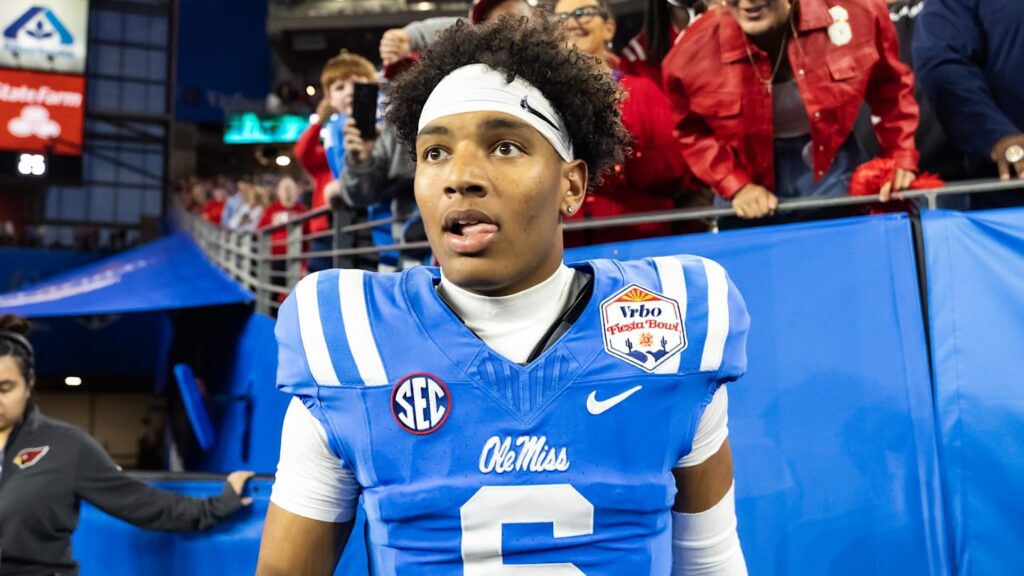
The long-awaited ruling on the eligibility of Ole Miss Rebels quarterback Trinidad Chambliss has finally arrived. On Thursday, it was confirmed that Chambliss is now cleared to return to college football in 2026. This decision comes after a legal battle that highlighted significant discrepancies in how the NCAA handles medical waivers.
According to ESPN’s Pete Thamel, the ruling was delivered by Judge Robert Whitwell, who stated that the NCAA failed to consider crucial evidence provided by Chambliss regarding his eligibility for a medical redshirt. The judge noted that Chambliss would suffer "irreparable harm" if denied this opportunity to compete this year. Whitwell emphasized that Chambliss had submitted adequate medical references, and criticized the NCAA’s actions as lacking good faith.
Chambliss' pursuit of a medical redshirt stems from serious respiratory issues that sidelined him during his sophomore year at Ferris State. Despite this clear medical complication preventing him from playing, the NCAA had previously argued that Chambliss could have undergone surgery to allow him to participate that season. This assertion drew considerable backlash, given the judge's ruling, which underscored the importance of acknowledging medical evidence in eligibility decisions.
The implications of this ruling extend beyond just Chambliss himself; it raises broader questions about the NCAA's authority and its decision-making processes concerning athlete eligibility. The landscape of college athletics has been shifting in recent years, with increasing scrutiny on the NCAA's policies and practices. Many in the sports community have expressed concern over the power dynamics involved in eligibility rulings, as noted by commentators on social media.
The judge has officially granted Trinidad Chambliss his injunction to play next season.
I'm excited to watch him play.
But local judges acting as de facto appeals committees for every NCAA eligibility decision is not exactly an ideal process.— Stewart Mandel (@slmandel) February 12, 2026
Others in the sports media have also weighed in. College Football News’ Pete Fiutak remarked, "Trinidad Chambliss gets another year of eligibility at Ole Miss ... for now. The NCAA will probably appeal. Whatever. I'm tired." This reflects a growing fatigue among fans and analysts regarding the NCAA’s contentious eligibility disputes.
Social media reactions ranged from excitement to skepticism. One user humorously commented on the situation, “Trinidad Chambliss is really allowed to play another year 😂😂. The NCAA is dead and gone. Zero power at all and a completely useless joke.” Another fan questioned Chambliss's decision to pursue a sixth year of eligibility instead of entering the professional ranks, given his potential draft stock.
Trinidad Chambliss in the Ole Miss locker room next year: pic.twitter.com/hbHFM7j9eQ
— Fanatics Sportsbook (@FanaticsBook) February 13, 2026
As for Chambliss, he had a stellar season in his first year at Ole Miss, leading the team to a program-record 13 wins and a couple of victories in the College Football Playoff. He threw for 3,937 yards, racked up 22 touchdowns against just three interceptions, and added 527 rushing yards with eight touchdowns. His performance has made him a key figure in the Rebels’ roster, which is anticipated to be bolstered by a strong transfer portal class under new coach Pete Golding.
With Chambliss’s eligibility for the upcoming season confirmed, Ole Miss is now positioned as a frontrunner in both the SEC and college football more broadly. This ruling not only affects Chambliss's future but also signals potential changes in how the NCAA may handle medical waivers going forward. Fans and analysts alike will be watching closely to see if this decision prompts further reforms within the NCAA, especially concerning athletes’ rights and health considerations.
Coinbase's Shocking $600 Million Loss: Is This the End of Crypto as We Know It?

Google CEO's Shocking Reveal: Gemini 3's Massive Upgrade Could Change Everything—Are You Ready?

Can Humanity Survive the Coming Storm? Shocking Insights from Gillani on Climate and Conflict!

You Won’t Believe the Shocking Side Effects of COVID Vaccines—Are You at Risk?

EPA's Shocking Climate Change Reversal: What This Means for Your Future!

Social Media Shocker: Surveillance Uncovers Disturbing Animal Abuse—Police Hunt for This Suspect!
You might also like: