
Shocking Truth: Are We Underestimating Wastewater Emissions by 50%? The Alarming Data You Must See!

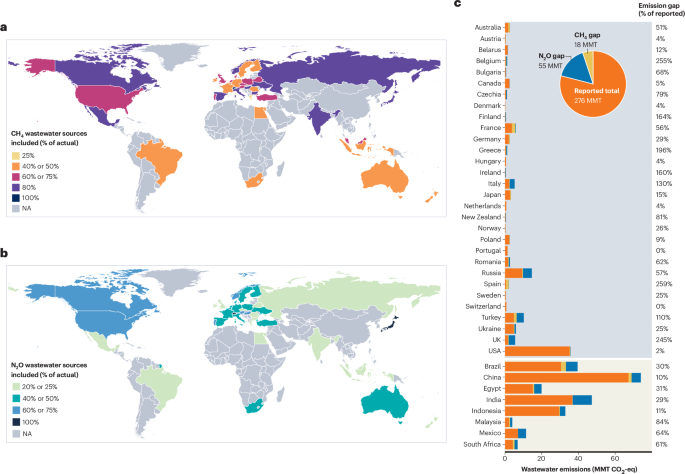
As global concern over climate change intensifies, the role of wastewater systems in contributing to greenhouse gas emissions is coming under scrutiny. Wastewater treatment facilities, which process water from households and industries, are significant sources of methane (CH4) and nitrous oxide (N2O), both of which are potent greenhouse gases with a much greater heat-trapping ability than carbon dioxide. Accurate accounting of these emissions is crucial for effective climate mitigation efforts and policy decisions.
However, emissions from wastewater systems are often significantly under-represented in national inventory reports (NIRs). This gap in reporting primarily stems from outdated accounting methodologies that fail to capture the full scope of emission sources. Emissions arise from various points, including decentralized systems, centralized treatment facilities, and the discharge of both treated and untreated wastewater. The current methodologies used do not consistently account for these varying sources, leading to substantial discrepancies in reported data.
Moreover, the inconsistency in accounting methods among different countries exacerbates the problem. Some nations may overlook key emission sources entirely, making it challenging to compare data internationally. This lack of uniformity in reporting is especially concerning in the context of the Paris Agreement, which relies on national inventories to support countries' climate pledges. The Global Stocktake, which monitors global mitigation efforts, also leans heavily on these inventories for its assessments. Therefore, the completeness and consistency of these reports are vital for establishing credible climate targets and making informed policy decisions.
To strengthen these inventories, a reevaluation of the methodologies used to calculate emissions is essential. Policymakers and scientists alike agree that improving the accuracy of data collection and reporting can enhance the capacity to meet climate goals. As nations prepare for future climate summits and enhance their commitments under the Paris Agreement, clear guidelines and standardized methodologies for emissions reporting from wastewater systems must be prioritized.
Addressing these challenges is not just an administrative issue; it has real-world implications for climate policy and public health. Accurate emissions data can inform effective regulations, drive technological innovations in wastewater treatment, and promote sustainable practices within communities. Furthermore, as cities grapple with the increasing impacts of climate change—such as extreme weather events and rising sea levels—robust wastewater management becomes an even more critical focus.
In conclusion, the underreporting of emissions from wastewater systems represents a significant gap in our understanding of climate change contributors. As the stakes rise, enhanced methodologies for accurate accounting are essential not only for meeting international obligations but also for fostering a sustainable future. The time to act is now, and the call for improved transparency and consistency in emissions reporting from these systems is more urgent than ever.
Super Bowl LX vs. Bad Bunny: Why 128.2 Million Watched Him Instead—You Won't Believe the Shock!

Caleigh Mackenzie's Shocking Age Revealed: How She Built a $1M Fitness Empire! You Won't Believe Her Journey!

Shocking Discovery in Arizona: What Investigators Found Could Change Everything in Nancy Guthrie's Case!

Hamilton County's Real Estate Market Just Took a SHOCKING Turn—Inventory Rises, But What Does This Mean for Buyers?

Is the White House Hiding a $10 Million Secret? Court Ruling Could Change Everything!

You Won’t Believe Jennifer Aniston’s Shocking Anti-Aging Secret for Staying Fit at 57!
You might also like: