
Is This the Point of No Return for Our Planet? Shocking Climate Data Reveals Alarming Truth!

The world is facing an alarming reality as it approaches the critical threshold of a 1.5 degrees Celsius increase in average global temperatures, a target set during the Paris climate conference a decade ago. Recent studies indicate that for the first time, a three-year span ending in 2025 has breached this threshold, signaling potentially devastating consequences for our planet. As climate change accelerates, governments appear to be losing their resolve to effectively tackle the emissions driving this global crisis.
Atmospheric chemist Robert Watson, a former chair of the U.N.’s Intergovernmental Panel on Climate Change (IPCC), bluntly states, “Climate policy has failed. The 2015 landmark Paris agreement is dead.” His sentiment is echoed by many scientists who warn that years of inadequate action have brought us to a point where breaching the 1.5-degree limit seems inevitable.
The implications of this warming are becoming increasingly dire. Researchers now fear that climate change might not continue its gradual course but could instead trigger sudden and irreversible shifts in Earth's systems. According to British global-systems researcher Tim Lenton from the University of Exeter, “We are rapidly approaching multiple Earth system tipping points that could transform our world with devastating consequences for people and nature.” The urgency of the situation cannot be overstated: failure to reduce emissions could lead to a warming scenario that many scientists believe is beyond recovery.
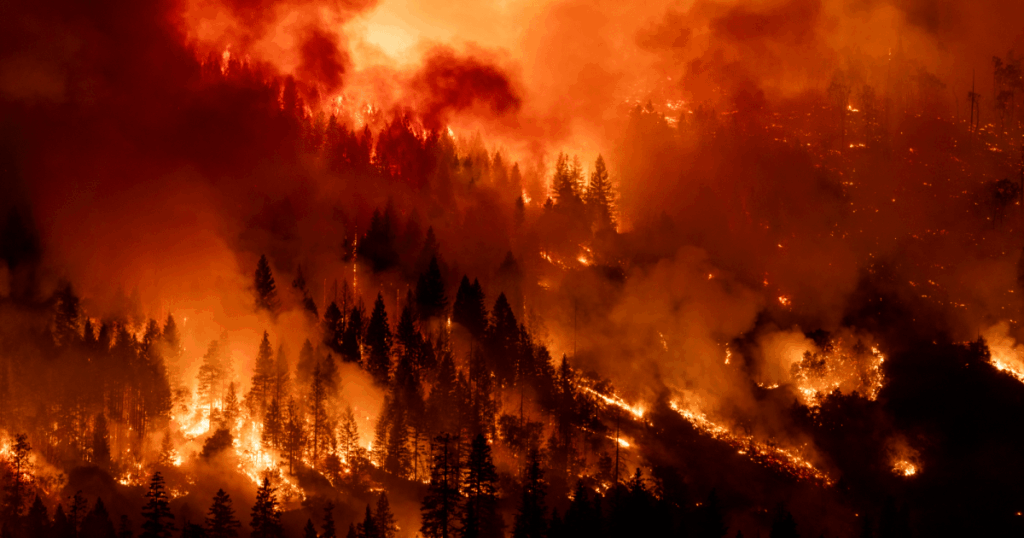
We are already witnessing the effects of this impending overshoot. There has been a notable increase in severe weather events, including soaring heatstroke-related deaths in regions like India, Africa, and the Middle East, as well as unprecedented wildfires across the United States. The International Chamber of Commerce has reported that extreme weather linked to climate change has cost the global economy over $2 trillion in the last decade, affecting approximately one-fifth of the world’s population.
The past three years have marked the hottest on record, with projections for 2024 indicating temperatures might reach 1.55 degrees Celsius above preindustrial levels. While traditionally scientists measure warming over a 20-year period to account for natural cycles like El Niño, recent studies suggest that we may have already surpassed the critical 1.5-degree threshold.
This acceleration in warming is largely attributed to two interlinked factors: persistent high emissions of greenhouse gases and the diminishing effectiveness of natural carbon sinks. The latter, which have historically absorbed around half of the CO2 we emit, are weakening. For instance, research has shown a significant decline in the capacity of African rainforests, once a vital carbon sink, which have recently begun releasing more CO2 than they capture.
Compounding this problem, the Greenland Ice Sheet is losing 30 million tons of ice every hour, and its melting could significantly contribute to global sea-level rise—potentially by up to 23 feet if the current warming trend continues. The West Antarctic Ice Sheet faces similar threats, raising concerns over the possibility of destabilizing global ocean circulation systems like the Atlantic Meridional Overturning Circulation (AMOC), which plays a critical role in regulating weather patterns across Europe and the eastern United States.
For scientists like James Hansen, a climatologist at Columbia University, the situation necessitates immediate action. He warns that without significant changes in global warming trends, we could see a rise to 2 degrees Celsius by as soon as 2045. Current emissions levels have already led to the most significant increase in atmospheric CO2 concentrations recorded in 2024.
Looking forward, the potential for a “domino effect” looms large. The crossing of one tipping point could trigger others, ultimately leading to a cascade of environmental catastrophes. Researchers are concerned that the melting of the Greenland ice might disrupt the AMOC, leading to further destabilization of ecosystems, including the Amazon rainforest.
The scientific consensus indicates that reversing the effects of exceeding the 1.5-degree threshold will be an uphill battle. Although potential solutions like enhancing carbon sinks or industrial-scale carbon capture have been proposed, they face significant challenges. Currently, efforts to bolster natural carbon sinks are only managing to absorb around 2 billion tons of CO2 annually, while estimates suggest we may need to reduce atmospheric CO2 by up to 400 billion tons to return to 1.5 degrees by the end of the century.
Innovation in technology, such as geoengineering, may provide additional avenues for intervention. However, many experts caution that these methods could inadvertently alter weather systems in unpredictable ways, akin to “turning on the air conditioning in response to a house fire,” as Watson describes it.
Despite the stark warnings from the scientific community, political will appears to be lacking. As the world gathers for climate negotiations, only Denmark has set a national negative emissions target, promising reductions of 110 percent from 1990 levels by 2050. The prospect of achieving global consensus on emissions reductions remains uncertain, especially considering the United States’ withdrawal from various climate initiatives.
As we grapple with the consequences of climate change, the urgency of action cannot be overstated. Without effective measures to rein in emissions and enhance carbon drawdown, the overshoot of the 1.5-degree threshold may lead to irreversible damage, propelling us into an era of accelerated warming that could reshape our planet for generations to come.
Shocking NFL Shakeup: Why Jim Schwartz’s Resignation Could Change the Browns Forever!

Is Bayern Munich's Josip Stanišić on the Brink of a Shocking Comeback? You Won't Believe the Stats!

What Happened When 4 Generations Went 30 Days Without Smartphones? The Shocking Truth Revealed!

Samsung Galaxy A55 vs iQOO Neo 10R: One Will Leave You Speechless—Discover the Shocking Truth!

Bill Cassidy's Shocking Anti-Vax Turn: Is It Too Late to Save Lives? The Alarming Truth Revealed!

You Won't Believe How This NJ College Defied NIL Losses to Snag Title—Find Out Their Secret!
You might also like: