
Is Your Smartphone’s Giant Battery Secretly Killing Your Experience? Find Out Now!

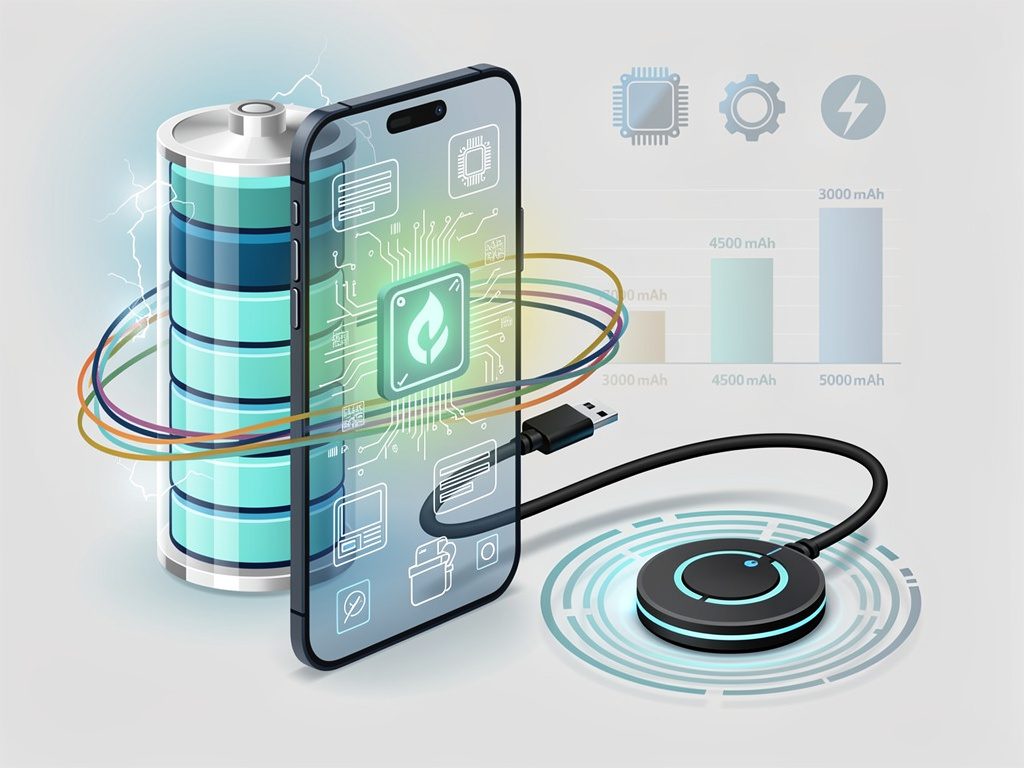
In today's smartphone market, manufacturers are engaged in a fierce competition to advertise larger battery capacities, boasting figures like 6,000 mAh, 7,000 mAh, and beyond. However, a growing number of engineers, analysts, and tech observers challenge the assumption that more milliamp-hours (mAh) equates to a better device. While consumers often believe that a bigger battery means longer usage times and less reliance on chargers, a recent analysis by MakeUseOf reveals that this relationship is far more complex than it appears.
The notion that a larger battery will automatically yield longer screen-on time and fewer battery anxiety moments seems logical. Yet, as MakeUseOf explains, battery capacity is just one component of a multifaceted equation. Factors such as processor efficiency, display power consumption, and the energy demands of 5G modems significantly influence a phone's overall performance. For instance, a smartphone equipped with a 6,000 mAh battery could easily fall short against a device with a 4,500 mAh battery if the latter is paired with an efficient chipset and a well-optimized software environment.
📰 Table of Contents
The Physics of Power: What the Spec Sheet Doesn’t Tell You
Benchmark data from industry sources like GSMArena and Tom’s Guide frequently highlight that phones with smaller batteries can outperform those with larger cells. Take Apple’s iPhone 16 Pro, which has garnered acclaim for its battery life despite having a smaller battery than many competing Android devices. The secret lies in Apple’s tightly integrated ecosystem of hardware and software, where its A-series processors and iOS power management work in harmony—a synergy that mere battery capacity cannot replicate.
However, having a larger battery does come with its downsides. One significant trade-off is the physical bulk. Larger batteries increase a device's weight and thickness, with some flagship models weighing over 220 grams. For users who prioritize portability, this trend towards heftier devices represents a setback in design. Additionally, engineers face tough decisions regarding the allocation of internal space. A larger battery may mean sacrificing advanced camera modules, improved haptic feedback, or enhanced speaker performance. Each cubic millimeter inside a smartphone is highly contested, and the push for larger batteries can distort design priorities.
The Silicon Revolution That Matters More Than Milliamp-Hours
Interestingly, the most critical advancements in smartphone endurance stem not from battery size but from breakthroughs in semiconductor technology. The shift from 7-nanometer to 5-nanometer and now to 3-nanometer chip architectures has resulted in remarkably improved power efficiency. Qualcomm’s Snapdragon 8 Gen 3, Apple’s A17 Pro and A18 Pro, and MediaTek’s Dimensity 9300 exemplify these generational leaps, enabling smartphones to perform more tasks with less energy.
This enhanced efficiency multiplies across various tasks, from web rendering to managing AI workloads. A phone built on a modern process node can achieve significantly better battery life than its predecessor, even if it has the same or smaller battery capacity. Apple has employed this strategy for years, and now Android manufacturers like Samsung and Google are following suit, investing in custom silicon designed with power efficiency as a primary focus.
Fast Charging: The Other Side of the Endurance Equation
The landscape of battery technology has also shifted due to advances in fast charging. Companies like Xiaomi, OPPO, and OnePlus have introduced charging speeds reaching 100W, 150W, and even 240W, allowing users to fully charge their devices in under 20 minutes. This technological leap alters the significance of battery size; if a phone can recharge as quickly as it takes to shower, then the perceived advantages of a 6,000 mAh battery over a 4,500 mAh battery diminish significantly for everyday use.
However, fast charging is not without its drawbacks. High charging currents can accelerate the degradation of lithium-ion and lithium-polymer cells. Manufacturers have countered this concern by implementing advanced battery management systems and dual-cell architectures to distribute charging loads. These innovations aim to maintain battery health, but pushing electrons into a cell at extreme rates still poses risks for users who plan to keep their devices for several years.
Software Intelligence: The Unsung Hero of Battery Life
Alongside hardware advancements, the role of software in battery management has become increasingly important. Both Android and iOS have developed sophisticated tools to manage background activities, throttle unused applications, and dynamically adjust performance metrics. Google’s Adaptive Battery feature, for example, employs machine learning to predict user behavior and limits background activities accordingly, leading to improved battery life across Pixel devices. Apple similarly capitalizes on its full control over software to impose strict limits on background processing, resulting in divergent battery performance even among devices with identical hardware.
This gap in software optimization can disadvantage smaller manufacturers or those relying on heavily customized Android versions, illustrating that while battery capacity is crucial, it is far from the only determinant of effective endurance.
The Consumer Perception Gap and What It Means for the Industry
The disconnect between battery size and actual battery life poses significant challenges for consumers making purchasing decisions. Shoppers are naturally drawn to the largest number advertised on spec sheets, and manufacturers are aware of this. As a result, the market becomes skewed toward prioritizing raw capacity over comprehensive optimization, which can lead to inferior user experiences.
This trend is especially pronounced in the mid-range and budget segments, where manufacturers may not have the luxury to invest in more efficient chipsets or advanced power management software. A 6,000 mAh battery in a $200 phone powered by an outdated chipset may not offer any better endurance than a more efficient 5,000 mAh battery in a competitively priced alternative. Yet, it will still capture attention on the spec sheet.
Looking to the future, the most promising improvements in smartphone endurance will likely arise from the intersection of material science, semiconductor engineering, and artificial intelligence. Innovations such as silicon-carbon anodes, which enhance energy density without adding bulk, and ongoing enhancements in chip fabrication suggest that the next generation of smartphones will maximize efficiency.
The key takeaway for consumers is that while battery capacity is an important consideration, it increasingly serves as a poor proxy for actual performance. The winners in the endurance race will be those companies that seamlessly integrate hardware efficiency, software intelligence, and charging technologies, rather than merely chasing the largest battery numbers. Ultimately, the milliamp-hour arms race may make for eye-catching marketing, but the real advancements are occurring in areas that spec sheets often overlook.
You Won't Believe What Miami Students Are Hiding About Their 10-0 Basketball Streak!

Matt Mahan’s Shocking Rise Could Change Everything—Is He Pasadena’s Future Governor?
Is the iPhone 15 REALLY worth $1,200? Shocking features that could change everything!

You Won't Believe What Arizona's New Health Tool Reveals About Your Community!

Healthcare Triangle Shock: 1-for-60 Stock Split Could Turn Your Investment into Dust—Find Out Why!

You Won't Believe What Students Are Revealing in GU's Shocking Mental Health Survey! Is Your Mental Health at Risk?
You might also like: