
Why This Shocking Book Reveals How Lifestyle Journalism Is Changing Politics Forever!

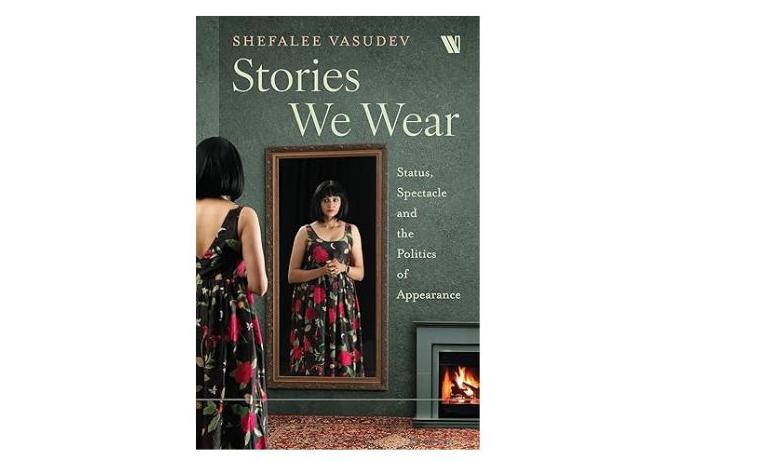
Stories We Wear, authored by Shefalee Vasudev, transcends the boundaries of typical lifestyle journalism, positioning itself within a tradition of subtle cultural criticism interwoven with memoir and philosophical reflection. The book explores the multifaceted implications of appearance, revealing how our outward expressions often symbolize deeper emotions such as grief, anxiety, aspiration, and social status. Vasudev's keen observation suggests that the external façade is frequently a cloak for the complexities of power dynamics, masquerading as “taste” or “choice.”
Vasudev's exploration of “appearance” extends beyond clothing to encompass public spaces like roads and airports. In the politically charged first chapter, “Kartavya Path,” she critiques the rebranding of an avenue, suggesting that the state manipulates public space to dictate how citizenship and nationalism should visually manifest. Through her lens, Indian politics takes on a new dimension in the chapter titled “Wearing Politics,” where she argues that the attire of political leaders often overshadows their actual messages. Power, she posits, meticulously dresses itself before making any vocal assertions.
In her analysis of Khadi, Vasudev extracts meaning from its evolving cultural significance. Once a symbol of ethical resistance, Khadi is now relegated to an aesthetic obligation, highlighting the stagnation in both the political and fashion realms. This notion of fashion becoming a mere surface-level concern is echoed throughout her discussions of airports and cafes, which serve as intersections of class aspiration and social anxiety, underscoring issues of surveillance and exploitation.
One of the most striking elements of Stories We Wear is Vasudev's willingness to tackle uncomfortable subjects. For instance, in “The Fire Exit,” she argues that the struggles faced by fire and acid attack survivors deserve a place in conversations about body politics. Similarly, chapters like “Bareilly Ki Barfi” and “Masaba” delve into gender issues, illustrating the book's commitment to exploring the intersections of identity and appearance.
Vasudev excels in “The Devil Wears Green,” where she critiques the phenomenon of greenwashing, suggesting that sustainability is often more about performance than authentic practice. The final chapter, “Last Rights,” stands out for its emotional grounding. Rather than confining her discussion to mourning rituals, she expands the conversation to include euthanasia and the right to die with dignity—issues often denied to marginalized groups, such as manual scavengers.
What makes Vasudev's work particularly compelling is her approach to cultural commentary. Rather than crafting a polemic or theoretical treatise, she builds her arguments through a gradual accumulation of observations. The politics of her book emerge from everyday cultural details, avoiding simplistic accusations. She reframes appearance as a vital lens through which to assess society, suggesting that clothing and decoration can unlock discussions about identity, power, and belonging.
Stories We Wear: Status, Spectacle & the Politics of Appearance, published by Westland, spans 288 pages and is priced at ₹699. It serves not only as a reflection on style but as a profound inquiry into the sociopolitical fabric that shapes our understanding of appearance. Vasudev encourages readers to consider how the visible elements of our lives—what we choose to wear or how we present ourselves—interact with the broader societal narratives that govern our existence.
You Won't Believe What Happens When Women Ignore Heart Health on National Wear Red Day!

Afiya Birch-Gentles’ Shocking Beauty Secret: Why 95% of You Are Missing Out on This Game-Changer!

A Shocking New Board Member Joins Climate Tech Firm—Will This Change Everything in 2023?

Live Nation's Stock Just Plummeted—Is This a Hidden Opportunity or a Financial Trap?

XRP Skyrockets 20% Overnight! What Did Whales Know That You Don’t? Don’t Miss This!

Teens Are Falling Into a Dark Trap: Shocking Data on Smartphone Addiction Revealed!
You might also like: