
$1 Trillion Tech Sell-Off: Is the AI Bubble About to Burst? What Investors MUST Know NOW!

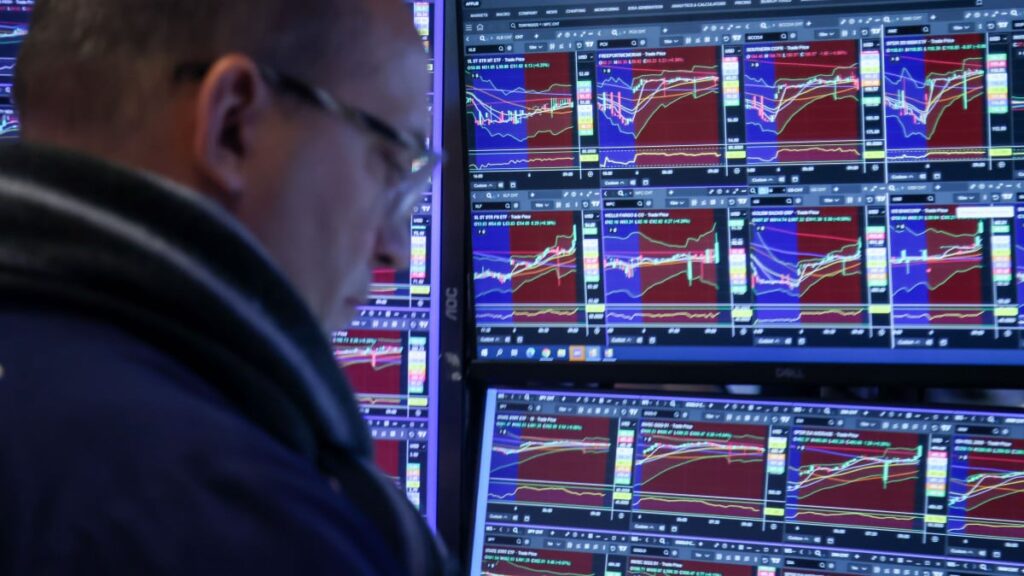
Are investors beginning to lose faith in the artificial intelligence (AI) sector, previously viewed as the tech industry's golden goose? On Friday, a significant downturn in tech stocks rattled Wall Street as concerns rose over escalating spending on AI infrastructure. Companies such as Microsoft, Amazon, Alphabet, Nvidia, Meta, and Oracle collectively experienced a staggering loss of approximately $1 trillion in market value, according to a report by CNBC.
The immediate catalyst for this sell-off was Amazon's fourth-quarter earnings report, which revealed an alarming projection: the e-commerce giant expects its capital expenditures to hit $200 billion by 2026. This figure was approximately $50 billion higher than analysts had anticipated, prompting a swift negative reaction in the stock market.
Paul Markham, investment director at GAM Investments, explained the weight of these capital expenditures concerning AI. He noted that investors are grappling with questions about both the scale of capital spending required to develop large language models and the anticipated returns on these investments. "The eventual return on that, and the fear of eventual over-expansion of capacity will be persistent," Markham told CNBC.
Notably, this skepticism from investors regarding AI investments marks a stark contrast to the optimism seen just weeks prior. In a recent announcement, Meta declared it would allocate an additional 73% of its capital spending—amounting to roughly $115 billion to $135 billion—toward AI development. Following this news, Meta's stock surged by 10%, illustrating the volatile market sentiment around the AI sector.
However, there are counterarguments to the notion of an AI bubble. On the same day as the Amazon sell-off, NVIDIA CEO Jensen Huang defended the company's significant increases in capital expenditures, asserting that such investments are "justified." Following his remarks on CNBC's "Halftime Report," NVIDIA’s shares rose by 8%. The company is often viewed as a bellwether in the AI field, supplying chips to high-profile firms like OpenAI, Meta, and Google. At a recent conference in Davos, Huang emphasized that the scale of investment in AI indicates the sector's viability, suggesting it is not a bubble. Given NVIDIA's heavy reliance on AI, the stakes are particularly high for the company should the market sentiment shift drastically.
Despite the broader concerns, there were hints that Amazon's stock was beginning to rebound slightly following Huang's comments. This duality in market response highlights the complexities of the current investor landscape, especially regarding AI. While some major players are facing significant scrutiny, others continue to thrive in the burgeoning AI arena.
The landscape of AI investment is fraught with both potential and peril. As companies ramp up their spending to harness AI capabilities, investors are left contemplating the balance between risk and reward. With capital expenditures climbing to unprecedented levels, the future of AI's impact on the tech sector—and the stock market—remains a topic of critical importance.
Mavs Shock Fans: Could This NBA Superstar’s Return Cost Them Their Future? Find Out Now!

Is Your Colorado Insurance Plan Keeping You From Your Health? Shocking Costs Exposed!

Governor Lombardo’s Shocking New Bill: What 10,000 Lives Could Be Impacted Overnight!

iPhone's Shocking New Feature Could Change Everything—Are You Ready to Be Left Behind?

Tragic Discovery: Lil Jon's Son Found in Atlanta Pond – What Really Happened?

You Won't Believe What's Hidden in AT&T's New Kid-Friendly Smartphone and Smartwatch!
You might also like: