
What Shocking Secrets Could Shape Thailand’s Election? Don’t Miss This Explosive Breakdown!

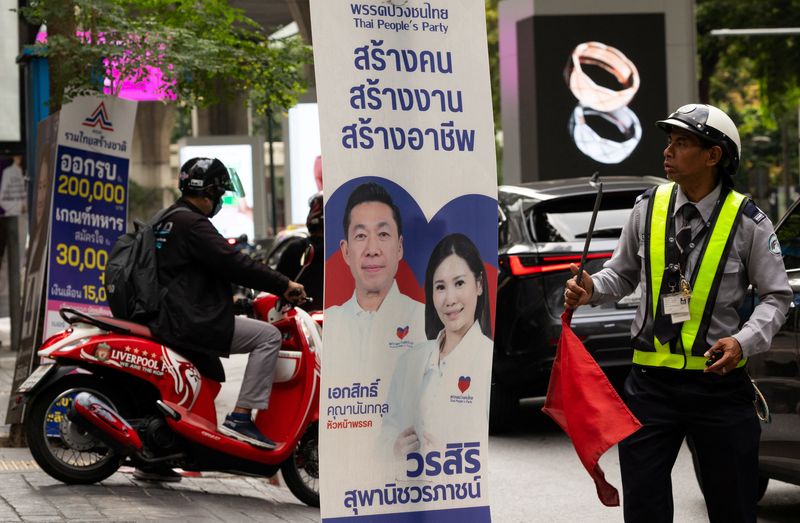
Thailand is gearing up for a pivotal general election on February 8, marking yet another chapter in the nation’s tumultuous political landscape. This election features a three-way contest among the progressive People’s Party, the populist Pheu Thai party, and the conservative Bhumjaithai party. The stakes are high, as the outcome will shape Thailand's future direction amid ongoing power struggles.
According to recent opinion polls, the People’s Party is emerging as the frontrunner. The party has captivated young and urban voters with a reformist agenda and a savvy use of social media. In a January 16-28 poll conducted by Suan Dusit University involving 26,661 respondents, the People’s Party garnered 36% support. In comparison, Pheu Thai received 22.1%, while Bhumjaithai secured 18.9%. Another poll from January 23-27 by the National Institute for Development Administration revealed similar results, with the People’s Party at 34.2%, Bhumjaithai at 22.6%, and Pheu Thai trailing at 16.2%.
The People’s Party, which won 151 of the 500 parliamentary seats in the last election, has shown no signs of losing momentum. Its predecessor, Move Forward, dominated the electoral landscape in 2023, winning nearly all seats in Bangkok and making notable inroads into conservative areas. However, despite their electoral success, they struggled to form a government due to insufficient support in parliament, even with an alliance with Pheu Thai.
While the People’s Party currently enjoys a strong position, the election outcome may not guarantee a straightforward path to governance. An outright majority seems unlikely, necessitating coalitions that could be complicated by historical tensions and ideological rifts among parties. The political landscape has been marred by betrayals and disputes, making alliances with smaller parties crucial for any party hoping to break through electoral fragmentation.
Notably, the Bhumjaithai party, led by Anutin Charnvirakul, has a reputation for strategic deal-making and is considered a formidable player in coalition-building. Anutin’s approach to politics has allowed him to navigate Thailand’s complex political waters effectively. In the last election, Bhumjaithai captured 71 seats, and Anutin is likely to leverage his connections within the establishment to bolster his party's negotiating power.
The Pheu Thai party, historically one of the dominant forces in Thai politics and linked to the influential Shinawatra family, has faced setbacks in recent years. It currently possesses a substantial financial reserve but has suffered defections to Bhumjaithai, complicating its prospects. Some analysts suggest a possible alliance between Pheu Thai and Bhumjaithai could emerge, echoing past collaborations.
The People’s Party's progressive agenda, aimed at addressing longstanding issues like monopolies and military reforms, poses a significant threat to the status quo upheld by powerful elites and conservative factions. Despite its popularity, the party must navigate a minefield of legal challenges and opposition. Following the dissolution of its predecessor in 2020 over campaign finance violations, the party has faced intense scrutiny from legal entities, including the National Anti-Corruption Commission, which is currently investigating 44 former Move Forward lawmakers for alleged ethical breaches.
Among those under investigation are key figures in the People’s Party, including leader Natthaphong Ruengpanyawut and deputy leader Sirikanya Tansakun. If the case escalates to the Supreme Court, these leaders could face disqualification from politics, which would have significant repercussions for the party’s future.
Anutin Charnvirakul, 59, exemplifies political pragmatism, having successfully positioned Bhumjaithai between conflicting political factions. His recent ascension to prime minister underscores his ability to maneuver through Thailand’s intricate political landscape. As the election approaches, Anutin aims to expand on his party’s previous seat count, solidifying alliances that could marginalize the People’s Party’s influence.
The process of selecting a prime minister in Thailand adds another layer of complexity to the upcoming election. Parties have nominated up to three candidates for the position, with any party holding at least 25 seats eligible to propose a nominee. Achieving a majority in the 500-member lower house is essential for any candidate to assume the premiership. Should the initial candidate fail to secure enough votes, the cycle continues until a suitable nominee is chosen.
As Thailand heads to the polls, the implications of this election extend beyond political alliances and individual candidates. The outcomes could signal a significant shift in the nation’s governance and societal framework, reflecting the aspirations of a younger generation eager for change amid a backdrop of historical legacies and entrenched power dynamics.
Sony's Shocking 12% Revenue Plunge: What This Means for Your Favorite Movies!

You Won’t Believe What This Simple Down Arrow Icon Could Mean for Your Productivity—Top Experts Weigh In!

Alphabet's $175 Billion Surprise: Is Your Portfolio at Risk? You Won't Believe What Happens Next!

Unlock the Secret to Earning Big: Write for Us and Transform Lives in Health & Lifestyle!

Greenland Hits Shocking 70°F – Is Your Future Economy About to Change Forever?

Newborn's Tragic Death Linked to Raw Milk: Shocking New Mexico Warning Revealed!
You might also like: