
You Won't Believe the CDC's Shocking New COVID Vaccine Stats – Are You at Risk?

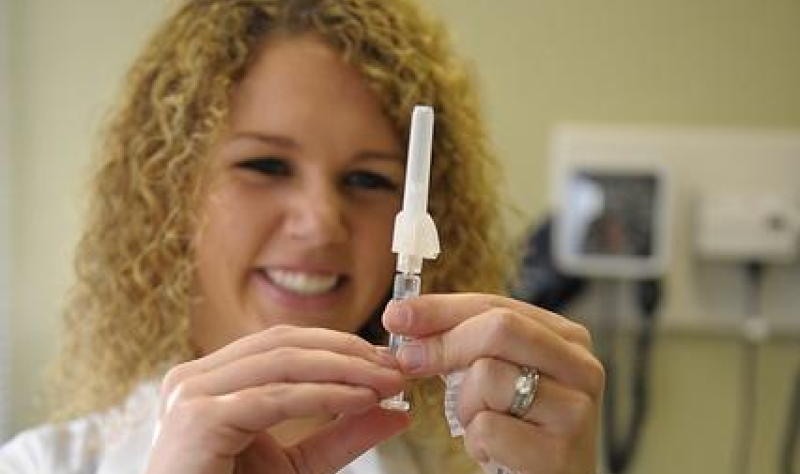
Recent findings from researchers at the U.S. Centers for Disease Control and Prevention (CDC) reveal that the 2024-25 COVID-19 vaccine demonstrated significant effectiveness in preventing severe outcomes related to the virus. According to a study published in JAMA Network Open, the vaccine was estimated to be 40% effective against hospital admission and 79% effective against invasive mechanical ventilation (IMV) or death, showing similar efficacy against the KP.3.1.1 and XEC variants, albeit with considerable uncertainty.
The study was a comprehensive test-negative case-control analysis involving 1,888 adults who tested positive for COVID-19 and 6,605 uninfected peers. Conducted from September 2024 to April 2025 across 26 hospitals in 20 states, the research aimed to assess the vaccine's effectiveness against hospitalization and severe outcomes, including the need for supplemental oxygen, acute respiratory failure, ICU admission, and IMV or death.
Vaccine Effectiveness Over Time
The median age of the patients in the study was 66 years, with 51.1% being women. Among the 1,888 case patients, only 11.4% had received the COVID vaccine, compared to 18.5% of the control group. Whole-genome sequencing of 50.4% of the COVID-19 patients found that 36.6% were infected with the KP.3.1.1 variant, 22.9% with XEC, and 14.1% with LP.8.1. The vaccine's effectiveness against COVID-related hospitalization was recorded at 40% (95% confidence interval [CI], 27% to 51%) within 90 to 179 days post-vaccination, with a higher effectiveness of 79% (95% CI, 55% to 92%) against IMV or death.
The effectiveness against hospitalization was 49% (95% CI, 25% to 67%) for KP.3.1.1 and 34% (95% CI, 4% to 56%) for XEC. For the variants that feature spike protein mutations, the effectiveness was measured at 41% (95% CI, 22% to 56%) for the S31 deletion and 37% (95% CI, 9% to 57%) for T22N and F59S substitutions.
Among 6,131 adults with healthy immune systems, the vaccine's effectiveness against hospitalization remained at 40% (95% CI, 27% to 51%), with a median time since vaccination of 80 days for case patients and 108 days for controls. For immunocompetent adults aged 65 and older, the effectiveness was slightly better at 45% (95% CI, 31% to 56%). It was 34% (95% CI, 14% to 49%) 7 to 89 days after vaccination and increased to 51% (95% CI, 31% to 66%) at 90 to 179 days post-vaccination.
However, the vaccine's effectiveness against severe outcomes in immunocompromised adults aged 65 and older was noted to be lower at 36% (95% CI, 6% to 57%), with a median time since vaccination of 79 days for case patients and 106 days for controls.
Among the 1,888 case patients, 57.0% required supplemental oxygen, 19.1% experienced acute respiratory failure, 17.6% were admitted to an ICU, and 8.6% needed IMV or died. The effectiveness for immunocompetent adults was observed to be 46% (95% CI, 31% to 59%) against the need for supplemental oxygen, 49% (95% CI, 22% to 68%) against acute respiratory failure, and a notable 79% (95% CI, 55% to 92%) against IMV or death.
“During a season without major antigenic changes to circulating SARS-CoV-2 viruses, we found sustained protection from COVID-19 vaccines through at least 90 to 179 days after vaccination,” the authors noted.
Despite these promising statistics, the uptake of the 2024-25 COVID vaccine remains concerning. The overall vaccination rate stands at only 23%, with a slightly higher uptake of 44% among adults aged 65 and older. This low engagement highlights the ongoing challenge of public perception and vaccine hesitancy, which continues to be a critical barrier in the fight against COVID-19.
As the FDA recommended monovalent JN.1 lineage-based COVID-19 vaccines, preferentially utilizing the LP.8.1 strain for the upcoming 2025-2026 season, the focus shifts toward improving vaccine confidence and accessibility to ensure better protection for vulnerable populations in the future.
Is the $1 Trillion Crypto Market on the Brink of Collapse? You Won't Believe What Regulators Are Proposing!
Davis Wright's Shocking Rise: How One Media Group Took Over the Industry in Just 3 Years!

Republicans UNVEIL Shocking Crypto Bill: Will This Change Your Investments Forever?

S&P 500 and Nasdaq Plunge: Is Google Earnings the Tipping Point for Tech’s Epic Collapse?

7 Mind-Blowing Snacks You MUST Try This January—#5 Will Leave You Speechless!

Is Michigan Football on the Brink of a SHOCKING Playoff Run by 2026? Find Out Why!
You might also like: