
Experts Warn: Are We on the Brink of a Measles Epidemic Again? Shocking Stats Inside!

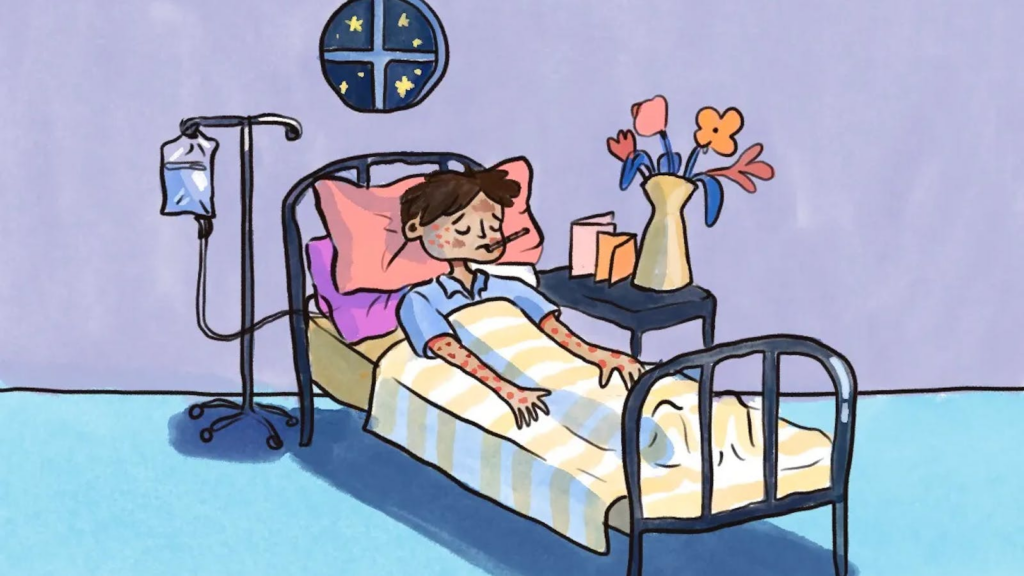
As measles cases rise across the United States, the nation faces the alarming prospect of losing its measles elimination status. This designation, first awarded in 2000, signifies that the U.S. has effectively eliminated the disease. However, a recent assessment by the Pan American Health Organization (PAHO) scheduled for April 13 could bring this status into jeopardy.
According to a spokesperson from PAHO, losing elimination status would indicate “gaps in vaccination coverage, surveillance, outbreak response or access to health services.” The independent Regional Monitoring and Re-Verification Commission will conduct this assessment, independent of the World Health Organization, which the U.S. recently withdrew from but remains a member of PAHO.
Experts from Brown University emphasized that the primary reason for the resurgence of measles in the U.S. is the decline in immunization rates. Scott Rivkees, the Interim Associate Dean of Education at Brown's School of Public Health, stated, “Because measles is so contagious, you really have to have 95% of the population vaccinated to stop its spread.” Currently, the vaccination rate stands at around 92%, a figure that falls short of the necessary threshold.
This decline in vaccination is attributed to a growing acceptance of exemptions for immunization and a decline in vaccine confidence, a trend that has worsened since the COVID-19 pandemic. Rivkees noted, “In addition to the pushback against COVID-19 vaccines, there was a spillover into routine childhood vaccines.” The measles, mumps, and rubella (MMR) vaccine is typically administered to children at the age of one, with a second dose given between ages four and six, according to Professor of Pediatrics Michael Koster from Hasbro Children’s Hospital.
Compounding the issue, there is no antiviral medication to treat measles, unlike treatments available for diseases such as influenza or COVID-19. “If a child has measles, there’s about a 20 to 30% chance that child will have to be hospitalized for pneumonia,” Rivkees pointed out. He also highlighted that one in 500 children may develop measles encephalitis, which can result in permanent brain damage, while up to 10% of infected children can suffer permanent hearing loss.
“To be clear, we’re never going to be able to stop vaccinating against measles,” said Jennifer Nuzzo, director of Brown’s Pandemic Center. “Measles elimination is more about driving the incidence, meaning the number of new cases that occur to a very low number, theoretically, domestically speaking, zero.” The need for steadfast vaccination is underscored by the fact that Rhode Island has recorded only one measles case since 2013.
The U.S. nearly lost its elimination status in 2019 after prolonged outbreaks in New York. More recently, Texas experienced a measles outbreak that lasted from January to August last year, while an outbreak in South Carolina, which began in October 2025, has reported a troubling total of 847 cases as of January 30. In an effort to maintain its elimination status, the U.S. may attempt to argue that these outbreaks are unrelated.
Nuzzo expressed skepticism about this approach: “Trying to disprove this connection is like trying to be graded on a curve. It’s contrary to the whole spirit of what the point of measles elimination as a goal was, which is to protect people from measles, and we’re clearly, by no measure, doing a good job of that.”
The rising cases of measles and the potential loss of elimination status serve as a stark reminder of the critical importance of vaccination in protecting public health. With the resurgence of preventable diseases looming, it is more important than ever for communities across the U.S. to address vaccination gaps and bolster public confidence in vaccine programs.
Are You Among the 1 in 5 Americans Overlooked in the Mental Health Crisis? Shocking Insights Revealed!

Virus Surge Hits Atrium Health: Are You and Your Family Safe? Shocking Stats Revealed!

You Won't Believe Which 8 Smartphones Seniors Are Raving About in 2026 - #4 Will Shock You!

UK Vaccine Market Set to Skyrocket to $3.3B by 2035—Are You Prepared for the Shocking Changes?

NFL Coaching Chaos: Why the Cardinals’ Shocking Choice Could Change Everything!

24 Kansas Artists Honored: Discover the SHOCKING Secrets Behind Their Artistry! You Won't Believe the Talents That Got Left Out!
You might also like: